

Summary: OpenAI is actively exploring ads in ChatGPT and is hiring senior monetization leaders under Applications CEO Fidji Simo. The idea is to create a path to monetize the huge free user base while keeping paid tiers attractive. A 2026 launch window is being discussed in industry reporting, though nothing is final.
OpenAI is building a monetization team and considering ads for ChatGPT’s free users. The company says it would only proceed if ads are “thoughtful and tasteful,” and several reports point to a possible 2026 timeline. Paid tiers likely remain the anchor.
Table of Contents
Who’s driving this and why now
Simo, formerly Instacart CEO and a longtime Facebook executive, joined OpenAI this year as CEO of Applications. Her remit: scale consumer products and revenue. That includes recruiting a monetization leader who would report directly to her. The strategic context is simple. ChatGPT has ballooned to ~700 million weekly users, but most use it free. Turning that reach into durable revenue is now a priority.
Scale vs Revenue reality
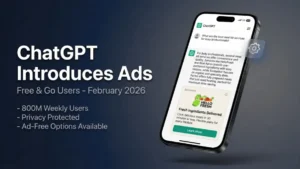
OpenAI has told press and partners that subscriptions are growing fast, with ~20 million paying subscribers cited earlier this year. Even so, leaders acknowledge the need for new revenue lines. Nick Turley, who heads ChatGPT, said on The Verge’s Decoder that ads aren’t off the table but would need to be implemented very carefully.
How Ads could appear inside ChatGPT
OpenAI has not published UI mockups. Based on Turley’s framing and today’s ChatGPT surface, the most plausible options are:
- Clearly labeled sponsored modules adjacent to an answer.
- Inline insertions for commercial questions that still separate “answer” from “ad.”
- Callouts at the start or end of a thread when shopping intent is explicit.
Turley emphasized being “thoughtful and tasteful,” which suggests strict labeling, frequency caps, and policies to prevent ads from steering core answers. Notably, OpenAI already shows organic product recommendations in shopping-intent searches and says these are not ads. That existing surface could evolve into a paid channel later, if the company chooses.
Expect ads, if they arrive, to live alongside answers for commercial queries with clear labels and guardrails. OpenAI already shows organic product picks in ChatGPT Search, which could be a stepping stone.
Will Plus or Pro stay ad-free
OpenAI hasn’t said. The most logical approach is hybrid: ad-supported access for free users and ad-free paid plans with faster models and advanced tools. That mirrors how streaming and news subscriptions evolved. Turley repeatedly praised subscriptions, which hints that premium tiers remain the anchor.
Timeline and what’s already shipping under the hood
Several marketing and growth job postings describe campaign tooling, integrations with major ad platforms, and real-time attribution. That reads like groundwork for both running OpenAI’s own marketing and potentially supporting on-platform campaigns in the future. Reporting suggests OpenAI wants ad monetization for free users as early as 2026, but timelines in fast-moving AI are fluid.
OpenAI is hiring for growth and paid-marketing platform roles that mention campaign tools and attribution. Industry reports point to a 2026 goal for ads, but that could slip.
Benefits vs Risks at a glance
Upsides
- Sustain free access at today’s scale without pushing everyone to pay.
- Relevant intent moments for marketers in a conversational context.
- New revenue line that reduces over-reliance on subscriptions and helps fund compute.
Risks and trade-offs
- Privacy expectations rise if targeting uses chat context.
- Answer bias concerns if ads appear too blended.
- UX fatigue if frequency or placement feels interruptive.
What this means for users
In the near term, nothing changes. ChatGPT remains ad-free. If ads launch, look for clear labels, limited placements, and a likely ad-free paid option. If the shopping surface expands, you may see sponsored picks alongside organic ones, similar to how search engines evolved.
What this means for marketers
Start testing AEO and structured product feeds now. The organic product recommendation surface already rewards clean data and review signals. If or when paid formats arrive, the best campaigns will likely align with query-level intent and first-party signals while respecting guardrails.
Bottom Line
- OpenAI is recruiting monetization leadership and building growth tooling. Ads are on the table.
- User scale ~700M weekly creates a compelling ad surface. Paid subs ~20M.
- 2026 is a plausible window, not a promise.
- Expect clear labels, conservative rollout, and ad-free paid tiers to remain attractive.
Comparison Table
| Model | What users get | Likely trade-offs |
|---|---|---|
| Subscription-only | Ad-free experience, fastest models, premium tools | Slower free growth, higher ARPU reliance |
| Hybrid (free + ads) | Free access funded by ads, paid plans remain ad-free | Privacy concerns, UX complexity |
| Ads-everywhere | Maximizes reach and revenue | High risk to trust and answer quality |
Frequently Asked Question
Is OpenAI already showing ads?
No. OpenAI shows organic product recommendations for shopping intent in ChatGPT Search. It says these are not ads.
What kind of ads might appear?
Expect clearly labeled modules near commercial answers, if launched at all. Inline ads would need strong guardrails.
Will my chats be used for ad targeting?
OpenAI hasn’t announced targeting rules. If ads launch, expect a privacy policy update and conservative defaults initially.
Is 2026 confirmed?
No. It’s a reported target, not an official date.
Why consider ads now?
Massive free usage plus rising compute costs. Ads create a second revenue line alongside subscriptions.
How many subscribers does ChatGPT have?
Earlier reporting put paid subs around 20 million in 2025.
Featured Answer Boxes
Will ChatGPT start showing ads?
OpenAI says ads are not ruled out. The company is hiring monetization leaders and building growth tools, and its ChatGPT head says any ads would need to be “thoughtful and tasteful.” No firm launch date has been announced.
When might ChatGPT ads launch?
Industry reporting points to a possible 2026 rollout for monetizing free users via ads. Timelines can slip, so treat that as directional, not confirmed.
Will paid tiers stay ad-free?
OpenAI hasn’t said. Given how Turley framed subscriptions as a core pillar, a hybrid model with ad-free paid tiers is the most likely path.
How big is ChatGPT’s audience?
OpenAI cites ~700 million weekly users as of 2025. Earlier reporting put paid subscribers near 20 million.

