

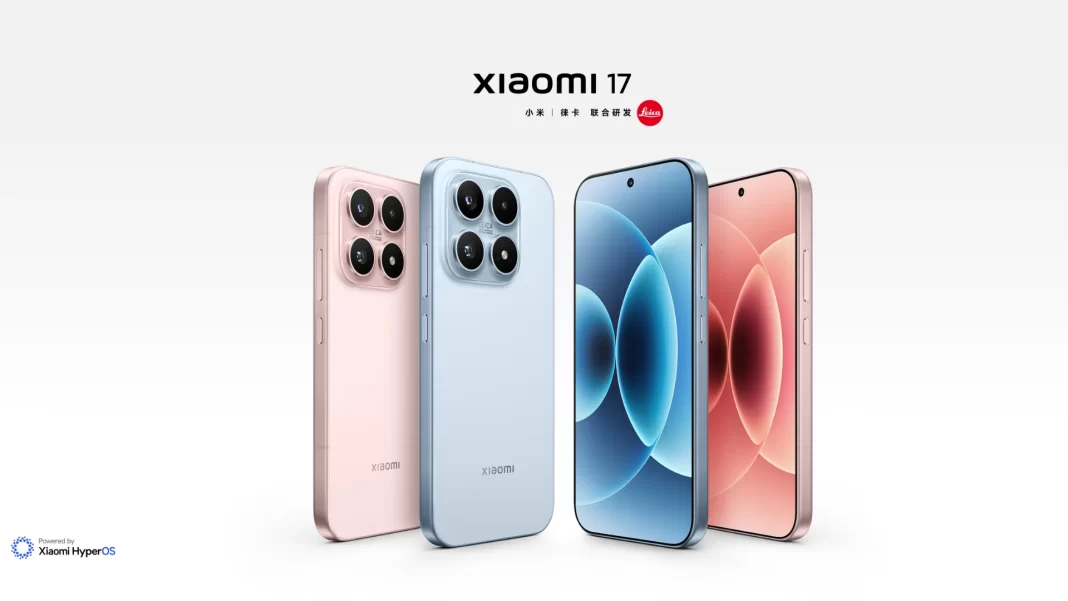
HomeNewsXiaomi 17 is first with Snapdragon 8 Gen 5, packs 7,000mAh

Xiaomi 17 is first with Snapdragon 8 Gen 5, packs 7,000mAh

Published on

Claude’s Agent Harness Patterns Are Rewriting Developer Assumptions About What AI Can Handle Alone

That’s Anthropic’s confirmed BrowseComp score for Claude Opus 4.6 running with a multi-agent harness, web search, compaction triggered at 50,000 tokens, and max reasoning effort.

Quick Take

Xiaomi 17 launches as the first phone with Qualcomm’s Snapdragon 8 Elite Gen 5. It brings a 6.3-inch LTPO OLED, a 7,000mAh silicon-carbon battery with 100W wired/50W wireless charging, triple 50MP rear cameras plus a 50MP selfie, IP68, and HyperOS 3. Prices start at CNY 4,499 in China; sales begin September 27.

Key Facts

  • Chipset: Snapdragon 8 Elite Gen 5; first phone to ship with it.
  • Battery/charging: 7,000mAh Si/C pack (up to 16% silicon), 100W wired, 50W wireless, 22.5W reverse
  • Display: 6.3″ 1.5K M10 LTPO OLED, 1–120Hz, up to 3,500 nits, Dragon Crystal Glass, 1.18mm uniform bezels.
  • Cameras: 50MP main (Light Fusion 950), 50MP ultra-wide, 50MP 2.6x telephoto; 50MP selfie.
  • Build & extras: Flat aluminum frame, IP68, in-display ultrasonic fingerprint reader.
  • Memory/storage: 12/16GB RAM; 256/512GB (plus 1TB in some markets per listings). Ships with HyperOS 3.
  • Price (China): 12/256GB CNY 4,499; 12/512GB CNY 4,799; 16/512GB CNY 4,999. Pre-orders live; sales Sept 27.

Details & Context

The Xiaomi 17 is a compact flagship with a 6.3-inch flat panel and notably slim 1.18mm bezels on all sides. Xiaomi also uses its Dragon Crystal Glass for higher drop resistance, and an ultrasonic in-display reader features you usually see on pricier phones.

Inside, the headline is Qualcomm’s new Snapdragon 8 Elite Gen 5. Qualcomm claims CPU/GPU and on-device AI gains generation-over-generation, positioning this chip to push computational photography and longer sustained performance. That should pair well with Xiaomi’s large vapor chamber and the big 7,000mAh silicon-carbon battery.
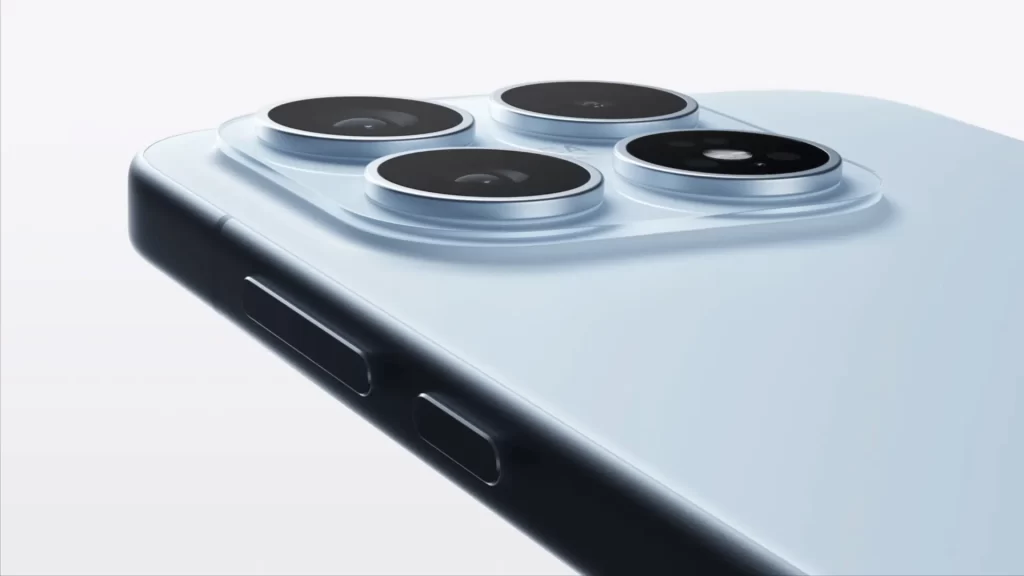
Close-up of Xiaomi 17 rear camera module
Xiaomi 17’s triple-camera Image: Xiaomi

Imaging sticks to a practical trio: a 50MP main using the Light Fusion 950 sensor (some third-party reports refer to “Light Hunter 950/L950”), a 50MP ultrawide, and a 50MP 2.6x telephoto. The selfie camera moves up to 50MP. Xiaomi’s color science still leans on Leica tuning and its AISP 2.0 pipeline.

Official Word

Xiaomi lists the panel at “up to 3,500 nits peak brightness” and confirms Dragon Crystal Glass protection on the Xiaomi 17 spec sheet. It also specifies the ultrasonic fingerprint sensor and IP68 rating.
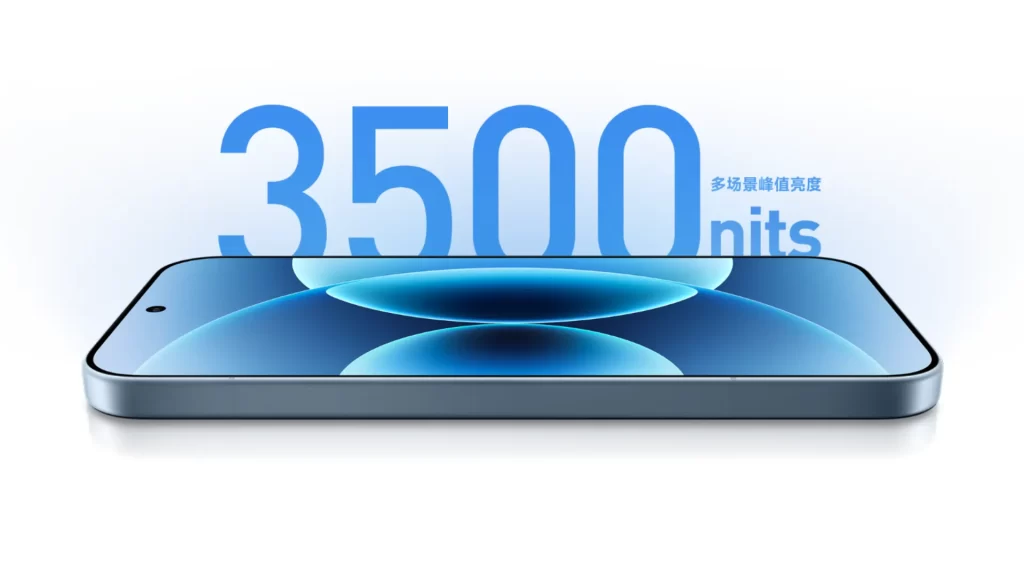
up to 3,500 nits peak brightness
Image: Xiaomi

(For the sensor naming, Xiaomi’s materials reference Light Fusion 950 on the main camera.)

Impact & What’s Next

Being first with Snapdragon 8 Gen 5 gives Xiaomi an early marketing edge and, more importantly, access to Qualcomm’s latest AI and video pipeline. Paired with the 7,000mAh Si/C battery and 100W charging, the 17 could set new endurance baselines for compact flagships.

For buyers outside China, Xiaomi hasn’t detailed global launch timing yet. Expect international variants later this year if past Xiaomi flagships are any guide, with regional pricing to follow. (We’ll update once Xiaomi confirms.)

Timeline / Availability / Pricing

  • China pre-orders: Live now
  • First sale: September 27, 2025 (China)
  • Colors: Black, white, blue, pink
  • Variants & prices (China):
    • 12GB/256GB — CNY 4,499 (~$630)
    • 12GB/512GB — CNY 4,799 (~$672)
    • 16GB/512GB — CNY 4,999 (~$700)

Source: Xiaomi

Mohammad Kashif
Mohammad Kashif
Senior Technology Analyst and Writer at AdwaitX, specializing in the convergence of Mobile Silicon, Generative AI, and Consumer Hardware. Moving beyond spec sheets, his reviews rigorously test "real-world" metrics analyzing sustained battery efficiency, camera sensor behavior, and long-term software support lifecycles. Kashif’s data-driven approach helps enthusiasts and professionals distinguish between genuine innovation and marketing hype, ensuring they invest in devices that offer lasting value.

Latest articles

Claude’s Agent Harness Patterns Are Rewriting Developer Assumptions About What AI Can Handle Alone

That’s Anthropic’s confirmed BrowseComp score for Claude Opus 4.6 running with a multi-agent harness, web search, compaction triggered at 50,000 tokens, and max reasoning effort.

Xcode 26.5 Beta Ships Swift 6.3 and an iOS SDK That Lays Groundwork for Maps Ads

Xcode 26.5 beta (17F5012f) arrived on March 30, 2026, and it carries more developer impact than a typical point release. Swift 6.3 ships as the new default compiler, five platform SDKs move forward simultaneously, and

macOS Tahoe 26.5 Beta 1 Quietly Tests RCS Encryption Again and Lays the Foundation for Apple Maps Ads

Apple released macOS Tahoe 26.5 Beta 1 on March 29, 2026, less than a week after macOS 26.4 reached Mac hardware worldwide. Most coverage frames this as a routine maintenance drop.

iOS 26.5 Beta Flips RCS Encryption Back On, Puts Ads Inside Apple Maps, and Expands EU Wearable Access

Apple dropped iOS 26.5 beta 1 (build 23F5043g) on March 29, 2026, one week after iOS 26.4 shipped to the public. Siri watchers will find nothing new here. But the update carries three changes significant enough to

More like this

Claude’s Agent Harness Patterns Are Rewriting Developer Assumptions About What AI Can Handle Alone

That’s Anthropic’s confirmed BrowseComp score for Claude Opus 4.6 running with a multi-agent harness, web search, compaction triggered at 50,000 tokens, and max reasoning effort.

Xcode 26.5 Beta Ships Swift 6.3 and an iOS SDK That Lays Groundwork for Maps Ads

Xcode 26.5 beta (17F5012f) arrived on March 30, 2026, and it carries more developer impact than a typical point release. Swift 6.3 ships as the new default compiler, five platform SDKs move forward simultaneously, and

macOS Tahoe 26.5 Beta 1 Quietly Tests RCS Encryption Again and Lays the Foundation for Apple Maps Ads

Apple released macOS Tahoe 26.5 Beta 1 on March 29, 2026, less than a week after macOS 26.4 reached Mac hardware worldwide. Most coverage frames this as a routine maintenance drop.