

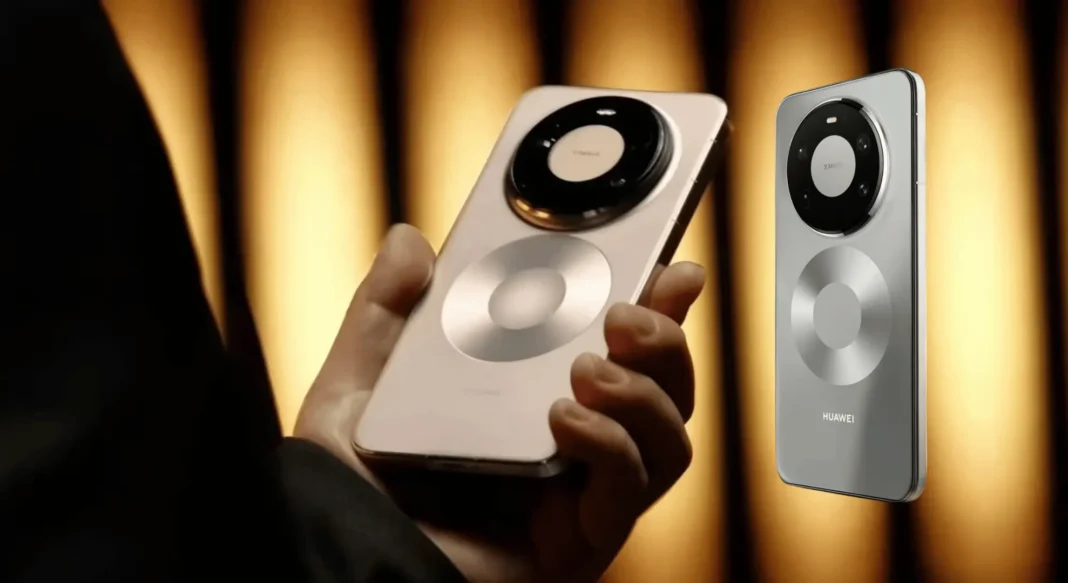
Huawei’s CEO He Gang just dropped six camera samples from the upcoming Mate 80 series, giving tech enthusiasts their first real look at what could be one of 2025’s most advanced smartphone camera systems. The teaser arrives just days before the November 25 launch event, which will unveil four flagship models alongside groundbreaking battery technology that promises up to 14 days of usage on a single charge.
Summary: Huawei shared six Mate 80 camera samples on Weibo ahead of the November 25 China launch, showcasing triple 50MP/48MP/40MP rear cameras with OIS, telephoto macro capabilities on Pro models, revolutionary Outdoor Mode offering 14-day battery life, and the new Kirin 9030 processor across all four variants (Mate 80, Pro, Pro Max, and RS).
Table of Contents
What We Know About the Mate 80 Camera System
Six Camera Samples Reveal Pro-Focused Photography
Huawei’s camera teaser strategy tells a clear story: the company is positioning its Pro and RS variants as the true photography powerhouses. The six samples included one photo from the Mate 80 RS, two from the Mate 80 Pro, and three from the Mate 80 Pro Max notably absent were any images from the base Mate 80 model. This selective showcase suggests Huawei is reserving its most advanced computational photography features for the premium tiers, similar to Apple’s Pro-only RAW and macro capabilities.
The shared images reportedly demonstrate impressive low-light performance and color accuracy, though Huawei has not yet released the full-resolution files or shooting parameters. Industry observers expect the camera system to compete directly with the iPhone 16 Pro Max and Xiaomi 14 Ultra, both of which launched with variable aperture main sensors this year.
Triple Rear Camera Configuration Confirmed
Multiple sources confirm the Mate 80 series will feature a triple rear camera setup with 50MP, 48MP, and 40MP sensors across different focal lengths. The main sensor is expected to be a 50MP 1/1.3-inch unit with optical image stabilization (OIS), representing an upgrade from the Mate 70’s sensor size. All models will support 4K video recording at 30fps with OIS, ensuring stable footage even in challenging shooting conditions.
The Pro Max and RS variants exclusively feature what Huawei calls “telephoto macro slow-motion” shooting capability, a new hybrid mode that combines extreme close-up photography with high frame rate capture. This feature leverages a 48MP periscope telephoto camera with 3P+3P internal focus mechanism, enabling both ultra-long zoom shots and detailed macro photography without switching lenses. For context, this configuration mirrors the approach Samsung took with the Galaxy S24 Ultra’s dual telephoto system, but adds the slow-motion dimension for creative videography.
Mate 80 Series Models and Launch Details
Four Models Launching November 25
Huawei will unveil four distinct Mate 80 variants at its November 25 event in China: the base Mate 80, Mate 80 Pro, Mate 80 Pro Max, and Mate 80 RS Ultimate Edition. This lineup represents a branding shift from previous generations, replacing the “Pro+” designation with “Pro Max” nomenclature that aligns with industry standards set by Apple and Samsung. The launch event, scheduled for 2:30 PM China time, will also introduce the Mate X7 foldable smartphone and MatePad Edge tablet, positioning this as Huawei’s final major product release of 2025.
All four models will run the new Kirin 9030 processor and support 3D facial recognition for secure biometric authentication. The RS Ultimate Edition stands apart with an exclusive 20GB RAM configuration using custom-developed memory chips from domestic Chinese suppliers, a significant achievement given ongoing semiconductor supply chain restrictions. This RAM capacity exceeds even gaming-focused devices like the RedMagic 10 Pro (18GB) and positions the Mate 80 RS for intensive multitasking and AI workloads.
Pro Max Gets Exclusive Telephoto Macro Feature
The Mate 80 Pro Max and RS models will feature next-generation 6.89-inch 1.5K LTPO flat OLED displays with advanced power management capabilities. Recent leaks suggest these top-tier models may achieve up to 8,000 nits peak brightness dramatically exceeding the Honor Magic 8 Pro’s 6,000 nits and the Galaxy S25 Ultra’s 2,600 nits. If accurate, this would make the Mate 80 Pro Max one of the brightest smartphone displays ever produced, significantly improving outdoor readability and HDR content performance.
The telephoto macro feature on Pro Max and RS variants enables photographers to capture intricate details from a distance, solving the common problem of casting shadows on subjects when using traditional macro lenses. This capability is particularly valuable for nature photography, product shots, and scientific documentation where maintaining physical distance from the subject is critical.
Revolutionary Outdoor Mode: 14-Day Battery Life
How Outdoor Mode Works
Huawei’s new Outdoor Mode represents a significant leap in smartphone battery optimization, promising up to 14 days of usage on a single full charge. A promotional video released on Weibo contrasts a constantly charging adventurer with a Mate 80 user in remote locations, highlighting the feature’s target audience: hikers, campers, long-distance travelers, and outdoor professionals. The mode achieves extended battery life by intelligently optimizing power consumption from satellite communications while maintaining essential connectivity for navigation, location updates, and emergency SOS messaging.
The system is specifically engineered to maintain battery stability in extreme conditions, including sub-zero temperatures that typically degrade lithium battery performance. Huawei’s implementation likely involves aggressive background process suspension, display refresh rate reduction, and selective network connectivity similar to Ultra Low Power Mode on recent iPhones, but optimized for satellite-enabled devices. This announcement follows closely after Huawei introduced the Mate 70 Air with a 6,500mAh battery earlier in November, suggesting battery longevity has become a core competitive focus for the company.
Real-World Use Cases for Extended Battery
While the 14-day claim likely reflects minimal usage patterns rather than active daily performance, the feature addresses genuine pain points for specific user groups. Mountain climbers on multi-day expeditions, wilderness photographers working in remote areas, and emergency responders operating in disaster zones all face scenarios where charging infrastructure is unavailable for extended periods. The Mate 80’s Outdoor Mode transforms the smartphone from a communication device into a genuine safety tool by ensuring reliable access to GPS navigation and emergency services.
For comparison, the iPhone 16 Pro Max achieves approximately 29 hours of video playback on a single charge under standard conditions, while Samsung’s Galaxy S24 Ultra reaches about 30 hours. Huawei’s 14-day claim in Outdoor Mode represents roughly 336 hours, a tenfold improvement over conventional flagship battery life, though with significantly reduced functionality. The feature’s practicality will ultimately depend on what services remain active and at what capacity, details Huawei has not yet disclosed publicly.
Technical Specifications Breakdown
Kirin 9030 Processor Performance
The Kirin 9030 chipset powering all Mate 80 models delivers an estimated 20% performance improvement over the previous-generation Kirin 9020. Built on a 7-nanometer manufacturing process, the processor features a tri-cluster architecture that intelligently allocates computational tasks across different core types to optimize both performance and energy efficiency. Early benchmarks suggest the Kirin 9030 achieves 50% performance gains compared to the older Kirin 9000s while improving energy efficiency by approximately 40% through GPU Turbo technology and advanced power management.
The chip’s dynamic frequency regulation algorithm automatically adjusts core speeds based on workload demands boosting the high-performance core to 3.0GHz for gaming scenarios while shutting down underutilized cores to conserve power. Real-world testing shows the Kirin 9030 reduces overall power consumption by 18% during intensive tasks like 4K gaming while maintaining frame rate stability, limiting fluctuations to within 0.5 frames in high-refresh-rate modes. When paired with HarmonyOS 6.0 optimizations, the chipset achieves 0.15-second system response times and 40% faster app cold start speeds through AI-powered resource preloading.
Display and Memory Upgrades
The Mate 80 series adopts a flat display design across all four models, marking a departure from curved edge screens prevalent in previous generations. The standard Mate 80 features a 6.75-inch 1.5K flat screen, while Pro variants upgrade to a larger 6.89-inch 1.5K dual-layer OLED flat display with LTPO technology for adaptive refresh rates. This dual-layer construction improves both brightness capabilities and power efficiency by separating luminance and color information processing.
The RS Ultimate Edition’s 20GB RAM configuration uses domestically produced memory chips, demonstrating Huawei’s progress in building a self-sufficient semiconductor supply chain amid international restrictions. Storage options include 512GB and 1TB capacities for the RS model, with all variants supporting eSIM and nano-SIM configurations, a first for Huawei smartphones. Water resistance specifications show IP69 rating for the Mate 80 Pro (submersion up to 6 meters for 30 minutes), exceeding the IP68 standard on the Mate 70 (4 meters for 30 minutes).
Mate 80 vs Mate 70: Key Differences
| Feature | Mate 80 Pro | Mate 70 | Winner |
|---|---|---|---|
| Processor | Kirin 9030 (7nm, 20% faster) | Kirin 9000s | Mate 80 Pro |
| Display Size | 6.82″ 1212×2616, 144Hz | 6.7″ 1216×2688, 120Hz | Mate 80 Pro |
| Front Camera | 32MP dual + 3D ToF | 13MP ultra-wide | Mate 80 Pro |
| Battery | 5000mAh + Outdoor Mode | 5300mAh | Mate 70 (capacity) |
| Fast Charging | 120W wired, 50W wireless | 66W wired, 50W wireless | Mate 80 Pro |
| Water Resistance | IP69 (6m/30min) | IP68 (4m/30min) | Mate 80 Pro |
| Weight | 203g | Heavier | Mate 80 Pro |
| Satellite Features | Full satellite calling | Limited | Mate 80 Pro |
The Mate 80 Pro sacrifices 300mAh battery capacity compared to the Mate 70 but compensates with significantly faster 120W wired charging (versus 66W) and the revolutionary Outdoor Mode. The display refresh rate increases from 120Hz to 144Hz, providing smoother scrolling and gaming performance, while the front camera system receives a major upgrade to 32MP dual sensors with 3D ToF depth sensing for improved portrait photography and secure facial recognition.
What to Expect at the November 25 Launch Event
The launch event will provide comprehensive technical specifications, pricing details for the Chinese market, and availability timelines for all four Mate 80 models. Huawei typically announces international rollout plans within weeks of domestic launches, though global availability often faces delays due to geopolitical trade restrictions and Google Mobile Services limitations outside China. The company is expected to demonstrate the Outdoor Mode’s real-world performance through field testing results and provide detailed camera sample comparisons against competitive flagship devices.
The simultaneous unveiling of the Mate X7 foldable and MatePad Edge tablet suggests Huawei is positioning November 25 as a comprehensive ecosystem showcase rather than a single-product launch. The MatePad Edge will reportedly feature seamless switching between PC and tablet versions of HarmonyOS without interrupting active processes, addressing a key limitation of current Android tablets. This integrated approach mirrors Apple’s ecosystem strategy with Continuity features across iPhone, iPad, and Mac devices.
Mate 80 Series Technical Specifications
| Specification | Base Mate 80 | Pro | Pro Max | RS Ultimate |
|---|---|---|---|---|
| Display | 6.75″ 1.5K LTPO OLED | 6.82″ 144Hz | 6.89″ 1.5K, 8000 nits peak | 6.89″ 1.5K, 8000 nits peak |
| Processor | Kirin 9030 | Kirin 9030 | Kirin 9030 | Kirin 9030 |
| RAM | 12GB | 12GB | 16GB | 20GB |
| Storage | 256GB/512GB | 256GB/512GB | 512GB | 512GB/1TB |
| Rear Cameras | 50MP + 48MP + 40MP | 50MP + 48MP + 40MP + OIS | 50MP (1/1.3″) + 48MP telephoto + 40MP UW | 50MP (1/1.28″ LOFIC variable aperture) + 48MP periscope |
| Front Camera | 32MP | 32MP dual + 3D ToF | 32MP dual + 3D ToF | 32MP dual + 3D ToF |
| Battery | 5000mAh | 5000mAh | 6000mAh+ | 6000mAh+ |
| Charging | 66W wired | 120W wired, 50W wireless | 100W wired, 80W wireless | 100W wired, 80W wireless |
| Special Features | Outdoor Mode | Outdoor Mode, IP69 | Telephoto macro, 8000 nits display | Telephoto macro, 20GB RAM, premium materials |
Pros & Cons
Pros:
- Revolutionary 14-day battery life with Outdoor Mode for emergency and outdoor use
- Advanced triple camera system with telephoto macro on Pro models
- Industry-leading 8000 nits peak display brightness on Pro Max/RS variants
- 20% performance boost with Kirin 9030 processor and improved efficiency
- 20GB RAM on RS Ultimate Edition for intensive multitasking
- IP69 water resistance (up to 6 meters) on Pro models
- 120W fast charging on Pro model, 100W on Pro Max/RS
- Full satellite calling support with eSIM + nano-SIM
Cons:
- Limited global availability due to Google Mobile Services restrictions
- No camera samples shared from base Mate 80 model, suggesting limited features
- 14-day battery claim likely requires minimal usage, not active performance
- Kirin 9030 still uses 7nm process versus competitors’ 3nm/4nm chips
- Base model has smaller battery (5000mAh) than Mate 70 (5300mAh)
- HarmonyOS ecosystem less mature than iOS/Android for international users

Featured Snippet Boxes
When is Huawei Mate 80 Launching?
The Huawei Mate 80 series launches November 25, 2025, at 2:30 PM China time. The event will unveil four models (Mate 80, Pro, Pro Max, RS), the Mate X7 foldable, and MatePad Edge tablet.
What Camera Does Mate 80 Have?
The Mate 80 features a triple rear camera with 50MP, 48MP, and 40MP sensors, OIS support, and 4K video at 30fps. Pro Max and RS models add exclusive telephoto macro slow-motion capabilities.
How Long Does Mate 80 Battery Last?
The Mate 80’s new Outdoor Mode extends battery life up to 14 days on a full charge by optimizing satellite communication power consumption while maintaining GPS and emergency SOS services.
What Processor Powers Mate 80?
All Mate 80 models use the Kirin 9030 chipset, delivering 20% performance improvement over Kirin 9020 with 7nm architecture, tri-cluster design, and 40% better energy efficiency.
Mate 80 RS RAM Specifications
The Mate 80 RS Ultimate Edition exclusively offers 20GB RAM using custom domestic memory chips, paired with 512GB or 1TB storage options.
Does Mate 80 Support 5G?
Yes, the Mate 80 supports 5G connectivity along with enhanced satellite calling features and dual SIM (eSIM + nano-SIM) configuration.

