

Quick Brief
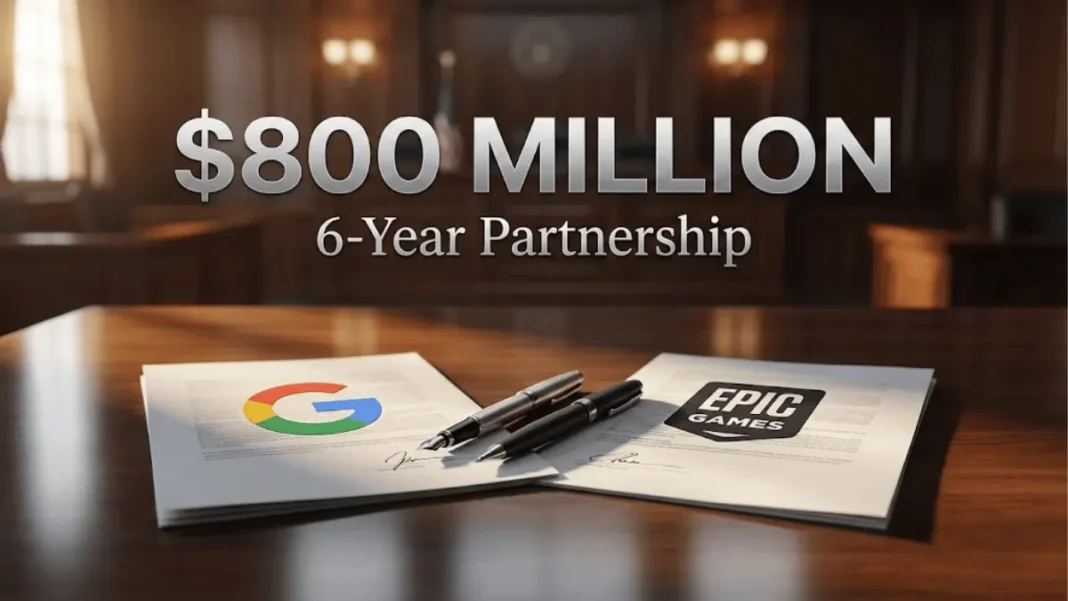
- The Deal: Epic Games will pay Google $800 million over six years for services while both companies pursue joint product development involving Unreal Engine, Android, and Fortnite.
- The Scrutiny: Federal Judge James Donato questions whether the partnership reduced Epic’s demands in their antitrust settlement, calling it potential “quid pro quo”.
- The Timeline: Settlement hearing occurred January 22, 2026, with no immediate ruling on approval.
California District Judge James Donato disclosed a confidential $800 million commercial agreement between Epic Games and Google during a January 22, 2026 settlement hearing in San Francisco. The partnership, which involves joint product development and marketing around Unreal Engine and Android, emerged as Epic seeks to finalize a settlement ending their antitrust battle that began in 2020. Judge Donato expressed concern the collaboration may have influenced Epic to soften reform demands for Google’s app distribution practices.
Partnership Structure and Terms
The agreement commits Epic to spend $800 million on Google services through 2032, marking a strategic shift after years of avoiding the tech giant’s ecosystem. Court documents reveal the partnership encompasses “joint product development, joint marketing commitment, [and] joint partnerships” with Epic assisting Android promotion while Google helps market Fortnite and other Epic products. Epic CEO Tim Sweeney testified the companies would each “separately [build] product lines” while working together, rather than creating a single joint product.
Sweeney characterized the expenditure as engaging Google “at market rates” after Epic “decided against Google” in previous years. He referenced the agreement as relating to the “metaverse” and noted that “Epic’s technology is used by many companies in the space Google is operating in to train their products, so the ability for Google to use the Unreal Engine more fullsome… sorry, I’m blowing this confidentiality” before stopping mid-sentence. The partnership involves Google gaining new access to use “Epic’s core technology” according to Judge Donato’s characterization.
Judicial Scrutiny and Settlement Terms
Judge Donato questioned whether the arrangement constitutes “quid pro quo” that reduced Epic’s incentive to push for terms benefiting other developers. The settlement would see Google reduce standard app store fees worldwide and allow alternative app stores to register for easy installation on Android. The proposed agreement modifies Donato’s October 2024 permanent injunction, which banned Google from paying device manufacturers and developers for Play Store exclusivity and required distribution of rival app stores through Google Play.
MIT economist Nancy Rose was appointed by Judge Donato in December 2025 to evaluate whether the settlement modifications serve public interest and competitive markets. Economics expert Doug Bernheim confirmed in testimony that the business relationship between Epic and Google “doesn’t exist today” and represents “new business between Epic and Google”. The settlement arrangement appears tied to the business deal, with both companies only proceeding if Judge Donato approves the settlement.
Antitrust Case Background
| Milestone | Date | Outcome |
|---|---|---|
| Lawsuit Filed | August 2020 | Epic challenges Google’s Play Store monopoly |
| Jury Verdict | December 11, 2023 | Unanimous ruling on all 11 counts against Google |
| Permanent Injunction | October 7, 2024 | Three-year remedies imposed on Google |
| Ninth Circuit Ruling | July 31, 2025 | Appellate court upholds verdict unanimously |
| Settlement Announced | November 2025 | Parties agree to resolve case |
The December 2023 jury verdict ruled Google illegally monopolized Android app distribution and in-app billing markets. The Ninth Circuit Court unanimously affirmed that decision in July 2025, rejecting all of Google’s appeals. Sweeney previously told The Verge in 2023 that Epic “always turned down special deals just for Epic” and “always fought on the principle that all developers should be given the same opportunities”.
Commercial and Legal Interdependence
Sweeney disputed suggestions Epic received financial incentives to settle, noting “I don’t see anything crooked about Epic paying Google off to encourage much more robust competition than they’ve allowed in the past”. He testified that specific terms of the $800 million deal have not yet been finalized but expects them to be reached pending settlement approval. Sweeney confirmed the Epic Games Store would not receive special treatment from Android under this arrangement.
The CEO acknowledged he considers the settlement and commercial partnership “an important part of Epic’s growth plan for the future”. Judge Donato has not set a ruling date for settlement approval, allowing both parties to submit additional briefs in February 2026 following Nancy Rose’s competitive impact analysis. The judge emphasized this case carries “consumer protection components that cannot be slighted” despite typical reluctance to intervene in private commercial disputes.
Frequently Asked Questions (FAQs)
What is the $800 million Google-Epic deal?
Epic Games will pay Google $800 million over six years for services while both companies pursue joint product development and marketing involving Unreal Engine, Android, and Fortnite.
Why is Judge Donato questioning the settlement?
Judge James Donato suspects the commercial partnership may constitute “quid pro quo” that caused Epic to weaken antitrust reform demands, potentially favoring both companies over broader market competition.
What was the original jury verdict?
A December 11, 2023 jury unanimously ruled on all 11 counts that Google illegally monopolized Android app distribution and in-app billing markets.
When will the settlement be finalized?
No ruling date is set; Judge Donato allowed parties to submit additional briefs in February 2026 after MIT economist Nancy Rose completes her competitive impact analysis.
Are the settlement and business deal connected?
Yes; testimony revealed both companies will only proceed with the $800 million partnership if Judge Donato approves the antitrust settlement.

