

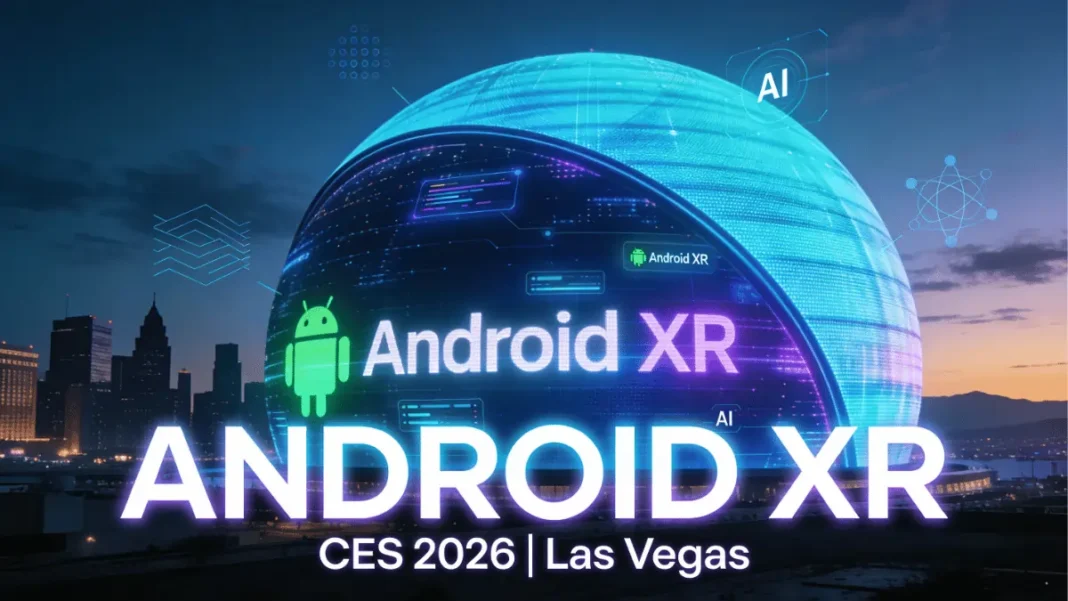
Google has transformed the Las Vegas Sphere into a towering display for Android XR, its AI-powered spatial computing platform, as CES 2026 kicks off. The activation showcases immersive experiences powered by Gemini AI and signals Google’s serious intent to dominate the extended reality market. This high-profile marketing push comes just months after Samsung launched the Galaxy XR headset in October 2025, the first major device running Android XR.
What’s Happening at the Sphere
Google is running Android XR animations on the Sphere’s massive exterior screen throughout CES 2026. The display features the Android mascot engaged in spatial computing activities painting mid-air, soaring through virtual space, and gaming with AI assistance. The activation is designed to showcase what Android XR devices can deliver at scale: immersive portal-like experiences with intelligent, context-aware assistance.
The timing is strategic. Samsung’s $1,800 Galaxy XR headset officially launched on October 21, 2025, in the US and Korea, featuring 4.3K resolution per eye and Qualcomm’s Snapdragon XR2+ Gen 2 chipset. Additional Android XR devices from other manufacturers are expected throughout 2026, including smart glasses from Warby Parker and Gentle Monster.
Why Android XR Matters
Android XR represents Google’s play to replicate its smartphone dominance in spatial computing. The platform is built as an open ecosystem that multiple hardware partners can adopt the same strategy that made Android the world’s leading mobile OS. Unlike closed platforms, Android XR runs standard Android apps from Google Play out of the box, giving users immediate access to Maps, Photos, YouTube, and third-party apps.
What sets Android XR apart is deep Gemini AI integration. The AI assistant provides real-time contextual help whether users are working, gaming, or exploring virtual environments. Google announced a dedicated “Android d “Android Show | XR Edition” on December 8, 2025, revealing more details about the platform and upcoming glass devices .
The global XR market could reach $97 billion by 2028, driven by advances in AI, display tech, and processing power. Enterprise spending on AR and VR is projected to rise nearly 20 percent to $12 billion in 2026.

How Android XR Compares to Competitors
| Feature | Android XR | Apple Vision Pro |
|---|---|---|
| Starting Price | $1,800 (Galaxy XR) | $3,499 (base model) |
| Resolution | 4.3K per eye | 23M combined pixels |
| Weight | 545g (Galaxy XR) | 600-800g |
| App Ecosystem | Google Play + Android apps | visionOS apps only |
| AI Integration | Gemini built-in | Siri integration |
| Platform | Open (multi-manufacturer) | Closed (Apple only) |
Android XR supports familiar developer tools including Android Studio, Kotlin, and Unity packages. The platform also embraces open standards like WebXR and OpenXR, reducing fragmentation that has slowed XR adoption.
What’s Coming Next
Google is planning broader Android XR announcements through 2026. Smart glasses with display capabilities are expected from Samsung and eyewear partners, with cross-platform support for both Android and iOS users. More hardware manufacturers are anticipated to join the ecosystem following Samsung’s lead.
Google previewed additional devices during its December 8 showcase, though specific launch dates remain unannounced. The company is prioritizing AI service distribution over platform exclusivity, positioning Android XR as infrastructure rather than just consumer electronics.
Developer adoption will be critical. Google’s bet is that millions of existing Android developers, familiar with the platform’s tools and libraries, will quickly build spatial computing apps accelerating ecosystem growth compared to closed platforms building from scratch.

Featured Snippet Boxes
What is Android XR?
Android XR is Google’s extended reality operating system for headsets and smart glasses, developed with Samsung and Qualcomm. It features deep Gemini AI integration and runs standard Android apps from Google Play.
Why is Google using the Las Vegas Sphere for Android XR?
The Sphere activation at CES 2026 is a high-profile marketing push to establish Android XR as a serious spatial computing platform. The iconic venue’s massive display demonstrates the immersive, AI-powered experiences Android XR can deliver.
When will Android XR devices be available?
Samsung Galaxy XR launched October 21, 2025, at $1,800. Smart glasses from Google partners like Warby Parker and Gentle Monster are expected throughout 2026.
How is Android XR different from Apple Vision Pro?
Android XR is an open platform for multiple manufacturers with lower starting prices ($1,800 vs $3,499), lighter weight (545g vs 600-800g), and runs standard Android apps. It focuses on Gemini AI integration across the entire experience.

