

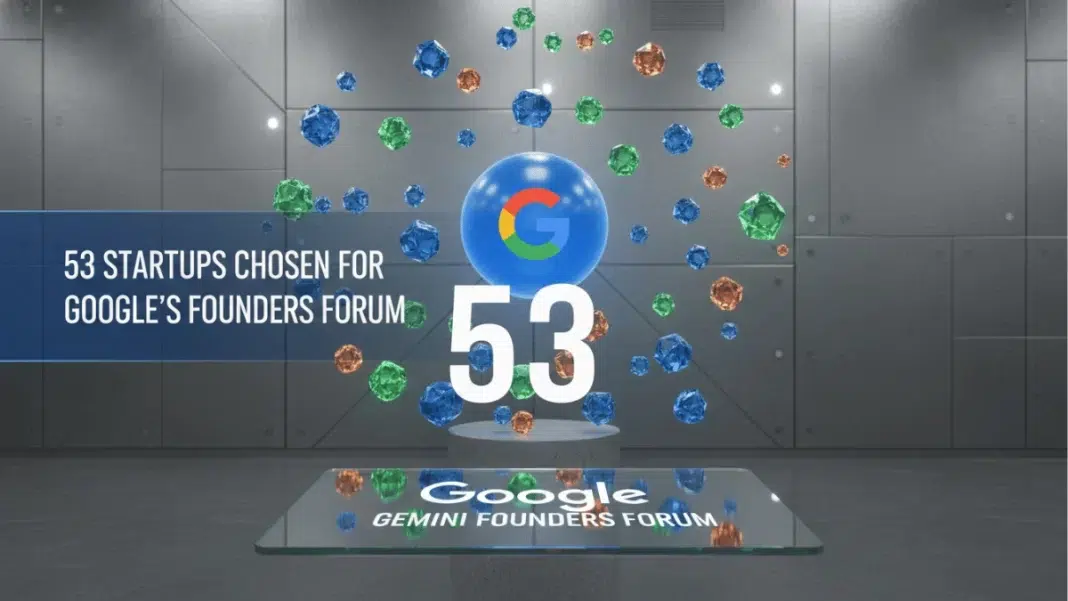
If you’re a Series A founder building with AI, Google’s new Gemini Founders Forum could be a fit. The first cohort is in, and the two-day summit runs at Google HQ in Mountain View. Below, we explain what the Forum is, what participants may receive, how it differs from other Google for Startups tracks, and how to prepare for the next cycle.
What is the Gemini Founders Forum
The Gemini Founders Forum is a two-day, application-based summit by Google for Startups that brings selected Series A founders together with teams from Google DeepMind and Google Cloud to pressure-test AI product roadmaps, unblock technical issues, and plan scale.
The Forum sits between a pure event and a traditional accelerator. It is short, curated, and tactical. Founders spend most of their time in working sessions, not keynotes. The outcome is a sharper product plan, clearer technical priorities, and connections to the right people.
Who it’s designed for
- Series A startups with AI at the core, not a bolt-on.
- Teams that can show a working product, real metrics, and a path to scale.
- Founders who want frank feedback from engineers, PMs, and research leads.
How it fits into the broader Google for Startups ecosystem
Google for Startups runs accelerators, themed programs, and events. The Forum joins that mix as a high-signal, short-format touchpoint focused on Gemini-era product and engineering questions, with a tight peer group.
Key facts: dates, venue, and cohort size
The inaugural cohort includes 53 startups selected from nearly 1,000 applications. The summit is scheduled for Nov 11–12, 2025 at Google’s Mountain View campus.
Expect small-room sessions, live debugging or design reviews, and structured conversations about model choices, evaluation strategy, and go-to-market. The agenda prioritizes “doing” over talking.
Eligibility and how it differs from other GFS tracks
GFF is a short, invite-style summit for Series A founders. The GFS Accelerator is a multi-month program. The AI Builders Forum is a larger community event. Cloud AI Accelerator is cohort-based with longer engagement.
Forum vs Accelerator (at a glance)
- Duration: 2 days vs several weeks.
- Cohort size: dozens vs smaller, region-specific accelerator groups.
- Focus: unblock near-term product and infra choices vs broader scaling curriculum.
- Outcome: a sharper 90-day AI roadmap vs a full accelerator playbook.
Forum vs Cloud AI Accelerator and AI Builders Forum
- Cloud AI Accelerator: application-based, multi-week, selected startups; heavier curriculum and milestones.
- AI Builders Forum (event): community-scale gathering; more talks and showcases.
- GFF: tightly curated working summit with direct specialist time.
What participants may get
Hands-on time with Gemini APIs and Google’s product teams, 1:1 or small-group mentorship with DeepMind and Cloud experts, and practical guidance on scaling and safety. Credits and partner perks depend on your startup’s program eligibility.
What tends to move the needle:
- Model strategy: picking the right Gemini family options per task; fallback and cost controls.
- Evaluation: offline eval sets, red-team plans, quality bars for releases.
- Infra: latency budgets, autoscaling, observability, and data governance.
- Product: user-facing safeguards, prompt lifecycle, and pricing experiments.
How to prepare for a future cycle
Show you’re shipping. Bring a live demo, a crisp problem statement, and specific blockers. Have metrics and a 90-day plan ready.
Technical readiness
- Baseline evals for your top 3 flows, with acceptance thresholds.
- Cost model: per-session costs, cache strategy, and fallbacks.
- Observability: traces, prompt/version tracking, and incident playbooks.
- Security: data classification, PII handling, and access controls.
Product readiness
- A single “hero” use-case with clear user value.
- Before/after metrics: time saved, accuracy uplift, or revenue lift.
- Rollout plan: internal dogfood, staged release, guardrail UX.
Team readiness
- Who decides technical trade-offs in the room.
- A note-taker and an owner for each follow-up.
- A commit to ship 1–2 improvements within 30 days.
Sector snapshots from the cohort
Founders range across healthcare, cybersecurity, robotics, legal tech, fintech, and more. Here are practical examples of problems this group appears to tackle:
- Healthcare: automating clinical coding, triage routing, and documentation.
- Cybersecurity: predictive threat detection with signal-rich models.
- Agri/robotics: autonomy kits for existing farm equipment and outdoor logistics.
- Legal tech: AI-assisted compliance and regulatory reviews.
- Fintech/ops: centralizing customer feedback to prioritize friction fixes.
Comparison Table: Forum vs other GFS touchpoints
| Program | Format | Typical duration | Who it fits | Outcome |
|---|---|---|---|---|
| Gemini Founders Forum | Curated summit | 2 days | Series A AI-first | 90-day roadmap, expert guidance |
| GFS Accelerator (e.g., AI First) | Cohort accelerator | Weeks to months | Seed–Series A | Curriculum, mentor network, milestones |
| Cloud AI Accelerator | Cohort accelerator | Weeks to months | AI startups with traction | Deeper Cloud + AI architecture support |
| AI Builders Forum | Event/community | 1 day+ | Broad founder audience | Talks, showcases, networking |
Frequently Asked Questions (FAQs)
What is the Gemini Founders Forum?
A two-day, application-based Google for Startups summit where selected Series A founders refine AI products with experts.
Who is eligible?
Series A founders building AI-first products. A working product and metrics help your case.
When and where is it?
Nov 11–12, 2025 at Google HQ, Mountain View.
How many startups were selected?
Fifty-three in the first cohort.
Do participants receive credits?
Credits are handled under the standard Google for Startups Cloud program tiers. Eligibility varies by stage and track.
How is it different from the Accelerator?
Short, work-heavy summit vs a multi-week accelerator with broader curriculum.
The Bottom Line
If your AI product is live, your metrics are real, and you need hands-on time with the teams behind Gemini, put the Forum on your radar. Prep a demo, your top blockers, and a 90-day plan. Decide what “shipped” looks like before you go.

Featured Snippet Boxes
What is the Gemini Founders Forum?
A two-day, application-based summit by Google for Startups where selected Series A founders refine AI products with experts from Google DeepMind and Google Cloud.
When and where is it happening?
November 11–12, 2025 at Google’s headquarters in Mountain View, California.
How many startups made the first cohort?
Fifty-three, selected from nearly 1,000 applications.
What do participants get?
Hands-on sessions with Gemini tools, mentorship from Google teams, and guidance on product, evaluation, and scale. Credits depend on program eligibility.

