

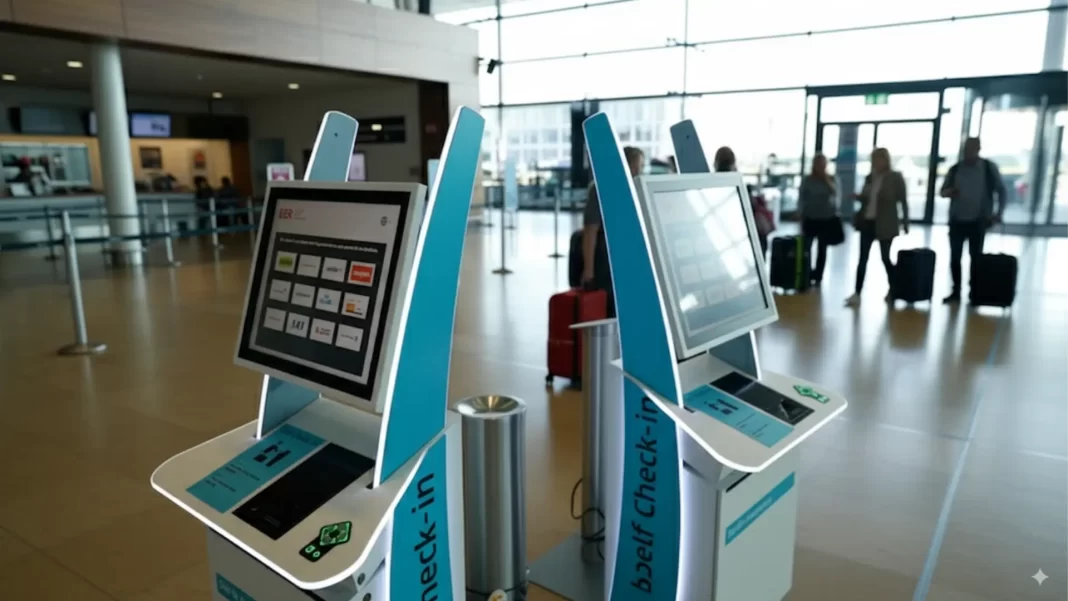
A cyberattack on Collins Aerospace’s MUSE check-in and boarding software disrupted operations at several European airports on Saturday, September 20, 2025. Heathrow, Brussels, and Berlin reported delays and some cancellations as systems switched to manual processing. Indian airports stayed online and stable. Below are the verified facts, airport status, and what to do if you’re flying.
Table of Contents
What happened at European airports on Sept 20, 2025?
Airports across Europe said a “cyber-related disruption” hit MUSE, a multi-user software platform that powers electronic check-in and baggage drop. The outage started Friday night local time and spilled into Saturday operations, forcing manual check-in at some hubs and slowing boarding.
The MUSE software outage and why it mattered
MUSE sits between airlines and airport desks, letting different carriers share counters and kiosks. When it’s down, airports can keep flying, but only by shifting to slower manual processes—lines grow, and schedules slip. RTX, Collins Aerospace’s parent, said the impact was limited to electronic check-in and baggage drop and could be mitigated with manual ops.

Which airports were affected and how bad was it?
By mid-afternoon Saturday, aviation data provider Cirium counted 29 cancellations across Heathrow, Berlin, and Brussels, with hundreds of departures still scheduled from those hubs for the day (651 from Heathrow, 228 from Brussels, 226 from Berlin). Brussels warned of heavy impact and said it would ask airlines to cancel half of departures on Sunday to control queues.
Heathrow: delays/cancellations
Heathrow said departing passengers could face delays while the provider worked on the issue. Local reporting and wire services showed queues and some cancellations; authorities stressed aviation safety wasn’t at risk.
Brussels: manual check-in, larger impact
Brussels Airport said only manual check-in and boarding were possible and flagged a “large impact” on schedules. It also reported diversions and planned capacity cuts to ease congestion.
Berlin Brandenburg: longer waits
Berlin’s Brandenburg Airport posted that waiting times at check-in were longer than usual; schedules saw delays and some cancellations.
Snapshot: airport impact (Sept 20, 2025)
| Airport | Status reported | Notes |
|---|---|---|
| London Heathrow | Delays and some cancellations | Provider “technical issue,” manual workarounds in place. |
| Brussels (BRU) | Manual check-in only; large impact | Diversions; asked airlines to cut Sunday departures by half. |
| Berlin Brandenburg (BER) | Longer waits at check-in | Some cancellations and delays. |
| Dublin/Cork | Minor impact later | Monitoring and mitigations. |
Is India affected?
India conducted quick checks across major airports. The IT ministry said there’s no impact observed so far. Delhi’s Indira Gandhi International Airport does use MUSE, but operations remained normal. Separately, authorities noted that most Indian airports do not use MUSE; Navi Mumbai (under construction) uses it but isn’t operational yet.
Delhi uses MUSE but no operational impact
Government officials confirmed the software overlap but said services continued without disruption. Airports were told to stay vigilant while checks continued.
Other Indian airports and Navi Mumbai
Goa, Hyderabad, Mumbai, Ahmedabad, Lucknow, Jaipur, Mangaluru, Guwahati, and Thiruvananthapuram don’t use MUSE. Navi Mumbai (under construction) does, but that airport isn’t open yet.
What airlines and authorities said
RTX/Collins Aerospace: “Aware of a cyber-related disruption” to MUSE at select airports; impact limited to electronic check-in and baggage drop; manual check-in mitigates.
Airport advisories: Heathrow cautioned delays; Brussels detailed manual processing and significant schedule impact; Berlin warned of extended waits.
Air India guidance: Air India asked Heathrow-bound passengers to expect possible check-in delays and recommended web check-in before reaching the airport.
What to do if you’re flying today (step by step)
- Check airline app/PNR every 30–60 minutes. If your flight is from/through Heathrow, Brussels, or Berlin, assume slower check-in.
- Web check-in early and download boarding passes locally. Air India explicitly advised this for Heathrow.
- Arrive earlier than usual. For long-haul, consider +45–60 minutes buffer.
- Carry printed or screenshot copies of e-tickets and bag tags (if your airline supports kiosk reprint).
- Pack essentials in cabin in case baggage drop queues move slowly.
- Monitor the departure airport’s social feeds/site for gate and queue updates.
MUSE explained
MUSE (Multi-User System Environment) lets multiple airlines share common check-in desks and kiosks at an airport. It centralizes passenger processing but creates a dependency: if the provider is hit, many desks slow at once. Airports can fall back to manual, which keeps flights moving but reduces throughput. Saturday’s disruption shows how third-party platforms can become single points of failure if not segmented and redundantly architected.
Limitations/considerations: Investigations are ongoing. Authorities haven’t named an attacker or motive; treat unverified claims with caution.
FAQ
Was this a ransomware attack?
Unknown. Authorities haven’t publicly confirmed attacker or motive.
Are flights safe?
Yes. The issue affected check-in and baggage systems, not flight safety. Airports and the European Commission indicated no sign of a widespread/severe safety threat.
How many flights were canceled?
Cirium cited 29 cancellations across Heathrow, Berlin, and Brussels by 11:30 GMT Saturday, with many departures still scheduled.
Is Heathrow back to normal?
Delays persisted Saturday with manual mitigations. Check your airline app before traveling.
Is Brussels still manual?
Brussels said manual only on Saturday and asked airlines to cut half of Sunday departures to control queues.
What did Collins/RTX say?
They confirmed a “cyber-related disruption” to MUSE at select airports and said manual check-in reduces impact while a fix is underway.
What is MUSE in simple terms?
Shared check-in/boarding software used by many airlines at common desks. If it’s down, airports can still operate, just slower.
Do Indian airports use MUSE?
Delhi and Navi Mumbai (under construction) use MUSE; several others do not. India reported no operational impact.

Featured Answer boxes
What is the European airport cyberattack 2025 about?
A cyberattack hit Collins Aerospace’s MUSE software used for check-in and baggage drop, slowing operations at major hubs like Heathrow, Brussels, and Berlin. Airports switched to manual processing, causing delays and some cancellations while the provider worked on a fix.
Which airports were most affected?
Brussels reported the largest impact with manual check-in only and planned Sunday cuts, while Heathrow and Berlin warned of delays and some cancellations as manual processes kicked in.
Are Indian airports affected?
No. India’s IT ministry said there was no impact domestically. Delhi uses MUSE but stayed normal; most other Indian airports do not use MUSE.
What should travelers do now?
Web check-in, arrive earlier, and watch airline/app updates. Air India advised Heathrow flyers to expect possible check-in delays and complete web check-in.
Source: Reuters

