

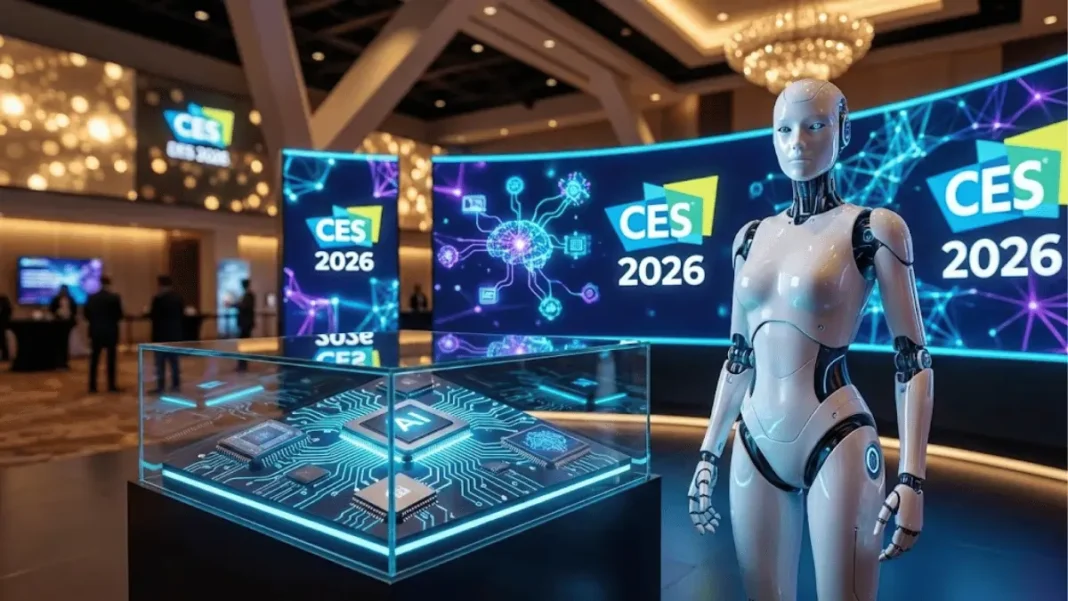
The Consumer Electronics Show 2026 kicks off in Las Vegas this week with artificial intelligence embedded across nearly every product category. Major chip makers Nvidia, AMD, and Intel deliver keynotes today, January 5, ahead of the show floor opening Tuesday. CES runs through January 9 with a new “AI Forward” theme and a dedicated CES Foundry section for AI and quantum technologies.
Monday’s Chip Battle
Nvidia CEO Jensen Huang delivers the marquee keynote today at 1 p.m. PT, with a 90-minute presentation expected to unveil the Rubin platform and discuss AI robotics and autonomous vehicles. The Rubin architecture, announced in September 2025, features purpose-built GPUs for massive-context inference handling up to 1 million tokens for applications like video generation and advanced coding assistants. The Vera Rubin NVL144 CPX platform packs 8 exaflops of AI performance and 100TB of memory in a single rack.
Intel follows at 3 p.m. PT with its Core Ultra 300 Series based on Panther Lake architecture, built on the company’s 18A process node. AMD CEO Lisa Su closes Monday’s presentations at 6:30 p.m. PT, promising to “share her vision for delivering future AI solutions” with expected announcements about the MI400 series data center accelerators and Zen 6 architecture.
Qualcomm’s Snapdragon X2 Elite processors power a new wave of laptops showcased across the show floor. The chips deliver 50% faster multi-core performance and 78% improved AI processing compared to the previous generation. Early Geekbench 6.5 benchmarks show the X2 Elite Extreme scoring 23,491 in multi-core tests.
Samsung’s Gemini-Powered Appliances
Samsung showcases AI-integrated home appliances at its “First Look” event, headlined by the Bespoke AI Refrigerator featuring Google’s Gemini AI model. The refrigerator uses internal cameras combined with Gemini to identify food items, suggest recipes based on available ingredients, and generate shopping lists for restocking. Samsung claims this is the world’s first home appliance with Gemini integration.
The company also debuts Micro RGB televisions ranging from 55 to 115 inches, positioning the technology as a lower-cost alternative to OLED displays. Additional AI appliances include the Bespoke AI AirDresser for quick wrinkle removal and an updated Bespoke AI Laundry Combo with shorter wash-to-dry cycles.

Humanoid Robots in Dedicated Hall
CES 2026 features a dedicated exhibition hall for humanoid robots, reflecting industry momentum toward physical AI applications. LG demonstrates its CLOiD home robot as part of a “Zero Labor Home” concept, showcasing the bot handling household tasks and companion care. The CLOiD features human-like arms designed for object manipulation and room navigation.
Multiple robotics companies occupy the humanoid hall. ROBOTERA showcases its L7 full-size bipedal robot (171 cm tall, 70 kg) with 55 degrees of freedom and 20 kg carrying capacity, plus the Q5 wheeled humanoid with 44 degrees of freedom. NEURA Robotics reveals its next-generation humanoid alongside the Neuraverse operating system.
AR Glasses Push Real-Time Translation
LLVision debuts the Leion Hey2 AR glasses at CES 2026, marketing them as the world’s first purpose-built AI-powered AR translation glasses. The device focuses exclusively on real-time cross-language communication rather than general AR entertainment. LLVision completed a 100-person field trial including a two-hour presentation delivered entirely through the glasses, and the product generated 10,000 pre-orders within two hours of its international announcement.
The smart glasses category expands across the show floor, with exhibitors demonstrating devices that combine AI assistants, augmented reality displays, and camera functionality for hands-free productivity.
Why It Matters
CES 2026 marks the shift from AI demonstrations to shipping consumer products with embedded intelligence. The concentration of three major chip keynotes in one day underscores intensifying competition for AI workload dominance across data centers and edge devices. Samsung’s Gemini integration signals Google’s expansion beyond Pixel phones into major appliance manufacturers.
For developers and enterprises, the Rubin platform announcement provides critical lead time for data center planning, as rack-scale architectures require facility retrofits that must begin months before H2 2026 shipments. Humanoid robots moving from research labs to dedicated exhibition space indicates manufacturers betting on consumer acceptance for home automation beyond smart speakers and displays.
What’s Next
The show floor opens Tuesday, January 6, with hands-on demonstrations of announced hardware. Nvidia’s Rubin platform details will clarify CUDA support, TensorRT optimizations, and NVLink programming models that determine developer adoption timelines. AMD’s MI400 specifications will reveal competitive positioning against Nvidia’s data center dominance.
Watch for pricing and availability throughout the week. Most CES products ship in Q2 or Q3 2026, meaning today’s announcements target enterprise purchasing decisions closing in early 2026. Smart glasses face ongoing challenges with battery life, privacy concerns, and consumer adoption that have plagued previous AR attempts.

Featured Snippet Boxes
What time is Nvidia’s CES 2026 keynote?
Nvidia CEO Jensen Huang presents Monday, January 5 at 1 p.m. PT (Pacific Time). The 90-minute keynote will cover the Rubin platform, AI robotics, and autonomous vehicle technology. It streams live on Nvidia’s website.
What is Samsung announcing at CES 2026?
Samsung is showcasing the Bespoke AI Refrigerator with Google Gemini integration for food recognition and recipe suggestions. The company also debuts Micro RGB televisions from 55 to 115 inches and AI-powered laundry appliances.
When does CES 2026 take place?
CES 2026 runs January 6-9, 2026 at the Las Vegas Convention Center. Major keynotes from Nvidia, Intel, and AMD occur Monday, January 5, before the show floor officially opens Tuesday.
What are humanoid robots doing at CES 2026?
CES 2026 features a dedicated hall for humanoid robots. LG demonstrates the CLOiD robot for household tasks, while companies like ROBOTERA and NEURA Robotics showcase bipedal and wheeled humanoids for home and commercial use.

