

Quick Brief
- The Clearance: ASUS Handheld Ultrasound LU800 receives FDA 510(k) clearance on January 12, 2026 the company’s first Class II medical device in the US market
- The Market: Entry into a $354.03 million global handheld ultrasound market projected to reach $586.55 million by 2035 at 5.77% CAGR
- The Innovation: World’s first handheld ultrasound supporting four operating systems (Android, iOS, Chrome, Windows) with 128-channel beamformer
- The Strategy: ASUS accelerates global deployment to Southeast Asia and South America, targeting point-of-care ultrasound (POCUS) adoption
ASUS announced January 12, 2026, that its Handheld Ultrasound LU800 received 510(k) clearance from the US Food and Drug Administration, marking the company’s formal entry into the American medical device market. The lightweight wireless ultrasound system joins a competitive US handheld ultrasound market that includes established players like GE HealthCare and Butterfly Network. ASUS COO and SVP Joe Hsieh characterized the approval as “more than just a regulatory milestone” but rather “a tangible affirmation of our long-term commitment to smart healthcare R&D“.
Technical Architecture of the LU800 Platform
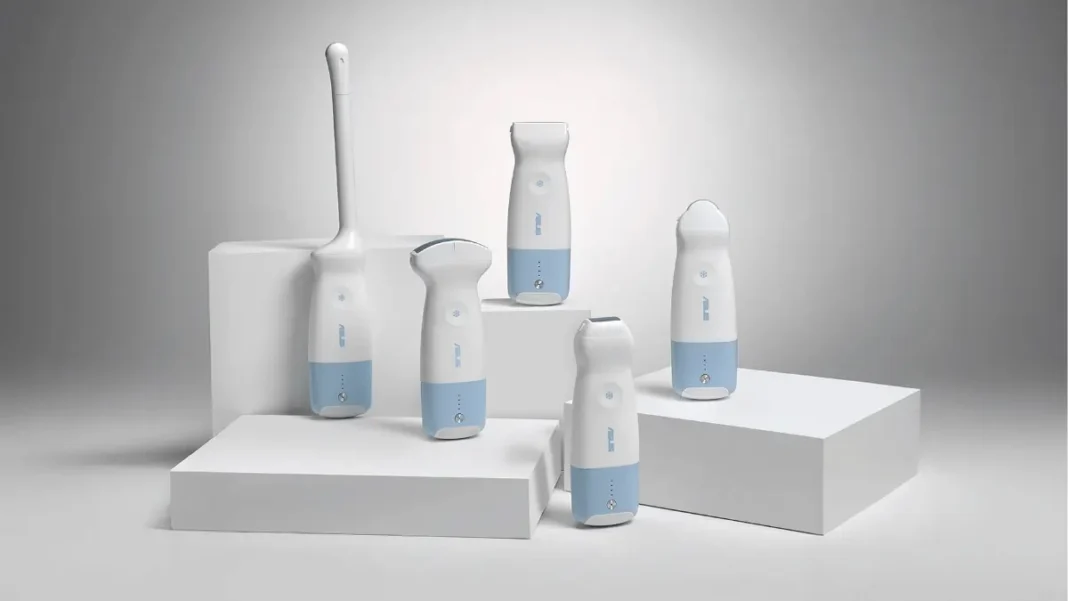
The LU800 employs a 128-channel beamformer across five probe configurations linear, convex, microconvex, phased array, and endocavity each optimized for specific clinical applications. The system weighs between 265-305 grams depending on probe type and features five imaging modes: B-mode, M-mode, color flow, pulse wave, and power Doppler. ASUS engineered cross-platform compatibility through its MediConnect App, enabling deployment on Android, iOS, Chrome OS, and Windows devices, a first in the handheld ultrasound category.
The device supports DICOM (Digital Imaging and Communications in Medicine) standard for seamless integration with hospital information systems and picture archiving systems. IP44 water resistance and a 3000mAh battery enable deployment in emergency rooms, ambulances, and rural clinics where traditional cart-based ultrasound systems prove impractical.
| Specification | LU800 Linear | LU800 Convex | LU800 Phased Array |
|---|---|---|---|
| Frequency Range | 4.2-12.5 MHz | 2-5 MHz | 1.3-3.7 MHz |
| Max Depth | 12.6 cm | 30 cm | 30 cm |
| Weight | 270g | 305g | 280g |
| Primary Applications | Vascular, Thyroid, Musculoskeletal | Abdomen, OB, Renal | Cardiac, Lung, FAST |
| Elements | 128 | 128 | 64 |

Strategic Positioning in Point-of-Care Diagnostics
ASUS enters a market where handheld ultrasound reduces diagnostic decision time by 30-50% compared to conventional imaging workflows. The $354.03 million global market in 2026 represents a strategic opportunity as healthcare systems prioritize bedside diagnostics and telemedicine integration. FDA 510(k) clearance validates the LU800’s substantial equivalence to predicate devices, a credential that opens institutional procurement channels.
The timing aligns with regulatory trends: the FDA processes approximately 3,000 medical devices annually through the 510(k) pathway, representing 99% of all device approvals. FDA data shows 85% of 510(k) applications receive Substantially Equivalent decisions, though nearly 32% of submissions initially fail acceptance review before being amended and resubmitted.
AdwaitX analysis indicates ASUS’s four-OS strategy directly addresses fragmentation in clinical IT environments. While competitors like Butterfly Network focus on iOS integration, ASUS’s Windows and Chrome OS support enables deployment across legacy hospital systems and Chromebook-equipped telehealth networks prevalent in emerging markets.
AI-Guided Scanning and Deployment Timeline
ASUS commits to developing AI-guided ultrasound scanning applications that provide real-time operational guidance during examinations. Joe Hsieh stated this innovation “lowers the technical barrier for ultrasound operation, enabling more non-specialist users to effectively utilize this tool”. The company targets Southeast Asia and South America for initial international expansion, regions where the compact ultrasound equipment market projects 11.53% CAGR growth through 2034.
Regulatory pathways in target markets remain unclear. While FDA clearance facilitates reciprocal approvals in some jurisdictions, ASUS must navigate separate certification processes for CE marking in Europe and CDSCO approval for India. The company has not disclosed US commercial launch timelines, pricing, or distribution partnerships following the January 12 clearance.

Frequently Asked Questions (FAQs)
What is FDA 510(k) clearance?
FDA 510(k) clearance confirms a medical device is safe, effective, and substantially equivalent to existing approved devices, allowing commercial sale in the US market.
How does the LU800 compare to traditional ultrasound?
The LU800 weighs 265-305g versus 150-300 pounds for cart-based systems, enabling point-of-care use in emergency and remote settings.
Which operating systems support the LU800?
Android, iOS, Chrome OS, and Windows via the ASUS MediConnect App, the industry’s first quad-OS handheld ultrasound platform.
When will ASUS launch the LU800 in the US?
ASUS has not announced commercial availability dates, pricing, or distribution details following the January 12, 2026 FDA clearance.

