

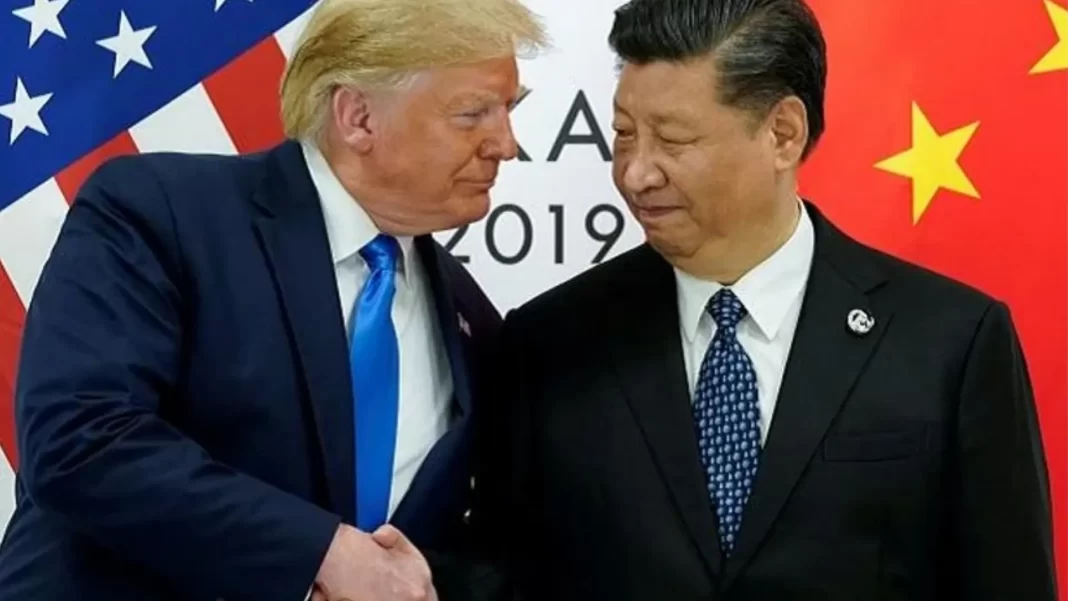
What Trump said vs. what’s confirmed
President Trump called his conversation with China’s Xi Jinping “very productive,” listing progress on trade, fentanyl, the Russia-Ukraine war, and a TikTok agreement. He also said they’ll meet on the sidelines of the APEC summit in South Korea and that he plans to visit China early next year.
Independent outlets reported the same APEC plan and framed the TikTok outcome more cautiously: Trump touted momentum, but China’s official summary didn’t explicitly confirm a deal. That leaves the shape of any approval especially around TikTok’s algorithm still in flux.
Fast fact: The APEC Leaders’ Meeting is in South Korea Oct 31–Nov 1, 2025, with events across Gyeongju, Incheon, Jeju and Busan.
The TikTok deal, in plain English
Reporting points to a U.S.-based spinoff with American majority ownership. An Oracle-led group, joined by Silver Lake and Andreessen Horowitz, is frequently cited as the core buyer consortium. Details vary across outlets, but the broad picture is U.S. investors taking control while ByteDance retains a minority stake.
A key procedural update: the administration extended the deadline to finalize the deal to December 16, effectively buying time to work through governance, data, and IP terms.
Short Answer: Most likely: TikTok U.S. becomes a new company with a U.S.-majority board, data hosted by Oracle, and guardrails to keep American user data in the country. ByteDance could hold a minority stake. The one big complication is the algorithm-China treats it as export-controlled tech, so any transfer or license needs approval. That’s the sticking point.
Key date: APEC 2025 in South Korea
Trump says he will meet Xi during APEC in South Korea and travel to China in early 2026, with a reciprocal Xi visit to the U.S. later. Even if formal announcements slip, APEC gives both sides a set piece for face-to-face diplomacy on trade and tech.
Dates, venues, and host confirmation are public: the leaders’ week is scheduled around Oct 31-Nov 1, 2025, hosted by South Korea, with Gyeongju highlighted for major sessions.
The algorithm problem
China put recommendation algorithms under export control in 2020, giving Beijing a say in any transfer or licensing. That’s why “deal approved” can mean different things—Beijing might approve a limited IP license while blocking a full transfer. U.S. lawmakers worry that any ongoing ByteDance influence could undercut the whole objective.
Users probably won’t notice front-end changes at first. If the U.S. app shifts to an Oracle-hosted stack and a licensed or parallel algorithm, the goal is for it to feel the same while meeting U.S. security demands. But if licensing stalls, features, recommendations, or cross-border content flows could be affected.
The politics: why the messaging matters
Trump has publicly said “it sounds like they’ve approved TikTok,” praising the “biggest, richest” investors. That framing helps signal momentum, but it also raises expectations before all the technical and legal pieces are nailed down. China’s careful wording omitting deal specifics keeps leverage on the algorithm question.
On Capitol Hill, skeptics are focused on two lines in the sand: true operational independence from ByteDance and iron-clad protections around data and content ranking. If the final arrangement looks like “Project Texas plus,” critics may still push for tougher separation.
Timeline and next checkpoints
- Now → Oct: Technical term-sheet work on ownership, governance, data, and IP licensing.
- APEC week (late Oct-early Nov): Potential leader-level optics or gestures. Not guaranteed.
- By Dec 16: U.S. deadline to finalize the transaction terms (subject to further changes if talks slip).
Pros and Cons likely deal structure
Pros
- Keeps TikTok available to U.S. users and creators.
- U.S.-majority ownership and Oracle data hosting address core security asks.
- Provides a framework other countries could copy.
Cons
- Algorithm IP remains the hardest nut to crack; licensing could be a political lightning rod.
- Minority ByteDance stake may fuel criticism that control isn’t cleanly severed.
- Legal and regulatory challenges could delay closing.

Comparison Table at a glance
| Option | Ownership | Algorithm | Data Hosting | Risk to Users |
|---|---|---|---|---|
| Oracle-led U.S. spinoff | U.S. majority; ByteDance minority | Likely licensed, not transferred | Oracle in U.S. | Low if licensing holds |
| Outright U.S. sale (no ByteDance stake) | 100% U.S. | Depends on China export approval | U.S. cloud | Medium; approval uncertain |
| Ban | N/A | N/A | N/A | High; app removed |
Did China approve the TikTok deal?
Trump says the approval is effectively in place, but China’s public readout did not confirm specifics. Core terms-especially any algorithm transfer or license-still appear to be under negotiation.
When and where will Trump and Xi meet?
Trump says they’ll meet during APEC in South Korea around Oct 31-Nov 1, 2025, with additional visits planned in 2026.
What’s the new TikTok deadline?
The administration extended the sell-or-ban deadline to December 16, 2025, giving time to finalize ownership and IP terms.
Who will own TikTok U.S.?
Reports point to an Oracle-led investor group (with Silver Lake and Andreessen Horowitz) taking a majority stake, with ByteDance retaining a minority position. Final ownership shares could shift as talks conclude.

