

Quick Brief
- The Deployment: Navantia adopted Red Hat Enterprise Linux, Red Hat Satellite, and Red Hat Device Edge to manage naval systems with 30+ year operational lifecycles
- The Impact: Spanish state shipbuilder eliminates hardware-software dependencies through abstraction layer, enabling automated deployments in disconnected environments
- The Context: Solution addresses challenge where naval platforms remain operational for decades while underlying technology evolves every 3-5 years
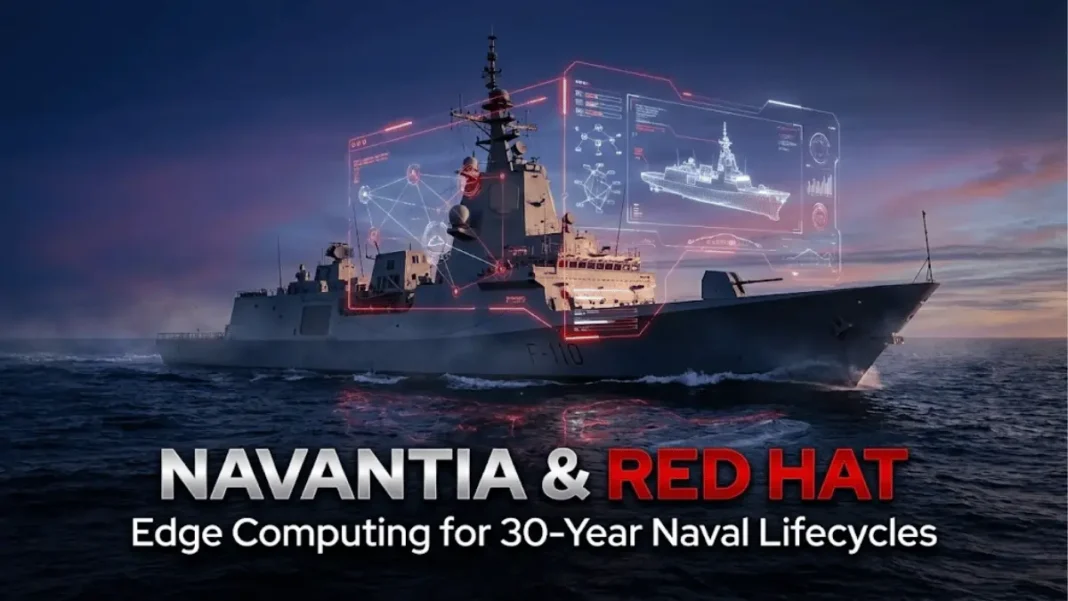
Navantia, the Spanish state-owned naval shipbuilder with over 300 years of maritime construction history, announced January 20, 2026, its deployment of Red Hat open-source technologies to modernize critical naval system development and management. The defense contractor, operating under the SEPI Group, implemented Red Hat Enterprise Linux, Red Hat Satellite, and Red Hat Device Edge to address the fundamental challenge of maintaining systems with 30-year lifecycles while technology platforms evolve rapidly.
The implementation, currently in advanced phases with Red Hat Consulting support, establishes a unified platform for consoles, containers, and virtual machines across Navantia’s naval operations.
Red Hat Platform Architecture for Extended Lifecycles
Navantia’s deployment centers on three integrated Red Hat technologies designed to decouple naval systems from hardware dependencies. Red Hat Enterprise Linux serves as the base operating system foundation, providing a stable environment for mission-critical applications across consoles, containerized workloads, and virtualized infrastructure. This standardization eliminates the fragmentation that occurs when naval platforms outlive the commercial technology they were originally built upon.
Red Hat Satellite delivers centralized management and security update distribution across Navantia’s distributed systems. The platform’s disconnected operation capability proves essential for naval applications, where vessels operate in air-gapped environments without continuous internet connectivity. Red Hat Satellite supports USB-based content delivery, enabling system administrators to update naval platforms when vessels return to port a deployment model specifically designed for maritime and aerospace applications.
Red Hat Device Edge extends management capabilities to resource-constrained edge devices at the tactical level. The lightweight platform supports containerized application deployment on small-footprint devices, enabling consistent operations across the spectrum from strategic core infrastructure to forward-deployed naval systems.

Hardware-Software Abstraction Strategy
The core technical objective of Navantia’s deployment focuses on creating an abstraction layer between naval combat systems and underlying hardware platforms. This architecture enables Navantia to upgrade or replace aging server and computing infrastructure without reengineering mission-critical software applications that control weapons systems, sensors, and propulsion.
Navantia identified enhanced control over systems through a common platform as the primary benefit, alongside automated deployments in challenging operational environments. The solution’s independence from cloud infrastructure or centralized data centers through portable deployment tools addresses the reality of naval operations where vessels spend months disconnected from shore-based networks.
AdwaitX analysis indicates this approach mirrors broader defense industry trends where platform lifecycles (ships, aircraft, armored vehicles) exceed technology refresh cycles by a factor of five to ten. The U.S. Navy, which signed a $133.4 million five-year agreement for Red Hat Enterprise Linux and Red Hat Satellite in 2017, demonstrated similar requirements for managing legacy systems while modernizing digital infrastructure.
Operational Efficiency and Predictive Maintenance
Beyond immediate system management, Navantia’s Red Hat platform enables future capabilities in simulation, predictive maintenance, and operational automation. The containerized application architecture supports deployment of AI-driven analytics for fleet management and equipment health monitoring without requiring wholesale replacement of existing naval platforms.
Red Hat Device Edge’s support for real-time data processing at the tactical edge reduces latency for critical decision-making systems while minimizing bandwidth requirements to shore-based command centers. This capability proves essential for modern naval operations where autonomous systems, sensor fusion, and AI-enhanced targeting require local processing power at the point of engagement.
The platform’s security architecture includes automated policy enforcement and compliance verification, addressing cybersecurity challenges in defense systems that traditionally run unpatched due to certification and testing requirements. By abstracting applications from hardware, Navantia can apply security updates to the operating system layer without re-certifying combat system software, a process that typically requires 18-24 months in defense procurement cycles.
Digital Shipbuilding and Industry 4.0 Integration
Navantia’s technology modernization extends beyond deployed naval systems to its shipyard operations through the “Navantia 4.0” program, which incorporates digital twins, automated welding, augmented reality, and smart logistics. The Red Hat platform provides the consistent infrastructure layer supporting both shipyard production systems and the vessels themselves, ensuring seamless technology transfer from construction to operational deployment.
The company’s specialization in complex naval platforms including submarines with Air-Independent Propulsion (AIP) systems, frigates, and amphibious assault ships demands precision in system integration across electrical, mechanical, and software domains. Red Hat’s open-source foundation enables Navantia to maintain proprietary combat system intellectual property while leveraging commodity computing infrastructure, avoiding vendor lock-in that plagues defense contractors operating multi-decade programs.
Strategic Defense Technology Roadmap
The deployment positions Navantia to deliver continuous capability improvements to existing naval platforms through software-defined upgrades rather than hardware replacement. This model aligns with global defense budget constraints where navies seek to extend service life of existing vessels through modernization programs rather than new construction.
Red Hat’s ecosystem of certified hardware and software partners provides Navantia flexibility to integrate emerging technologies such as AI-driven threat detection, quantum-resistant cryptography, and autonomous vehicle control as they mature without redesigning core platform architecture. The containerized deployment model enables Navantia to test new capabilities in laboratory environments, validate them in simulation, and deploy to operational vessels through the same Red Hat Satellite distribution infrastructure.
Frequently Asked Questions (FAQs)
What technology is Navantia deploying for naval systems?
Navantia deployed Red Hat Enterprise Linux as the base OS, Red Hat Satellite for centralized management and security updates, and Red Hat Device Edge for tactical edge device operations.
How does Red Hat Device Edge support naval operations?
Red Hat Device Edge enables containerized application deployment on resource-constrained devices at the tactical edge, supporting real-time processing in disconnected environments without cloud connectivity.
What is Red Hat Satellite’s role in defense systems?
Red Hat Satellite provides centralized system management, security patching, and content distribution via USB or disconnected networks critical for naval vessels operating in air-gapped environments.
Why do naval systems need 30-year lifecycle platforms?
Naval vessels remain operational for 30+ years while underlying technology evolves every 3-5 years. Hardware-software abstraction enables continuous modernization without platform replacement.

