

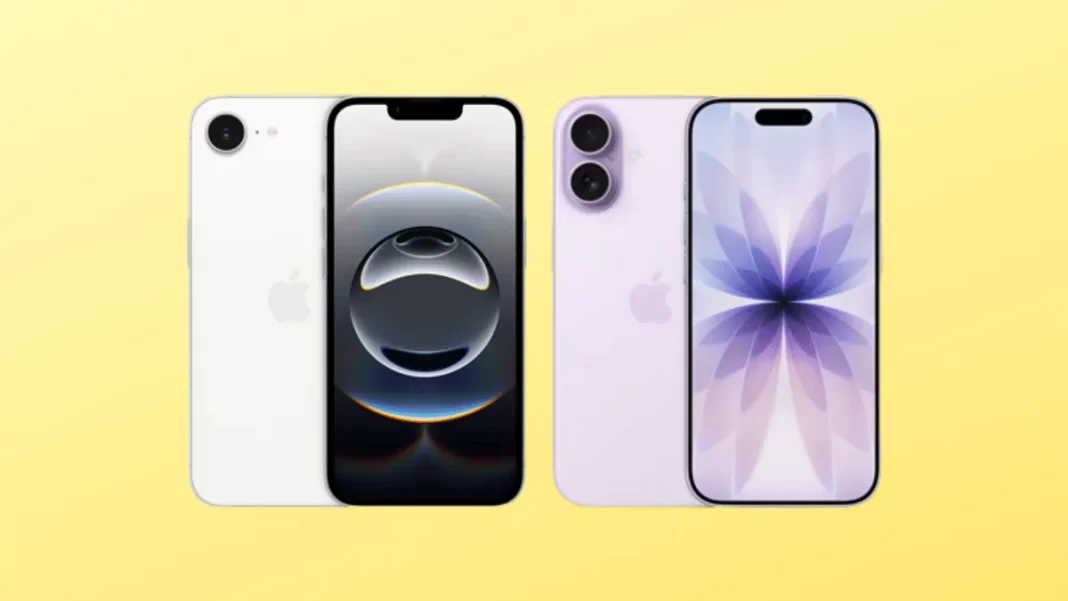
You’re picking between iPhone 17 vs iPhone 16e, and there’s a clean $200 gap. On paper the 16e covers the basics for less. In real life the 17’s screen, cameras, and storage change how the phone feels every day. Here’s the simple breakdown, based on current specs, pricing, and real-world use.
If you can stretch to the iPhone 17, do it. The base model adds a 120Hz display that makes everything feel snappier, an ultrawide camera for tight spaces and macro, better low-light selfies, and 256GB storage to grow into. The 16e is the safe pick if you want a modern iPhone at the lowest new price.
Table of Contents
Key Specs at a Glance
Price and storage: iPhone 16e starts at $599 with 128GB; iPhone 17 starts at $799 with 256GB. That base storage alone erases half the upgrade hesitation for many buyers who shoot video or keep apps offline.
Display: iPhone 17 steps up to 6.3 inches with ProMotion 120Hz and an always-on option. The 16e is 6.1 inches at 60Hz without always-on. If you scroll a lot or game, you’ll notice the difference immediately.
Cameras: iPhone 17 has a 48MP main + 48MP ultrawide, plus a sharper 18MP selfie with Center Stage for smarter framing. iPhone 16e keeps a single 48MP rear camera and a 12MP selfie. Ultrawide is the real unlock for travel, groups, and macro-style close-ups.
Performance and battery: iPhone 17 uses the A19 chip and is rated for up to 30 hours video playback. iPhone 16e runs A18 and is rated up to 26 hours. In third-party testing, the 16e already beats many older iPhones, but the 17 lasts longer and stays smoother under load.
Features and extras: iPhone 17 includes ProMotion, Always-On Display, Camera Control, and Dynamic Island. The 16e skips those, sticking to essentials with the Action button and Apple Intelligence.
What You Actually Feel in Daily Use
Scrolling and screen smoothness
Even if you don’t game, a 120Hz screen changes the feel of a phone. Scrolling looks clean, typing feels more immediate, and animations don’t stutter. Once you get used to it, 60Hz feels a touch sticky. If you keep phones 3–4 years, 120Hz is the safer bet for how iOS will evolve.
Photos, video, and ultrawide flexibility
The 16e’s single 48MP camera is capable. But you’ll miss an ultrawide more often than you think. Tight café corners. Hotel rooms. Big group shots. Food overheads. The iPhone 17 gives you that second angle and adds macro-style focus for close-ups. Selfies get a noticeable lift too with the higher-resolution front camera and smarter framing.
Battery and charging habits
Apple’s ratings put the iPhone 17 ahead. In lab-style tests, the 16e already lasts a full day for many users. The 17 pushes farther, especially under heavier photo, maps, and video use. If you travel or shoot a lot of 4K footage, that buffer is real peace of mind.
Storage headroom and app sizes
This is the quiet deal-breaker. Base 256GB on iPhone 17 means fewer hard choices. If you edit video, keep playlists offline, or download Netflix for flights, 128GB fills up fast. Jumping to 256GB on a 16e narrows the price gap, making the 17’s package the smarter buy.
Mini Case Studies
Student or light user:
You message, browse, take casual photos, and stream. The 16e will be fine at $599. If you can spend more, the 17’s 120Hz and bigger storage are nice-to-haves, not must-haves.
Social creator:
You shoot Reels and shorts, edit on phone, and need wide angles for tight rooms. The iPhone 17 is worth it for the ultrawide and extra storage alone, plus smoother scrubbing on a 120Hz screen.
Traveler or parent:
You rely on cameras in mixed light and want more framing options without stepping back. The 17’s ultrawide helps indoors and in crowded spots; its battery advantage also shows up on long days out.
Which One Should You Buy?
Go iPhone 16e if you:
- Want the cheapest new iPhone with modern design and Apple Intelligence
- Don’t care about 120Hz, always-on, or ultrawide photos
- Mostly shoot at 1x and rarely crop or edit video
- Are fine managing storage at 128GB or buying iCloud
Go iPhone 17 if you:
- Want a smoother 120Hz display for years of iOS updates
- Care about an ultrawide for travel, indoor, and macro-style shots
- Prefer 256GB baseline without paying for an upgrade
- Want slightly longer stamina under heavier use
Pros and Cons
iPhone 16e — Pros
- Lowest price for a modern iPhone
- A18 performance is more than enough for daily use
- Good main camera with clean 2x crop
- Action button and Apple Intelligence features onboard
iPhone 16e — Cons
- 60Hz screen and no always-on
- No ultrawide limits framing and macro-style shots
- 128GB base can feel tight fast
iPhone 17 — Pros
- 120Hz ProMotion and always-on for a premium feel
- Dual 48MP rear cameras plus sharper 18MP selfie
- 256GB base storage
- Better endurance and performance headroom
iPhone 17 — Cons
- Costs $200 more
- Slightly larger and heavier
- Some features still gated to Pro models
Detailed Comparison of iPhone 16e vs iPhone 17
| Category | iPhone 16e | iPhone 17 |
|---|---|---|
| Launch price (US) | $599 | $799 |
| Base storage | 128GB | 256GB |
| Display | 6.1″ OLED, 60Hz | 6.3″ OLED, ProMotion 120Hz, Always-On |
| Rear cameras | 48MP main | 48MP main + 48MP ultrawide |
| Front camera | 12MP | 18MP with Center Stage |
| Chip | A18 | A19 |
| Battery claim | Up to 26 hrs video playback | Up to 30 hrs video playback |
| Notable features | Action button, Apple Intelligence | Action button + Camera Control, Dynamic Island, Apple Intelligence |
Frequently Asked Questions (FAQs)
Is iPhone 17 finally 120Hz?
Yes. The base iPhone 17 gets ProMotion up to 120Hz with an always-on display.
Does iPhone 16e have Dynamic Island or always-on?
No. The 16e keeps things simple: 60Hz, no always-on, and no Dynamic Island.
How different are the cameras?
The 16e has one 48MP rear camera. The iPhone 17 adds a 48MP ultrawide and a sharper 18MP selfie with Center Stage.
What about battery life?
Apple rates the 17 for up to 30 hours of video playback vs 26 hours on the 16e; third-party testing shows strong all-day results for the 16e too.
Is the real price gap still $200 after storage?
Often less. If you’d buy the 16e at 256GB, the jump to the iPhone 17’s built-in 256GB narrows the difference.
Does the 16e support MagSafe/Qi2 or UWB?
Reports suggest the 16e omits MagSafe/Qi2 and UWB to cut costs. Apple’s product page doesn’t list them for 16e. Check your region before buying.
The Bottom Line and Checklist
Bottom: If you keep phones for a while, the iPhone 17 is the better long-term buy thanks to 120Hz, ultrawide, better selfies, and 256GB base storage. The iPhone 16e is the right call for tight budgets and basic use.
Checklist:
- Do you want smoother scrolling for years? → 17
- Will you miss an ultrawide for travel and tight rooms? → 17
- Need 256GB without paying extra? → 17
- Strict $599 budget and light use? → 16e
Featured Answer Boxes
Is the $200 upgrade from iPhone 16e to iPhone 17 worth it?
Usually, yes if you value a smoother 120Hz display, an ultrawide camera, longer stamina, and double base storage. The 16e is fine for basics and tight budgets, but the 17 feels faster and more future-proof for photos, video, and Apple Intelligence features.
Source: Apple

