

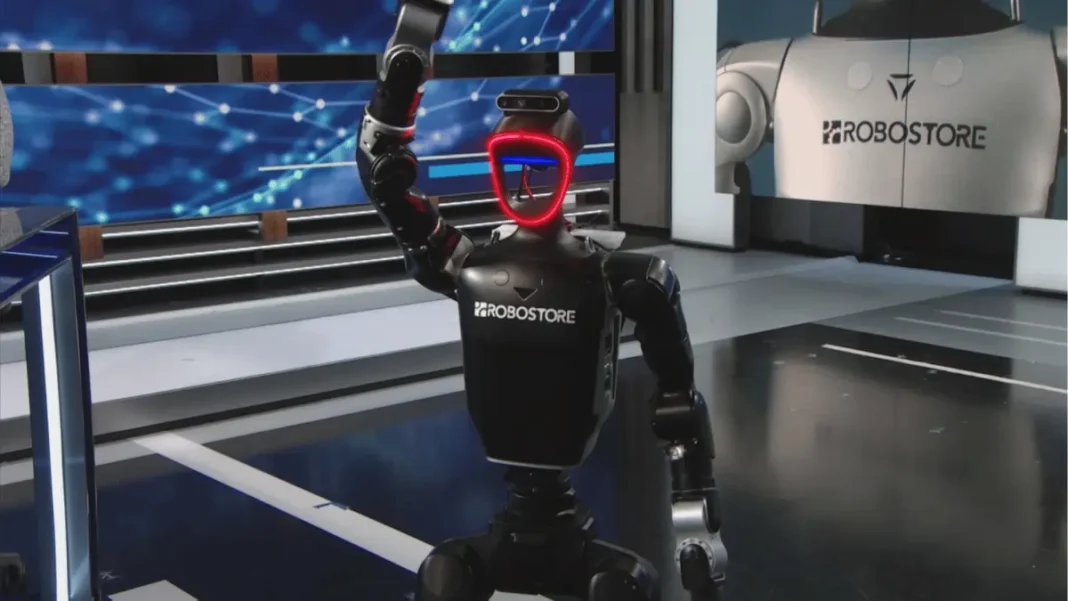
A humanoid robot appeared on CNBC’s “Power Lunch” on December 30, 2025, to answer whether artificial intelligence is experiencing a bubble. KOID, a Unitree G1 robot with a glowing facial ring and black metallic body, delivered a carefully hedged response that mirrored Wall Street analysts’ caution. The segment highlighted a stark reality: Chinese robotics companies are shipping functional humanoid robots while Tesla’s promised Optimus remains largely unavailable to consumers.
What Happened During the Interview
KOID told CNBC viewers that “considerable enthusiasm” surrounds AI but whether it constitutes a bubble “is something only time will reveal”. The 77-pound robot demonstrated the kind of diplomatic non-answer typical of market commentary during volatile periods.
RoboStore CEO Teddy Haggerty, who appeared alongside the robot, offered more direct insights. He confirmed the industry remains in a “prototyping stage” and that the fundamental question persists: what should robots actually do? This candid assessment contrasts sharply with the hype surrounding humanoid robotics investments.
The G1 model features 23 degrees of freedom and runs on Nvidia technology. It can perform tasks from dancing to boxing. Customers can purchase KOID through RoboStore, America’s largest distributor of Unitree robots, with prices ranging from $8,990 to $128,900 depending on configuration.
Why This Interview Matters Now
The timing reveals growing scrutiny of AI and robotics valuations. While Elon Musk claims Optimus robots will drive Tesla’s future worth, Chinese competitors are already delivering commercial products. Companies like Nissan and OpenAI use these robots for research and development.
China’s National Development and Reform Commission issued a rare bubble warning on November 27, 2025. Over 150 companies now operate in China’s humanoid robotics sector, with more than half being startups or companies pivoting from other industries. This rapid expansion raises sustainability questions.
KOID shares its name with the KraneShares Global Humanoid & Embodied Intelligence Index ETF, launched in June 2025 to capture the emerging market. The robot’s appearance on financial television reflects investor interest in separating genuine innovation from speculation.

Chinese Firms vs. Tesla’s Promises
The competitive landscape shows clear winners in product availability:
Current Market Reality:
- Unitree ships functional G1 and H2 models to global customers
- RoboStore distributes multiple Chinese humanoid robot brands in the U.S.
- Tesla’s Optimus remains in development with no clear consumer release date
- Chinese manufacturers achieve profitability while Western rivals burn cash
Unitree reported annual revenue exceeding $140 million and has operated profitably since 2020. The Hangzhou-based company is preparing for an IPO potentially valuing it at $7 billion, according to September 2025 reports. In October 2025, Unitree unveiled its 31-joint H2 model with bionic facial features, advancing its commercial product line.
Industry Reality Check
Haggerty’s acknowledgment of the prototyping phase contradicts rosy predictions about imminent robot adoption. The industry faces core challenges:
- Unclear use cases for home and business environments
- High costs limiting mass market appeal
- Technical limitations in real-world task performance
- Fragmented standards across manufacturers
Companies invest billions based on assumptions that robots will integrate into daily routines. KOID’s prediction that robots become “even more adaptable and integrated” remains unproven. The gap between current capabilities and promised utility creates bubble risk.
What Comes Next
Unitree’s planned IPO will test investor appetite for humanoid robotics at current valuations. The offering comes as AI investment skepticism grows and companies face pressure to demonstrate returns.
Multiple factors will determine whether this represents a bubble or genuine transformation:
- Real-world deployment success rates beyond research labs
- Development of practical use cases that justify consumer pricing
- Cost reduction enabling mass market adoption
- Regulatory frameworks for home and workplace robots
The industry sits at an inflection point. Chinese manufacturers gain market share through available products while Western competitors focus on ambitious long-term visions. Which strategy proves correct will shape the sector’s trajectory through 2026 and beyond.
KOID’s diplomatic “only time will tell” assessment may be the most accurate prediction offered during the December 30 segment. Investors and consumers will discover the answer as commercial deployments either validate or deflate current valuations.

Featured Snippet Boxes
Is KOID a real robot or just a promotional stunt?
KOID is a genuine Unitree G1 humanoid robot available for purchase through RoboStore, America’s largest Unitree distributor. It features 23 degrees of freedom, runs on Nvidia technology, and can perform various tasks. Prices range from $8,990 to $128,900 depending on model and customization options.
Why are Chinese humanoid robots available but not Tesla’s Optimus?
Chinese companies like Unitree prioritized commercial product development and already ship functional robots to customers globally. Unitree has been profitable since 2020 and generates over $140 million in annual revenue. Tesla’s Optimus remains in development with no confirmed consumer release date despite CEO Elon Musk’s claims.
Is the humanoid robotics industry experiencing a bubble?
China’s National Development and Reform Commission warned about bubble risks on November 27, 2025, noting over 150 companies operate in the sector with rapid startup growth. Industry experts acknowledge the field remains in a prototyping stage with unclear use cases and practical applications.
When did Unitree announce its newest humanoid robot?
Unitree unveiled its H2 humanoid robot with 31 joints and bionic facial features on October 20, 2025. The company is also preparing for an IPO that could value it at up to $7 billion, with filings expected in 2025-2026.

