

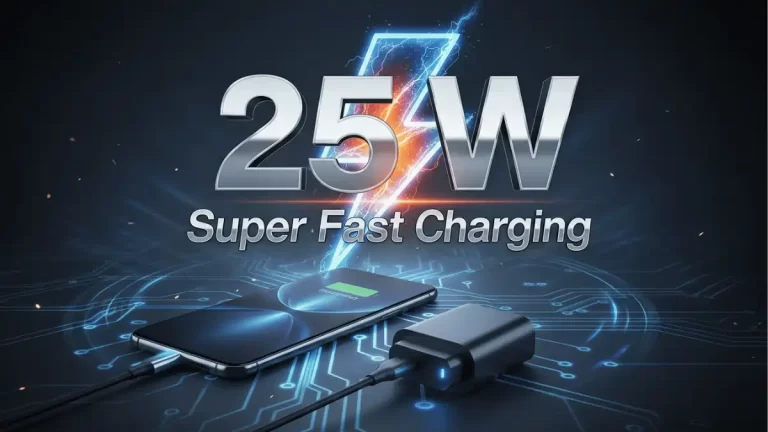
Definition: Samsung’s name for 25-watt wired charging that follows USB Power Delivery PPS. The charger and phone negotiate voltage and current in small steps to keep things efficient and cooler. Real charge time varies by battery level and heat. Using a certified 25 W PD PPS adapter typically gives the best results.
Example: A 25 W PD PPS brick can take a phone from low to about 50 percent in roughly half an hour.
Also called: 25W fast charging, PD PPS 25W
Related: PPS, USB Type-C, mAh
25 W
15 W Wireless
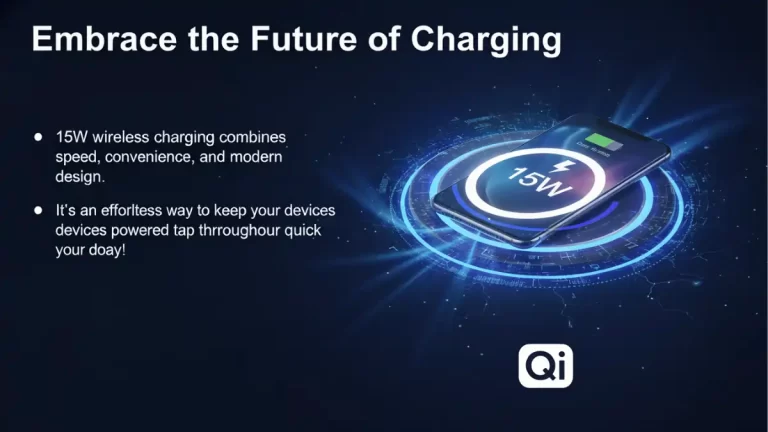
Definition: Wireless power transfer up to 15 watts using standards like Qi. The phone rests on a charging pad or stand; power moves through coils using electromagnetic induction. Charging speed depends on pad quality, alignment, temperature, and the phone’s thermal limits. Wireless is usually slower and less efficient than a good wired charger, but it is convenient on desks and nightstands.
Example: Dropping the phone on a Qi stand at work tops it up at up to 15 W.
Also called: 15W Qi charging
Related: Reverse wireless charging, USB Type-C, PPS
120 Hz
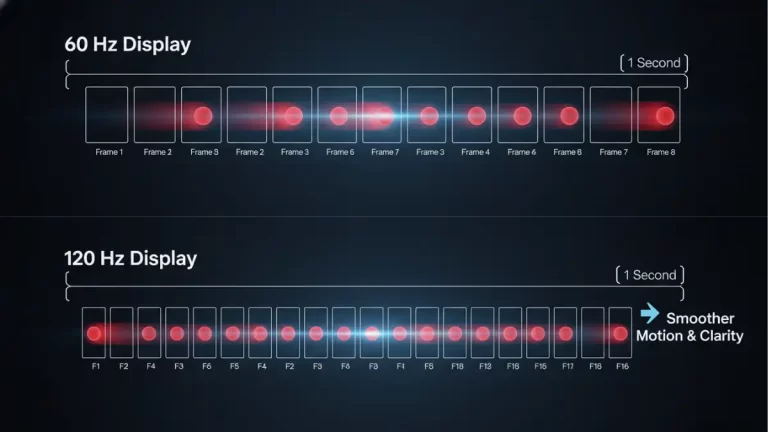
Definition: A display that refreshes 120 times per second. Higher refresh rates make motion look smoother and reduce blur when you scroll, play games, or switch apps. The trade-off is slightly higher power use, though adaptive modes may drop to lower rates to save battery. Most 120 Hz panels also support touch sampling above 120 Hz, which can improve responsiveness in games and drawing apps.
Example: Scrolling Twitter on a 120 Hz screen looks fluid compared to a 60 Hz display.
Also called: 120Hz, 120 hertz
Related: Dynamic AMOLED 2X, Refresh rate (via 120 Hz), Vision Booster
HTTP
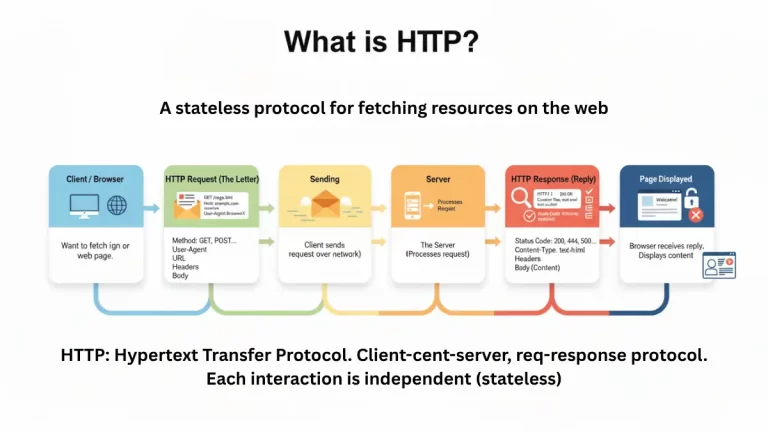
Definition: Hypertext Transfer Protocol is the application layer protocol most web APIs use to exchange requests and responses. It defines methods like GET, POST, PUT, and DELETE, status codes, headers, and message bodies. Modern APIs typically run over HTTPS, which wraps HTTP in Transport Layer Security to encrypt traffic and verify server identity. HTTP/2 introduces multiplexed streams over one connection, improving latency, while HTTP/3 builds on QUIC. Intermediaries such as proxies, gateways, and CDNs can observe or modify headers and caching behavior. Understanding method semantics and idempotency helps design predictable APIs and safe retries. Content negotiation selects formats via headers wisely.
Example: A server returns 200 OK with a JSON body.
Also called: Hypertext Transfer Protocol
Related: Header, Status code, REST (Representational State Transfer)
API
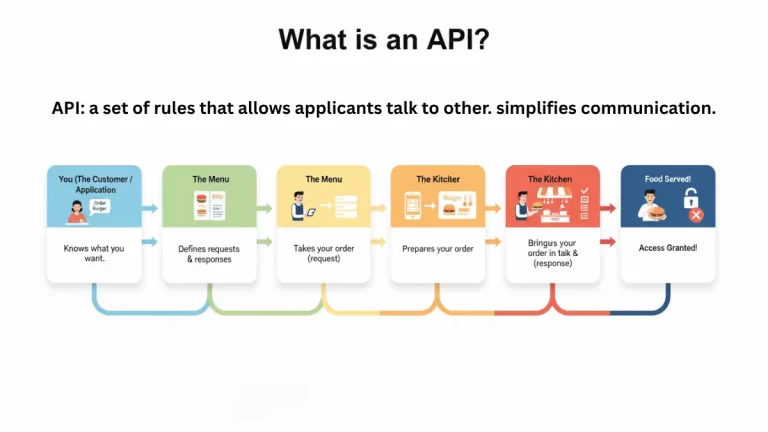
Definition: An API (Application Programming Interface) is a defined way for software components to communicate using requests and responses. It specifies available operations, input formats, output formats, and error handling, so different programs can work together reliably. APIs may be local, between processes on one machine, or remote over a network using protocols like HTTP. Public APIs expose services to external developers, while private or internal APIs support a company’s own systems. Styles include REST, GraphQL, and gRPC. Good APIs document endpoints, authentication, rate limits, and versioning, and often publish schemas such as OpenAPI for tooling and testing support. Monitoring tools track real usage.
Example: A weather app uses a forecast API to fetch tomorrow’s temperature in Celsius.
Also called: Application Programming Interface
Related: HTTP (Hypertext Transfer Protocol), REST (Representational State Transfer), GraphQL, OpenAPI Specification (OAS)
Access token
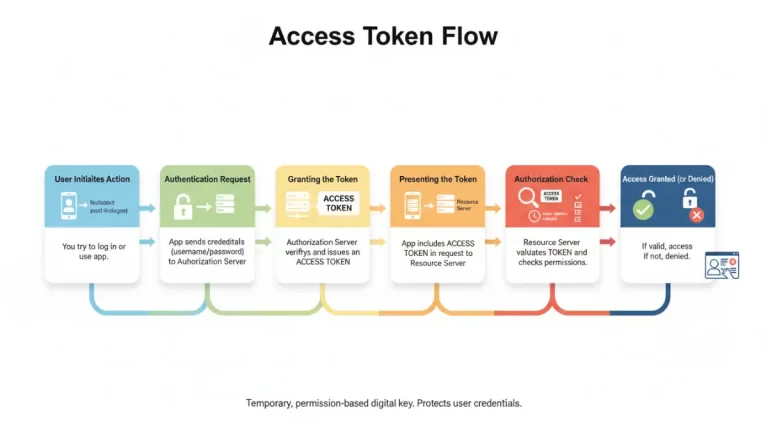
Definition: An access token is a short-lived credential a client sends to an API to prove permission to call protected endpoints. Servers validate the token before processing. Tokens usually carry scopes, expiry time, and issuer details, as either opaque strings or JSON Web Tokens. They must be stored securely and transmitted only over HTTPS. Most clients include tokens in the HTTP Authorization header using the Bearer scheme. When a token expires, the request fails with an authorization error. A companion refresh token can obtain a new access token without reauthenticating the user. Access tokens should be scoped narrowly to reduce risk.
Example: A mobile app sends Bearer abc123 in the Authorization header to call /me.
Also called: bearer token
Related: Authentication, Authorization, OAuth 2.0, API Key, HTTP (Hypertext Transfer Protocol)
Sparse attention
• A way for AI models to look at only the most useful parts of text instead of everything at once.
• It skips less relevant tokens to save time and memory.
Why it matters
- Sparse attention can make long-context tasks faster and cheaper without a big hit to quality. If you’re summarizing a 100-page PDF, it may finish quicker and use less GPU or phone memory. Many modern large-context models use it to scale beyond 100K tokens. The trade-off: if the selection is too sparse, the model might miss details or nuance.
Also called:
- sparse transformer, block-sparse attention, local-global attention
Short excerpt:
- Sparse attention speeds up long-context AI by focusing compute on the most relevant tokens.
eSIM
• eSIM (embedded SIM) is a tiny chip built into your phone that stores your mobile plan digitally.
• It lets you activate or switch carriers without a physical SIM card.
Why it matters
eSIM can make life easier: you can add a second line for work, keep your personal number, or grab a local plan while traveling without hunting for a store. Setup is usually quick scan a QR code or use your carrier’s app. It may also free up the SIM tray for dual-SIM use on some phones. One catch: support varies by carrier and country, and some devices allow only one active eSIM profile at a time.
You’ll see it on AdwaitX as:
• Dual SIM (nano + eSIM)
Also called:
• embedded SIM, embedded UICC, digital SIM
Short excerpt:
• A built-in digital SIM that lets you activate mobile plans without a physical card.