

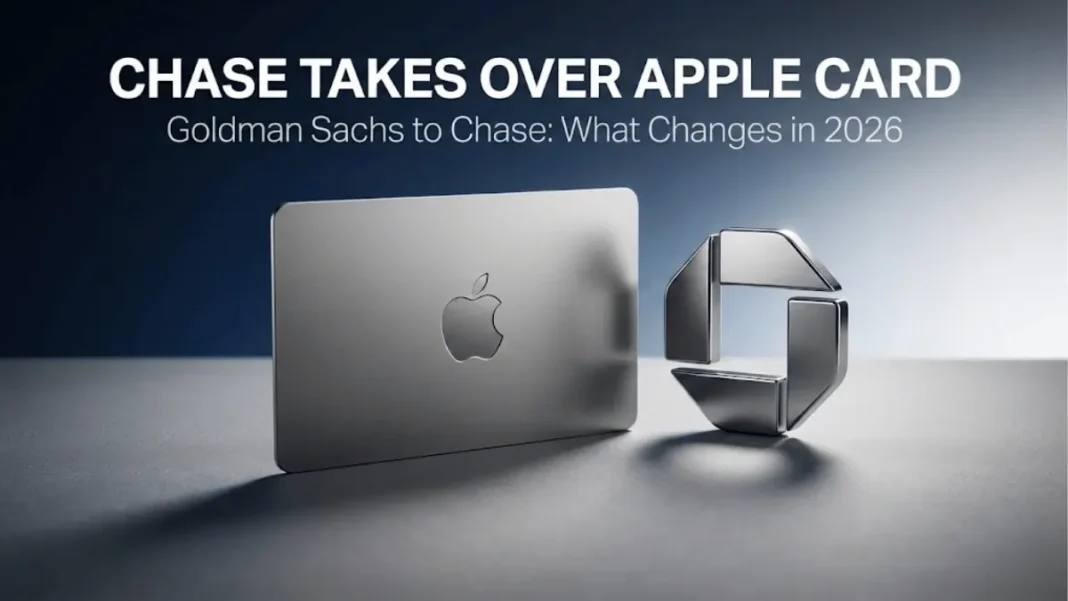
Apple and JPMorgan Chase announced Wednesday that Chase will become the new issuer of Apple Card, replacing Goldman Sachs after a seven-year partnership. The transition is expected to take approximately 24 months, with all current features remaining intact. Goldman Sachs will offload roughly $20 billion in card balances at a $1 billion discount as it completes its exit from consumer banking.
What’s Changing
Chase will take full control of Apple Card issuance and management while Mastercard remains the payment network. Apple Card users can continue using their cards normally during the transition period, which should conclude by early 2028.
Goldman Sachs announced the deal alongside Apple and Chase on January 7, 2026. The bank expects a $0.46 earnings per share increase in Q4 2025 results, reflecting a $2.48 billion release of loan loss reserves, partially offset by $2.26 billion in markdowns on the loan portfolio and contract termination costs.
JPMorgan stated the deal brings over $20 billion in card balances to Chase’s already dominant credit card portfolio. The bank will need to issue new physical cards to existing cardholders and establish a new Apple Savings account, though users can choose to keep their current Goldman-backed accounts.
Why Goldman Sachs Is Leaving
Goldman Sachs has been retreating from consumer finance since 2022 after significant losses from its consumer banking ventures. The Apple Card partnership, launched in 2019, resulted in a $1.2 billion loss for Goldman in 2022 alone, with the platform solutions unit recording an $859 million net loss in 2024.
“This transaction substantially completes the narrowing of our focus in our consumer business,” said David Solomon, Goldman Sachs Chairman and CEO. The firm is refocusing on its core franchises in Global Banking & Markets and Asset & Wealth Management.
Higher-than-expected delinquency rates among Apple Card users contributed to the program’s challenges for Goldman Sachs, which lacked the infrastructure for large-scale consumer lending. Negotiations between Apple and JPMorgan Chase lasted over a year before reaching this agreement.

What Stays the Same for Users
All key Apple Card features will continue unchanged under Chase. Users keep:
- Up to 3% unlimited Daily Cash back on every purchase
- Zero fees (no annual, late, international, or over-limit fees)
- Apple Card Family sharing with up to five people
- Access to high-yield Savings accounts
- Apple Card Monthly Installments (ACMI) for interest-free Apple product purchases
- Easy spending tracking and management through Apple Wallet
Mastercard will remain the payment network, ensuring continued global acceptance and Mastercard benefits. Jennifer Bailey, Apple’s vice president of Apple Pay and Apple Wallet, emphasized that “Chase shares our commitment to innovation and delivering products and services that enhance consumers’ lives”.
| Feature | Current (Goldman Sachs) | After Transition (Chase) |
|---|---|---|
| Daily Cash Rewards | Up to 3% back | Up to 3% back (unchanged) |
| Fees | Zero fees | Zero fees (unchanged) |
| Payment Network | Mastercard | Mastercard (unchanged) |
| Savings Account | Goldman Sachs, high-yield | Chase, high-yield expected |
| Apple Card Family | Available | Available (unchanged) |
| Monthly Installments | ACMI available | ACMI available (unchanged) |
| Issuing Bank | Goldman Sachs Bank USA | JPMorgan Chase |
| Transition Timeline | Active until ~2028 | Takes over ~2028 |
Chase’s Role and Experience
Chase is the largest credit card issuer in the United States and operates one of the industry’s leading co-brand credit card programs. Allison Beer, Chase’s CEO of Card & Connected Commerce, called Apple “an iconic brand recognized globally for its innovation, design excellence, and commitment to delivering exceptional customer experiences”.
The partnership represents a major win for JPMorgan Chase in the competitive credit card market. Chase’s extensive experience with consumer banking and credit card operations positions it to scale Apple Card operations more effectively than Goldman Sachs could.
Timeline and Next Steps
The 24-month transition period gives both companies time to migrate millions of accounts smoothly. Goldman Sachs will continue operating the Apple Card program and recording business results until the transition completes.
Apple has set up a dedicated transition information page at learn.applecard.apple/transition where users can find FAQs and updates. Additional details will be shared with cardholders as the transition date approaches.
Current Apple Card users don’t need to take any action immediately. Cards will continue working as normal, and Chase will handle the technical migration behind the scenes. Users applying for new Apple Cards today will still be issued by Goldman Sachs until the transition occurs.
What This Means for the Industry
This partnership shift signals broader trends in financial services. Goldman Sachs’s retreat from consumer banking follows similar moves by other investment banks that struggled to compete with retail banking giants. The Apple Card program required massive consumer lending infrastructure that Goldman lacked.
For JPMorgan Chase, the deal strengthens its position in digital banking and fintech partnerships. Chase gains access to Apple’s ecosystem of over 1 billion active device users worldwide, potentially expanding its customer base significantly.
The transition also demonstrates Apple’s commitment to Apple Card despite the banking partner change. Launched in 2019, Apple Card quickly became popular for its privacy-focused design, no-fee structure, and seamless integration with Apple Pay and Apple Wallet.
Impact on Savings Accounts
Apple Card Savings accounts, currently provided by Goldman Sachs Bank USA, will transition to Chase management. Users will have the option to transfer their savings to a new Chase-backed Apple Savings account or maintain their existing Goldman accounts.
Daily Cash rewards will continue automatically depositing into Savings accounts as they do currently. The high-yield nature of the Savings account is expected to remain a key feature under Chase, though specific interest rates will be determined closer to the transition.

Featured Snippet Boxes
Do I need to apply for a new Apple Card when Chase takes over?
No. The transition will happen automatically. Chase will issue new physical cards to existing cardholders during the 24-month transition period, but you don’t need to reapply or undergo a new credit check.
Will my Apple Card rewards and Daily Cash change with Chase?
No. All current benefits remain unchanged, including up to 3% Daily Cash back, zero fees, and Apple Card Monthly Installments. Mastercard stays as the payment network.
Why did Goldman Sachs stop issuing Apple Card?
Goldman Sachs is exiting consumer banking after losing over $1 billion from the Apple Card program. The bank lacked consumer lending infrastructure and faced higher delinquency rates than anticipated.
When exactly will Chase take over my Apple Card account?
The transition will occur within approximately 24 months from January 2026, likely by early 2028. Apple will notify cardholders with specific details as the date approaches.

