

Quick Brief
- The Shift: Alibaba Cloud deploys WebAuthn and IDaaS EIAM for enterprise passwordless authentication, eliminating SMS-based multi-factor authentication (MFA) vulnerabilities.
- The Impact: Nearly 50% of data breaches stem from stolen credentials; passwordless biometric methods offer up to 99% accuracy in face recognition.
- The Context: Global passwordless authentication market projected to reach $92.69B by 2034 according to Precedence Research, driven by rising smishing attacks and cloud adoption.
- Market Position: Cloud-based deployment captures 53.90% market share in 2025; Asia-Pacific leads fastest growth trajectory.
Alibaba Cloud has integrated WebAuthn-based passwordless authentication into its Identity as a Service (IDaaS) Enterprise Identity Access Management (EIAM) platform, marking a strategic pivot away from SMS-based multi-factor authentication. The deployment addresses escalating security vulnerabilities as the 2022 Verizon Data Breach Investigations Report confirms stolen credentials were involved in nearly 50% of breaches, with web application attacks showing exposure rates exceeding 80%.
Infrastructure Transition Details
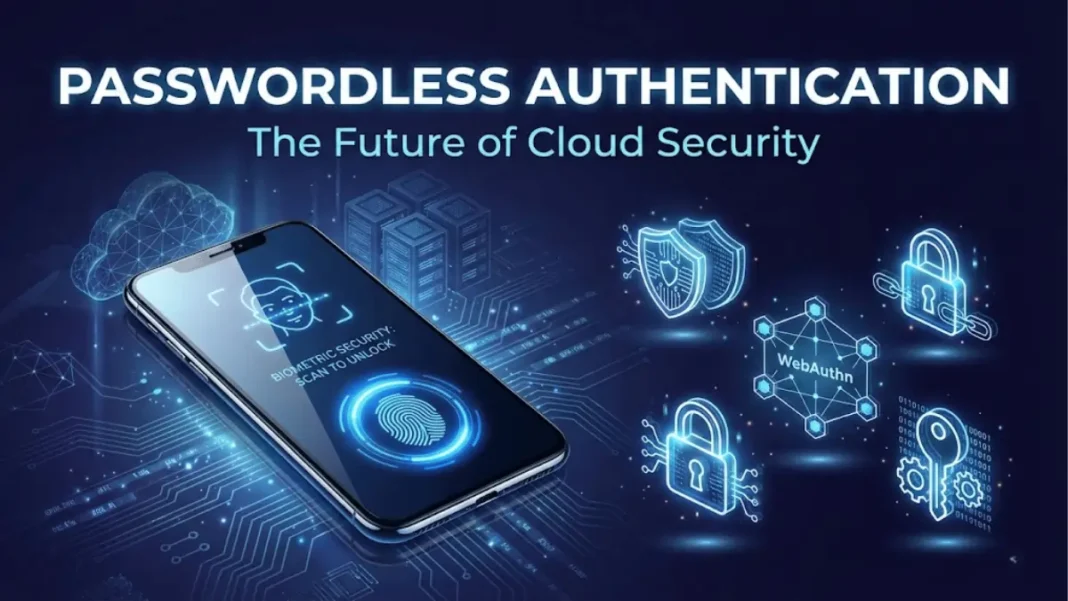
The IDaaS EIAM platform now enforces two-factor authentication by default for all enterprise accounts, replacing traditional SMS one-time passwords (OTPs) with possession-factor and biometric-based verification. WebAuthn enables password-free login by verifying users through fingerprint, facial recognition, or hardware security keys rather than knowledge-based credentials.
Alibaba Cloud integrates ZOLOZ RealID for liveness detection with up to 99% face recognition accuracy and advanced spoof detection capabilities. The system operates across all web applications connected to IDaaS single sign-on (SSO), creating immediate enterprise-wide protection layers. Two-factor authentication becomes mandatory before access grants, with risk control verification triggering for sensitive operations including instance deletion, batch account removal, and key rotation.
Security Architecture Analysis
SMS-based MFA faces critical vulnerabilities through SIM swapping attacks, where threat actors manipulate mobile carriers to redirect phone numbers, and signal spoofing that intercepts authentication codes. Smishing attacks exploit inherent SMS trust, with AI-generated polymorphic messages bypassing traditional spam filters.
WebAuthn addresses these attack vectors through device-based verification and cryptographic key pairs. The protocol eliminates plaintext password transmission, reducing cyber risks associated with credential theft. Alibaba Cloud layers business-level signature and encryption atop HTTPS for end-to-end security during cross-origin requests.
| Authentication Method | Security Level | Phishing Resistance | User Friction |
|---|---|---|---|
| SMS OTP | Low | No | High |
| WebAuthn Biometric | High | Yes | Low |
| Hardware Tokens | High | Yes | Medium |
| Password + Call Center | Medium | No | Very High |

Enterprise Deployment Challenges
Organizations face significant capital investment requirements for biometric infrastructure and hardware token distribution. Privacy concerns emerge around biometric data tracking, while false rejection rates persist despite high accuracy thresholds. Multi-device management complexity increases as employees access cloud resources from diverse endpoints.
The passwordless authentication market addresses these barriers through cloud-based Identity and Access Management (IAM) services via platforms including Microsoft Entra ID and Okta. Cloud deployment eliminates on-premises hardware costs while enabling global scalability.
Market Trajectory and Regulatory Drivers
The global passwordless authentication market is projected to reach $92.69 billion by 2034 according to Precedence Research, propelled by GDPR and NIST compliance mandates requiring stronger authentication measures. Cloud-based deployment models captured 53.90% market share in 2025 as digital transformation accelerates.
Asia-Pacific emerges as the fastest-growing region, driven by cybersecurity investments in China, India, and Japan. E-commerce expansion, mobile payment proliferation, and cloud application adoption intensify demand for trusted authentication solutions. Government and corporate awareness of security vulnerabilities in high-risk sectors amplifies passwordless technology adoption.
Strategic Implementation Roadmap
Enterprises transitioning to passwordless authentication should prioritize phased rollout strategies beginning with high-privilege accounts. Integration with existing IAM systems requires API compatibility testing and backup authentication method configuration. Organizations must establish device enrollment protocols supporting multiple form factors including smartphones, tablets, and workstations.
AI-driven adaptive authentication will enhance anomaly detection and threat prediction capabilities. Tighter integration between MFA and comprehensive IAM solutions streamlines security management while reducing IT support costs associated with password resets.

Frequently Asked Questions (FAQs)
Why is SMS-based MFA no longer secure in 2026?
SMS authentication fails against SIM swapping, signal spoofing, and AI-generated smishing attacks that bypass traditional filters. Cybercriminals intercept codes through mobile network vulnerabilities.
What is passwordless authentication and how does it work?
Passwordless authentication verifies users through biometrics (fingerprint, face, iris), hardware tokens, or device-based cryptographic keys instead of passwords, eliminating credential theft risks.
How does WebAuthn improve enterprise cloud security?
WebAuthn uses device verification and cryptographic key pairs, resisting phishing and man-in-the-middle attacks. It provides up to 99% face recognition accuracy while removing password transmission vulnerabilities.
What are the costs of implementing passwordless MFA?
Organizations require significant investment in biometric infrastructure, hardware tokens, and IAM platform integration. Cloud-based solutions reduce on-premises hardware expenses while enabling scalable deployment.

