

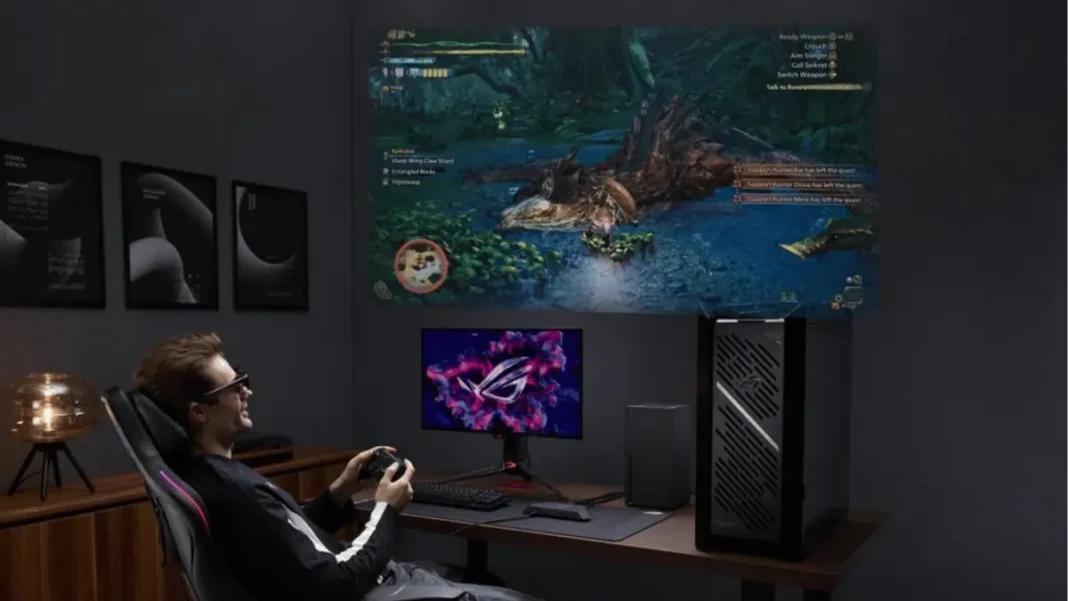
ASUS Republic of Gamers announced the ROG XREAL R1 at CES 2026 on January 5, 2026 the world’s first AR gaming glasses with a 240Hz micro-OLED display. Built in partnership with XREAL, the wearable device projects a 171-inch virtual screen and connects to ROG Ally handhelds, PCs, and consoles through a dedicated control dock. The glasses weigh just 91 grams and target gamers seeking big-screen experiences on the go.
What’s New
The ROG XREAL R1 features a Sony 0.55-inch micro-OLED display with 1920×1080 FHD resolution and an industry-first 240Hz refresh rate double the 120Hz standard found in most AR glasses. The glasses deliver a 57° field of view, projecting a virtual screen equivalent to 171 inches when viewed from 4 meters away. Motion-to-photon latency sits at 3ms, promising responsive gameplay without blur or jitter.
ASUS includes the ROG Control Dock (model GCD01) with two HDMI 2.0 ports and one DisplayPort 1.4 port for switching between gaming devices. ROG Ally users can connect directly via USB-C for plug-and-play setup with no configuration required. The glasses support both Anchor mode which pins the virtual screen to a fixed position and Follow mode, powered by XREAL’s X1 spatial computing chip.
Electrochromic lens technology automatically adjusts transparency based on where the wearer looks. The lenses tint when viewing the anchored screen and clear when looking away, with three manual dimming levels available. Sound by Bose technology provides spatial audio for footsteps, explosions, and directional cues.
Why It Matters
The 240Hz refresh rate positions the ROG XREAL R1 ahead of competing gaming glasses like the Lenovo Legion Glasses Gen 2, which max out at 120Hz. For competitive and fast-paced gaming, the doubled refresh rate reduces motion blur and improves tracking of fast-moving objects. The partnership combines ASUS’s gaming hardware expertise with XREAL’s consumer AR leadership.
The ROG Ally integration is particularly significant handheld gamers get a giant-screen experience without carrying an external monitor. At 91 grams, the glasses remain light enough for extended gaming sessions while delivering desktop-level visuals.

Compatibility and Connectivity
Supported Devices
- ROG Ally and ROG Ally X via USB-C (zero setup)
- Windows PCs via DisplayPort 1.4 or HDMI 2.0
- Gaming consoles (PlayStation, Xbox) via HDMI 2.0
- Smartphones with USB-C output
The Control Dock enables quick device switching with a single button press, supporting up to 4K@60Hz output. Users retain full touchscreen access on the ROG Ally while wearing the glasses. The dock measures 215×100×25mm and weighs 230 grams.
Technical Specifications
| Feature | Specification |
|---|---|
| Display | Sony 0.55″ micro-OLED |
| Resolution | 1920×1080 FHD per eye |
| Refresh Rate | 240Hz |
| Field of View | 57° |
| Latency | 3ms motion-to-photon |
| Brightness | 700 nits |
| Color Gamut | 107% sRGB |
| Tracking | Native 3 DoF, 6 DoF supported |
| Audio | Sound by Bose |
| Weight | 91g (glasses only) |
The electrochromic lenses offer three adjustable dimming levels for different lighting conditions. Native 3 Degrees of Freedom (DoF) tracking allows head movement within the virtual space, with 6 DoF support available for advanced applications.
What’s Next
ASUS confirmed the ROG XREAL R1 will ship globally in the first half of 2026. The company has not announced pricing, but industry observers expect the glasses to cost more than the current XREAL 1S model priced at $449, given the higher refresh rate and gaming-focused features. Regional availability and India-specific pricing will be announced separately.
The glasses were on display at the ASUS ROG booth at The Venetian and XREAL locations during CES 2026 in Las Vegas. ASUS has not revealed whether future updates will add features like prescription lens compatibility or improved battery life for extended gaming sessions.

Featured Snippet Boxes
What are the ROG XREAL R1 gaming glasses?
The ROG XREAL R1 are wearable AR glasses with a 240Hz micro-OLED display that projects a 171-inch virtual screen. They connect to ROG Ally handhelds, PCs, and consoles for gaming on the go, weighing just 91 grams with Sound by Bose audio.
When will the ROG XREAL R1 be available?
ASUS confirmed the ROG XREAL R1 will launch globally in the first half of 2026. The company displayed the glasses at CES 2026 in Las Vegas from January 5-8, 2026.
How much will the ROG XREAL R1 cost?
ASUS has not announced official pricing for the ROG XREAL R1. Industry sources expect the cost to exceed $449 the current price of XREAL’s 1S model due to the 240Hz refresh rate and gaming features.
Do ROG XREAL R1 glasses work with PlayStation and Xbox?
Yes, the ROG XREAL R1 works with gaming consoles through the included ROG Control Dock, which has two HDMI 2.0 ports. The dock supports 4K@60Hz output and allows switching between PC and console devices.

