

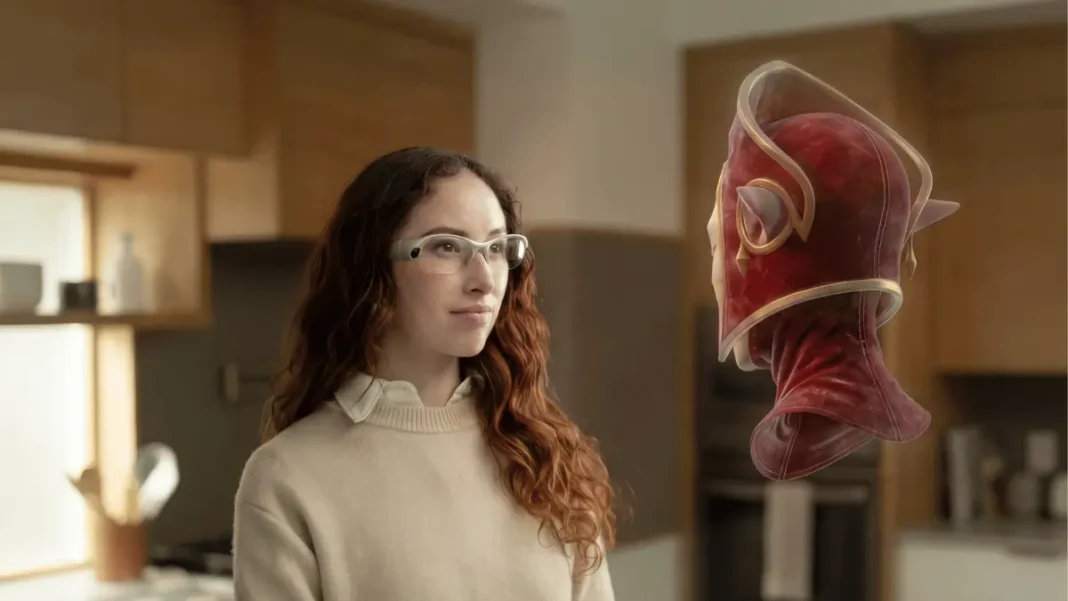
California-based startup Pickle opened pre-orders January 1, 2026, for Pickle 1 a pair of AI-powered AR glasses the company calls the world’s first “Soul Computer”. Priced at $799 for early adopters (regular $1,300), the device promises to see, remember, and anticipate your daily life through a proactive AI that learns your habits and executes tasks autonomously. Deliveries begin Q2 2026 in the U.S., with international rollout to follow.
What Is Pickle 1
Pickle 1 is a 68-gram aluminum AR wearable powered by Pickle OS, a memory-driven operating system that continuously records audio and visual context from dual cameras and microphones. Unlike voice assistants that wait for commands, Pickle 1 analyzes real-time context and proactively surfaces suggestions, reminders, and actions booking rides, sending messages, making reservations, or shopping without manual input.
The system organizes experiences into searchable “memory bubbles” that can be recalled later, such as details from a conversation weeks ago or preferences mentioned in passing. An interactive avatar interface appears in the AR display, conversing with users and representing them in virtual meetings via a digital avatar.
Hardware includes a Qualcomm Snapdragon processor for low-latency AR and AI tasks, a binocular full-color waveguide display (claimed as the widest field-of-view for standalone AR glasses as of December 2025), spatial audio, and up to 12 hours of mixed-use battery life. A built-in fingerprint scanner ensures only the wearer can unlock the device.
Why It Matters
Pickle 1 represents a shift from reactive to proactive AI companions in wearable tech. Most AR glasses like Meta’s Ray-Ban collaboration or Xreal’s displays require users to trigger actions through voice commands or gestures. Pickle’s approach automates routine decisions by learning user patterns over days of use, potentially reducing friction in daily workflows.
The memory system addresses a practical pain point: recalling fragmented details from conversations, meetings, or fleeting thoughts. For professionals juggling multiple contexts or neurodiverse users who benefit from external memory aids, a persistent AI that logs and retrieves episodic information could improve productivity and reduce cognitive load.
At $799 for the first batch, Pickle undercuts enterprise AR devices that cost thousands while offering broader AI integration than consumer-focused alternatives. If the hardware and software deliver on promises, it could accelerate mainstream AR adoption beyond niche use cases.
How Pickle OS Works
Pickle OS processes reality into “connected memories” every second, storing visual context, preferences, and behavioral patterns. The AI develops a distinct personality over time, adapting its responses and suggestions based on accumulated data. Users interact through natural conversation rather than navigating menus or apps.
Key capabilities include:
- Anticipatory actions: Detect when you’re running late and automatically order a ride
- Contextual recall: Surface a note you made three months ago when the topic resurfaces
- Ambient suggestions: Recommend music, products, or ideas by observing your current environment
- Avatar representation: Send your digital twin to attend virtual meetings while you multitask
The system evolves through daily use Pickle estimates 3+ hours of interaction per day with 50+ verbal or visual exchanges for optimal personalization.
Privacy and Security Architecture
Pickle employs end-to-end encryption with master keys generated and stored exclusively on the user’s device never transmitted to company servers. AI processing occurs in hardware-isolated AWS Nitro Enclaves, where data is decrypted only in volatile memory (RAM) and wiped immediately after inference tasks complete.
Third-party AI providers process requests via blind-relay TLS tunnels through stateless routing, with contractual restrictions against logging or training on user data. Ephemeral encryption keys exist only during active sessions and are destroyed upon termination, ensuring forward secrecy.
The system supports reproducible builds: users can verify the cryptographic hash of server binaries matches open-source code published on GitHub, mathematically guaranteeing no hidden backdoors. Account deletion triggers irreversible key destruction, rendering encrypted data permanently unrecoverable within 30 days.
Fingerprint authentication and instant “off-the-record” controls give wearers granular control over recording permissions.
Pickle 1 vs. Competitors
| Feature | Pickle 1 | Meta Ray-Ban | Xreal Air |
|---|---|---|---|
| AI Model | Proactive, learns behavior | Reactive voice assistant | Display only, no AI |
| Memory System | Persistent memory bubbles | Session-based | None |
| Privacy | On-device keys, open-source enclaves | Meta servers, proprietary | No data processing |
| Display | Binocular AR, widest FOV claim | None (camera-only) | Full AR screen |
| Price | $799–$1,300 | $299 | $379 |
| Weight | 68g | 50g | 79g |
Pickle differentiates through autonomous task execution and long-term memory, while Meta focuses on social capture and Xreal prioritizes display quality for media consumption.
What’s Next
Pre-orders require a $200 fully refundable deposit, with first shipments targeting Q2 2026 in the United States. International availability and prescription lens options have not been confirmed but are expected later in 2026.
Pickle has not disclosed production volume for the initial batch or detailed upgrade timelines. The company warns that generative AI features “may produce inaccurate, inconsistent, or fictional information” and advises independent verification of critical outputs. High-performance AR tasks may trigger thermal throttling or automatic shutdown if the aluminum frame exceeds safety temperatures.
Founded in 2024 by CEO Daniel Park, Sanio Jung, and Emmett Kim, Pickle completed Y Combinator’s accelerator program before launching its first hardware product. The announcement post accumulated millions of views within 48 hours of release.

Featured Snippet Boxes
What is Pickle 1 Soul Computer?
Pickle 1 is an AI-powered AR glasses that continuously records your daily life, organizes experiences into searchable “memory bubbles,” and proactively executes tasks like booking rides or sending messages without commands.
How much does Pickle 1 cost?
Early pre-orders cost $799 with a $200 refundable deposit; the regular price is $1,300. Shipping starts Q2 2026 in the U.S., with international availability later.
Is Pickle 1 private and secure?
Yes Pickle uses on-device encryption keys never sent to servers, processes data in isolated AWS enclaves, and offers open-source code verification. Users can delete all data irreversibly via key destruction.
What makes Pickle 1 different from other AR glasses?
Unlike reactive assistants (Meta Ray-Ban) or display-only devices (Xreal), Pickle 1 learns your behavior over time and autonomously handles tasks before you ask. Its memory system recalls past conversations and preferences contextually.

