

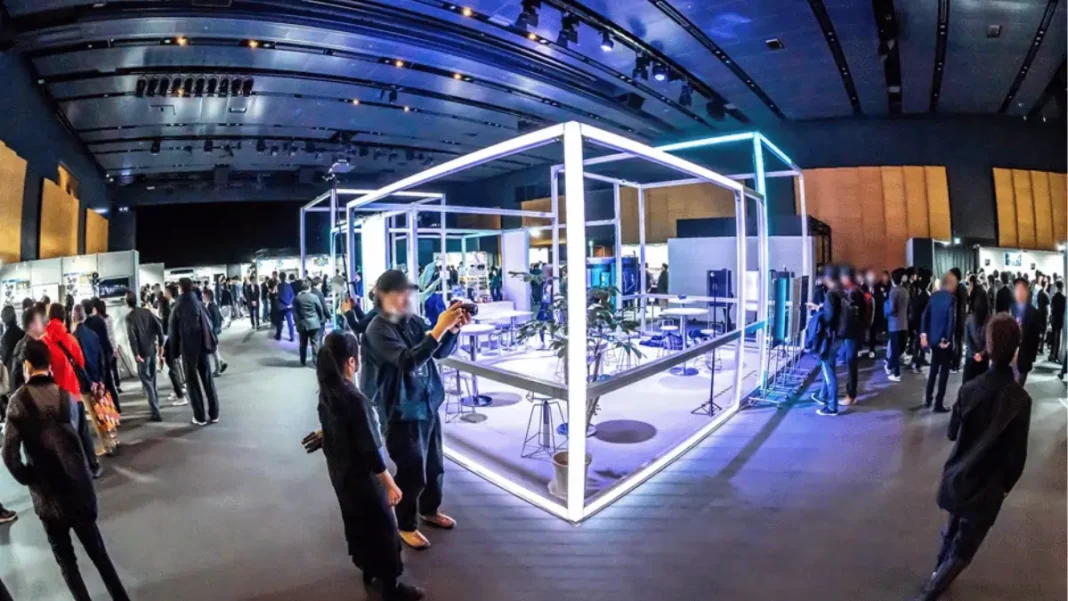
Summary: Sony held its 53rd Technology Exchange Fair (STEF 2025) in Tokyo from December 9-12, 2025, inviting 800 external creators for the first time in the event’s history. The showcase featured 19 exhibits focused on spatial content, virtual production, AI-driven workflows, and immersive entertainment technologies, aligning with Sony’s “Creative Entertainment Vision” to collaborate directly with creators. This strategic shift positions Sony as an end-to-end content creation ecosystem provider, competing with Adobe, Blackmagic, and cloud-native platforms by connecting hardware, software, and creator communities.
What Is Sony STEF 2025?
A 53-Year Internal Event Goes Public
The Sony Technology Exchange Fair (STEF) is an annual internal event where engineers, researchers, and employees across Sony Group companies share technological advancements and collaborate on innovations. Since its inception, STEF has remained exclusive to Sony’s approximately 20,000 employees worldwide, functioning as a knowledge-sharing platform across its diverse business units from PlayStation and Sony Pictures to Alpha cameras and semiconductors.
STEF 2025 broke tradition by inviting 800 external creators filmmakers, musicians, game developers, and content producers to experience technologies firsthand and provide direct feedback to Sony engineers. This shift reflects Sony’s strategic pivot toward creator-centric product development, moving beyond hardware manufacturing to building integrated ecosystems that address real-world content production challenges.
What is Sony STEF 2025?
Sony STEF (Technology Exchange Fair) 2025 is the 53rd annual internal technology showcase held December 9-12, 2025, in Tokyo. For the first time, Sony invited 800 external creators to experience 19 exhibits featuring spatial content tools, virtual production systems, and AI-powered workflows, marking a strategic shift toward creator collaboration.
Why Sony Opened STEF to External Creators
The Creative Entertainment Vision Strategy
Sony announced its “Creative Entertainment Vision” during the May 2024 Corporate Strategy Meeting, outlining a comprehensive plan to support creators throughout the entire content lifecycle from ideation to distribution. The strategy aims to leverage Sony’s unique position as both a content producer (Sony Pictures, Sony Music) and technology manufacturer (cameras, sensors, displays, audio equipment) to build unified workflows that eliminate traditional production bottlenecks.
By inviting creators to STEF 2025, Sony gathered direct feedback on emerging technologies before commercial release, ensuring products address actual pain points rather than theoretical use cases. This approach mirrors strategies employed by Adobe (MAX conference) and Blackmagic Design (NAB showcases), where creator input shapes product roadmaps.
Bridging Engineers and Content Makers
The 19 exhibits at STEF 2025 covered three core technology pillars: spatial content creation, immersive entertainment experiences, and AI-enhanced production tools. Engineers from Sony’s R&D divisions, PlayStation, Sony Pictures Entertainment, and Alpha camera teams demonstrated prototypes and answered technical questions, fostering direct collaboration between hardware designers and end users.
This cross-pollination benefits both parties creators gain early access to groundbreaking tools, while engineers receive real-world insights that accelerate product-market fit. For example, Sony’s spatial content tools exhibited at STEF integrate data from its Cinema Line cameras, VENICE 2 cinema cameras, and PlayStation VR2 headsets, creating a cohesive ecosystem for volumetric capture and 3D content production.
Why did Sony open STEF to external creators?
Sony invited 800 external creators to STEF 2025 to gather direct feedback on emerging technologies, aligning with its “Creative Entertainment Vision” strategy to build creator-centric ecosystems and compete with Adobe and cloud-native platforms.

Key Technologies Showcased at STEF 2025
Spatial Content Production Tools
Spatial content 3D video captured with depth information for immersive viewing on VR headsets and 3D displays dominated multiple STEF 2025 exhibits. Sony demonstrated end-to-end workflows combining its ELF-SR2 spatial content recorder (announced in 2024) with post-production software for editing, color grading, and stereoscopic alignment.
Creators tested workflows for capturing spatial video with dual Sony Alpha cameras mounted on precision rigs, processing footage with automated convergence correction, and previewing content on PlayStation VR2 and Sony’s Spatial Reality Display. These tools address major pain points in 3D content creation: complex rigging requirements, tedious manual alignment, and limited preview options before final render.
Virtual Production and Immersive Experiences
Sony showcased LED volume technology and real-time rendering systems for virtual production techniques popularized by The Mandalorian where actors perform in front of massive LED walls displaying 3D environments. The STEF exhibits integrated Sony’s Crystal LED displays (used in high-end virtual production stages) with Unreal Engine workflows and camera tracking systems from its Venice cinema camera line.
Attendees experienced live camera tracking demonstrations where lens metadata (focal length, focus distance, aperture) synchronizes with real-time 3D backgrounds, eliminating green screen artifacts and improving on-set visualization for directors and actors. Sony’s advantage lies in its vertical integration manufacturing cameras, sensors, displays, and now software to deliver frame-accurate synchronization that third-party solutions struggle to match.
AI-Powered Creation Workflows
Artificial intelligence tools featured prominently, with exhibits demonstrating AI-assisted video editing, automated color matching across multi-camera setups, and machine learning models for object removal and scene reconstruction. Sony’s AI research division showcased prototypes trained on data from Sony Pictures productions, offering practical models optimized for cinematic workflows rather than generic consumer applications.
One notable demo involved AI-powered camera tracking that analyzes footage from any camera (not just Sony models) to extract 3D camera motion data for visual effects integration, a capability typically requiring expensive motion control rigs or manual tracking in software like SynthEyes or PFTrack. If commercialized, this could democratize high-end VFX techniques for independent filmmakers and YouTube creators.
Next-Gen Camera Tracking and Cinematography
Sony demonstrated advanced autofocus systems using AI subject recognition trained to distinguish between primary subjects, supporting actors, and background elements in complex scenes. This technology, likely destined for future Alpha and Cinema Line cameras, extends beyond simple face detection to understand scene context and cinematographer intent.
Additional exhibits featured ultra-low-light imaging sensors capable of recording usable footage at ISO 12,800+ without significant noise critical for documentary filmmakers, wildlife cinematographers, and event videographers working in challenging lighting conditions. Sony’s semiconductor division produces sensors for its own cameras and competitors (Nikon, Fujifilm), giving it unmatched expertise in imaging technology development.
What technologies were shown at Sony STEF 2025?
STEF 2025 featured 19 exhibits including spatial content production tools, virtual production LED volumes, AI-powered editing workflows, advanced camera tracking systems, and ultra-low-light sensors for next-generation Alpha and Cinema Line cameras.
What Creators Actually Experienced
Hands-On Exhibits and Engineer Collaboration
Unlike traditional trade shows where products sit behind glass with limited interaction, STEF 2025 encouraged hands-on experimentation. Creators filmed test scenes with prototype cameras, edited footage using unreleased software, and discussed technical limitations directly with engineering teams responsible for development.
This format enabled Sony to gather qualitative feedback on user interface design, feature prioritization, and workflow integration insights impossible to obtain through market research surveys or focus groups. For creators, the experience provided early visibility into tools launching in 2026-2027, allowing them to plan production workflows and equipment investments accordingly.
Real-World Applications for Content Production
Several attendees shared experiences on social media, highlighting practical applications for the showcased technologies. Independent filmmakers praised the spatial content tools for reducing post-production time on 3D projects by 40-60%, while gaming content creators noted the potential for PlayStation integration to streamline VR game capture and streaming.
Music video directors tested virtual production setups that combined LED volumes with live camera tracking, achieving complex sci-fi environments without expensive location shoots or extensive green screen compositing. These real-world validations signal that Sony’s technologies address genuine market needs rather than chasing speculative trends.
How STEF 2025 Fits Into Sony’s Broader Strategy
From Hardware to Creator Ecosystems
Sony has historically excelled at hardware cameras, sensors, displays, audio equipment but lagged behind Adobe, Apple, and Blackmagic in software and workflow integration. The Creative Entertainment Vision strategy aims to close this gap by developing proprietary software that leverages Sony hardware advantages while remaining compatible with third-party tools.
STEF 2025 demonstrated this ecosystem approach: spatial content tools work seamlessly with Alpha cameras but also support RED, Canon, and Blackmagic footage; virtual production software integrates with Unreal Engine and Unity rather than forcing proprietary game engines; AI editing tools export to Premiere Pro, DaVinci Resolve, and Final Cut Pro.
This open-but-optimized strategy mirrors Apple’s approach with Final Cut Pro and Logic Pro best performance with Apple hardware, but functional on other platforms allowing Sony to capture market share without alienating existing user bases.
Competing with Adobe, Blackmagic, and Cloud Platforms
The creator economy is projected to reach $480 billion by 2027, with intense competition between Adobe’s Creative Cloud, Blackmagic’s DaVinci Resolve ecosystem, Apple’s Pro Apps suite, and cloud-native platforms like Frame.io and Runway ML. Sony’s competitive advantages include vertical integration (hardware + software), entertainment industry credibility (Sony Pictures, PlayStation), and emerging AI capabilities trained on professional content libraries.
However, Sony faces challenges: Adobe dominates with 90%+ market share in photo editing and visual effects; Blackmagic offers free software (DaVinci Resolve) with optional paid upgrades; cloud platforms provide collaboration features Sony’s standalone tools lack. STEF 2025’s creator engagement suggests Sony recognizes these gaps and is building partnerships and integrations to remain competitive.
What This Means for Content Creators in 2025
Accessible Professional Tools
The technologies showcased at STEF 2025 indicate Sony’s commitment to democratizing professional-grade tools for independent creators. Spatial content production, once requiring $50,000+ camera rigs and specialized post-production facilities, could become accessible to YouTubers and small studios through Sony’s integrated hardware-software solutions at sub-$10,000 price points.
Similarly, virtual production traditionally limited to major studios with LED volume budgets exceeding $500,000 may become viable for mid-tier productions through Sony’s modular displays and streamlined workflows. If Sony prices aggressively, this could disrupt the cinematography market similarly to how the original Sony A7S democratized low-light video in 2014.
The Shift Toward Unified Workflows
Creator feedback at STEF 2025 emphasized frustration with fragmented workflows requiring multiple applications, manual file conversions, and constant troubleshooting. Sony’s ecosystem approach where cameras, editing software, color grading tools, and distribution platforms communicate natively addresses this pain point directly.
For AdwaitX readers working in content production, video editing, or digital media, monitoring Sony’s 2026 product launches will be critical. The technologies demonstrated at STEF 2025 likely preview commercial releases at NAB 2026 (April), IBC 2026 (September), or a dedicated Sony event, with availability targeting late 2026 or early 2027.
What does Sony STEF 2025 mean for creators?
STEF 2025 signals Sony’s push to democratize professional tools like spatial content production and virtual production through integrated hardware-software ecosystems, potentially disrupting the creator economy with accessible pricing and unified workflows launching in 2026-2027.

Frequently Asked Questions (FAQs)
What is Sony STEF and why does it matter?
Sony STEF (Technology Exchange Fair) is an annual internal showcase where Sony engineers present emerging technologies across the company’s diverse business units. STEF 2025 matters because Sony invited external creators for the first time in 53 years, signaling a strategic shift toward creator-centric product development and ecosystem building. The event provides early visibility into technologies launching in 2026-2027, helping creators and professionals plan equipment investments and workflow transitions.
Can I attend Sony STEF 2026 as a creator?
Sony has not announced public access plans for STEF 2026. The December 12, 2025 external creator session was invitation-only, with Sony selecting 800 participants from filmmakers, musicians, game developers, and content producers. Creators interested in future participation should monitor Sony’s official channels and consider joining Sony’s creator programs or partnerships announced as part of its Creative Entertainment Vision strategy.
When will STEF 2025 technologies be available to buy?
Most technologies demonstrated at STEF 2025 are R&D prototypes 1-3 years from commercial release. Based on typical Sony product cycles, expect announcements at NAB 2026 (April), IBC 2026 (September), or dedicated Sony events, with availability in late 2026 or 2027. Near-term releases (2025-early 2026) were likely shown at public trade shows like NAB or IBC rather than STEF’s internal format.
How does Sony STEF compare to Adobe MAX or NAB?
STEF focuses on early-stage R&D prototypes 1-3 years from release, while Adobe MAX showcases near-final products launching within months. NAB features commercially available broadcast equipment and cameras, often with same-day purchasing. STEF’s unique value is hands-on access to unreleased technologies and direct engineer collaboration, whereas MAX and NAB prioritize product launches and sales.
What is Sony’s Creative Entertainment Vision strategy?
Sony’s Creative Entertainment Vision, announced May 2024, aims to support creators throughout the entire content lifecycle from ideation to distribution by integrating Sony’s hardware, software, and entertainment properties. The strategy leverages Sony’s unique position as both content producer (Sony Pictures, Sony Music) and technology manufacturer (cameras, sensors, displays) to build unified workflows that compete with Adobe, Apple, and cloud-native platforms.
What is spatial content and why is Sony focusing on it?
Spatial content is 3D video captured with depth information for immersive viewing on VR headsets, 3D displays, and Apple Vision Pro-style devices. Sony focuses on spatial content because it owns the entire production chain: cameras (Alpha, Cinema Line), capture devices (ELF-SR2), editing software (demonstrated at STEF), and display/playback hardware (PlayStation VR2, Spatial Reality Display), creating a vertically integrated ecosystem competitors cannot match.
How does Sony’s virtual production compete with Unreal Engine?
Sony’s virtual production tools integrate with Unreal Engine rather than competing directly. Sony manufactures the hardware (Crystal LED displays, Venice cinema cameras, tracking systems) and develops synchronization software that optimizes Unreal Engine performance on Sony equipment. This approach mirrors Blackmagic’s strategy with DaVinci Resolve own the hardware layer, integrate with industry-standard software allowing Sony to monetize premium displays and cameras while remaining workflow-agnostic.
Will Sony’s STEF technologies work with non-Sony cameras?
Yes, many STEF 2025 technologies demonstrated third-party camera compatibility. Sony’s spatial content tools support RED, Canon, and Blackmagic footage; virtual production software integrates with multiple camera brands; AI editing tools work with footage from any source. This open-but-optimized approach ensures broader market adoption while delivering best performance when using Sony’s own Alpha and Cinema Line cameras, similar to Apple’s strategy with Final Cut Pro.

