

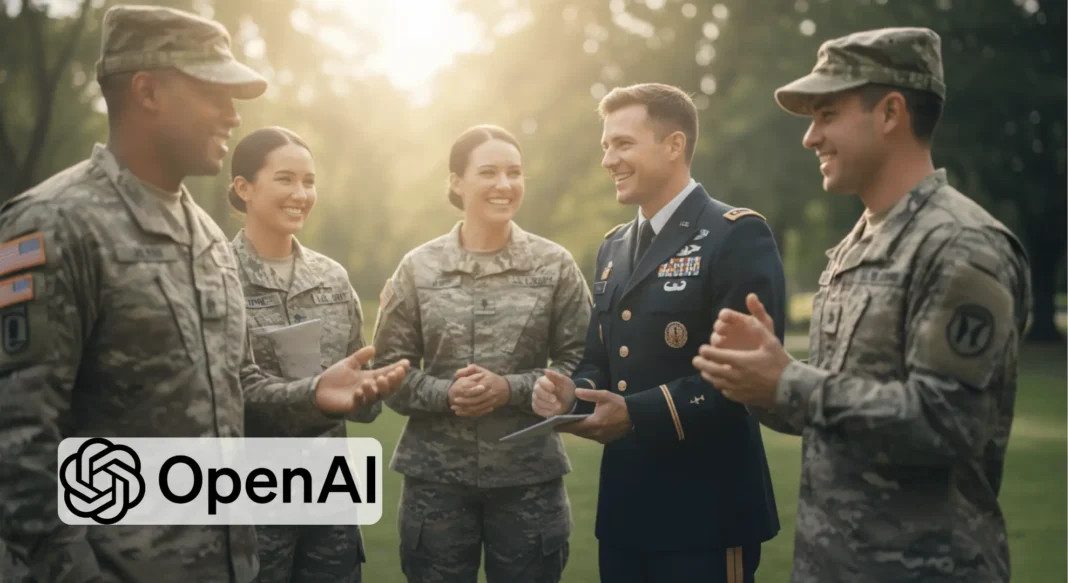
OpenAI launched a free ChatGPT Plus program for U.S. military servicemembers and veterans transitioning to civilian life, offering a full year of premium AI access valued at $240. The initiative, announced on Veterans Day 2025, provides eligible veterans with advanced AI tools specifically designed to ease one of life’s most challenging career transitions.
Quick Answer: OpenAI’s ChatGPT for Veterans program gives U.S. servicemembers within 12 months of separation and recently separated veterans (first year post-service) free access to ChatGPT Plus for one year. The program includes GPT-4o, Advanced Voice Mode, 100+ veteran-created example chats, and specialized onboarding resources through OpenAI Academy.
Table of Contents
What Is the ChatGPT for Veterans Program?
Program Overview and Launch Date
OpenAI announced the ChatGPT for Veterans initiative on November 9, 2025, coinciding with Veterans Day weekend to maximize visibility within the military community. The program emerged from conversations among OpenAI’s veteran employees who recognized AI could address specific challenges their peers face during military-to-civilian transitions. Unlike typical corporate veteran programs that offer symbolic discounts, this initiative provides full premium access worth $240 annually with no credit card required.
Who Created This Initiative
The program was championed by OpenAI employees with military backgrounds, including Vikki Lampton, an Army veteran who leads robotics engineering, and Troy Peterson, another Army veteran serving as technical program manager. Their firsthand experience with transition challenges informed the program’s design. The initiative gained additional credibility when retired General Paul Nakasone, former NSA and U.S. Cyber Command director, joined OpenAI’s board in June 2024 and supported the veteran-focused effort.
Key Statistics: 200K Annual Transitions
Approximately 200,000 U.S. military personnel separate from service annually, entering a civilian job market that often doesn’t understand their skills. Federal research shows the government invests over $13 billion in veteran transition programs, yet nearly 50% of post-9/11 veterans report adjustment difficulties during their first year. More sobering, veteran suicide rates spike to 2.5 times higher during the first year after separation, highlighting the mental health dimension of transition stress.
Pros and Cons
Pros:
- Genuine value ($240 annual subscription free)
- Created by veterans for veterans
- No credit card required for signup
- Comprehensive onboarding resources
- Advanced Voice Mode excellent for interview prep
- Priority access during peak usage
- Covers full first year of transition
Cons:
- Limited to U.S. servicemembers only
- 12-month eligibility window (must be near separation)
- Requires military documentation for verification
- Not a standalone solution (complements traditional TAP)
- Free tier ends after one year with no guaranteed extension
- AI limitations with highly specialized military skills
Eligibility Requirements
Active Servicemembers (Within 12 Months of Separation)
The program targets servicemembers currently serving but within 12 months of their separation or retirement date. This timing aligns with the Department of Defense’s Transition Assistance Program (TAP), which typically begins 12 months before separation. Early access allows servicemembers to start building civilian resumes and exploring career options while still in uniform.
Recently Separated Veterans (First Year Post-Service)
Veterans who separated within the past 12 months qualify regardless of discharge status. This covers the critical first-year adjustment period when veterans navigate job searches, benefit applications, and career establishment simultaneously. The one-year window recognizes that transition challenges intensify immediately after leaving military structure.
Verification Process with SheerID
OpenAI partnered with SheerID, a digital verification platform used by major brands for identity authentication. The verification process takes approximately 2-3 minutes and requires uploading military separation paperwork (DD-214 for separated veterans) or orders showing pending separation for active-duty members. SheerID’s encrypted system protects sensitive military documents and provides instant verification in most cases.
Branch Requirements (All U.S. Military Branches)
The program covers all U.S. military branches: Army, Navy, Air Force, Marine Corps, Space Force, and Coast Guard. National Guard and Reserve members qualify if they meet the 12-month separation window. Unfortunately, the program currently excludes international military veterans and non-U.S. servicemembers.
ChatGPT Plus: What Veterans Get
Full ChatGPT Plus Features ($240 Annual Value)
Veterans receive identical access to paying ChatGPT Plus subscribers, not a limited veteran-specific version. The $20 monthly subscription ($240 annually) includes all premium features without advertisements or usage throttling. This represents genuine value rather than token corporate goodwill.
Access to GPT-4o and Latest Models
ChatGPT Plus subscribers access OpenAI’s most advanced models, including GPT-4o, which offers superior reasoning, nuance, and contextual understanding compared to the free tier. For veterans translating complex military jargon into civilian terminology, GPT-4o’s enhanced language processing proves essential. The model handles technical military occupational specialties (MOS) and converts them into marketable civilian skills more accurately than earlier versions.
Advanced Voice Mode for Interview Practice
Advanced Voice Mode enables natural conversational interactions, making it ideal for mock interviews. Veterans can practice answering common interview questions, receive real-time feedback on communication style, and build confidence explaining military experience to civilian hiring managers. The voice interface mimics actual interview conditions better than text-based practice.
Priority Access During Peak Times
ChatGPT Plus users skip queues during high-traffic periods when free-tier users experience slowdowns or temporary lockouts. For veterans on tight job application deadlines or preparing for scheduled interviews, guaranteed access eliminates frustrating delays.
100+ Veteran-Specific Example Chats
OpenAI curated over 100 example conversations demonstrating how veterans can use ChatGPT for transition tasks. These templates cover resume writing, interview preparation, benefit navigation, career exploration, and business planning. Rather than starting from scratch, veterans can adapt proven prompts to their specific situations.
OpenAI Academy Onboarding Video
The program includes dedicated onboarding through OpenAI Academy, featuring a video tutorial designed for veterans. The training explains ChatGPT’s capabilities, limitations, and best practices specifically contextualized for military transition scenarios.
Comparison: ChatGPT Tiers
| Feature | Free Tier | ChatGPT Plus | Veterans Program |
|---|---|---|---|
| Cost | $0/month | $20/month | $0 for 12 months |
| AI Model | GPT-4o mini | GPT-4o | GPT-4o |
| Message Limit | 15-20 per 3 hours | 80-100 per 3 hours | 80-100 per 3 hours |
| Advanced Voice Mode | No | Yes | Yes |
| Priority Access | No | Yes | Yes |
| Response Time | Standard (may queue) | Faster | Faster |
| DALL-E Image Generation | Limited (2-3/day) | Unlimited | Unlimited |
| Custom GPTs | No | Yes | Yes |
| File Upload & Analysis | No | Yes (PDFs, docs, images) | Yes |
| Code Interpreter | No | Yes | Yes |
| Web Browsing | Limited | Enhanced | Enhanced |
| Veteran-Specific Examples | No | No | 100+ chats |
| Specialized Onboarding | Generic tutorials | Generic tutorials | Veteran-focused video |
| Program Duration | Unlimited | Ongoing subscription | 12 months free |
| Annual Value | $0 | $240 | $240 (free) |
| Eligibility | Everyone | Anyone willing to pay | U.S. vets (12-month window) |
Military-to-Civilian Resume Translation Examples
| Military Role (MOS) | Military Language | Civilian Translation | Target Industries |
|---|---|---|---|
| 11B Infantry Squad Leader | “Led 9-soldier infantry squad in combat operations; maintained 100% accountability” | “Managed cross-functional team of 9 personnel in high-stress environments; achieved 100% asset accountability and zero safety incidents” | Operations Management, Security, Emergency Services |
| 25B IT Specialist | “Administered battalion network infrastructure supporting 500+ users; performed COMSEC duties” | “Managed enterprise network infrastructure for 500+ users; implemented cybersecurity protocols and maintained 99.8% uptime” | IT Administration, Network Engineering, Cybersecurity |
| 92Y Supply Specialist | “NCOIC of supply operations; managed $3.2M inventory; conducted quarterly audits” | “Supervised supply chain operations managing $3.2M inventory; implemented digital tracking system reducing discrepancies by 40%” | Supply Chain Management, Logistics, Procurement |
| 68W Combat Medic | “Provided emergency medical treatment in combat zones; trained 30 soldiers in CLS” | “Delivered emergency medical care in high-pressure environments; developed and executed training program for 30 personnel” | Emergency Medical Services, Healthcare, Training & Development |
| 35F Intelligence Analyst | “Analyzed SIGINT/HUMINT for threat assessment; briefed battalion leadership” | “Synthesized multi-source data to produce intelligence assessments; delivered strategic briefings to C-suite stakeholders” | Data Analysis, Business Intelligence, Strategic Planning |
| 15T UH-60 Mechanic | “Performed phase maintenance on UH-60 aircraft; supervised 4 junior mechanics” | “Conducted preventive and corrective maintenance on $20M aviation assets; led 4-person technical team ensuring 95% mission-ready rate” | Aviation Maintenance, Fleet Management, Quality Control |
ChatGPT Use Cases for Veterans
| Transition Task | ChatGPT Capability | Effectiveness | Example Prompt |
|---|---|---|---|
| Resume Writing | MOS/role translation to civilian terms | ⭐⭐⭐⭐⭐ High | “Translate my role as [MOS] with [specific duties] into 3 resume bullets for [target job]” |
| Cover Letter | Personalized job application letters | ⭐⭐⭐⭐ Good | “Write a cover letter for [job title] at [company] emphasizing my military leadership in [area]” |
| Interview Prep | Mock interviews via Advanced Voice | ⭐⭐⭐⭐⭐ High | “Conduct a 15-minute mock interview for [role]; ask behavioral questions” |
| LinkedIn Profile | Professional summary optimization | ⭐⭐⭐⭐ Good | “Create a LinkedIn summary for a transitioning [MOS] targeting [industry]” |
| Networking Messages | Cold outreach templates | ⭐⭐⭐ Moderate | “Draft a LinkedIn message to a [title] at [company] requesting an informational interview” |
| VA Benefits | Benefit explanation (not filing) | ⭐⭐⭐ Moderate | “Explain GI Bill housing allowance differences between online and in-person classes” |
| Career Exploration | Skills-based job matching | ⭐⭐⭐⭐ Good | “What civilian careers match my skills: [list military skills/experiences]” |
| Salary Negotiation | Compensation research and scripts | ⭐⭐⭐⭐ Good | “How should I negotiate salary for [role] in [city] with [X] years military leadership?” |
| Business Planning | Startup concept development | ⭐⭐⭐⭐ Good | “Create a business plan outline for [veteran business idea] targeting [market]” |
| Education Planning | Degree/certification recommendations | ⭐⭐⭐⭐ Good | “What certifications or degrees would help a [MOS] transition to [career field]?” |
How Veterans Can Use ChatGPT: 5 Practical Applications
1. Translating Military Experience to Civilian Resumes
Military job titles and responsibilities rarely translate directly to civilian equivalents. An “11B Infantryman” must become a “team leader with crisis management experience.” A “25B Information Technology Specialist” becomes a “network administrator with cybersecurity expertise.” ChatGPT excels at this translation work when given proper context.
Example Prompt for MOS Translation:
“I served as a U.S. Army 92Y Unit Supply Specialist for 6 years. I managed inventory worth $2.5M, conducted monthly audits, trained 12 junior personnel, and maintained 98% accountability. Translate this into 3-4 civilian resume bullet points for a supply chain coordinator position.
Before (Military Language):
“Served as 92Y Unit Supply Specialist, NCOIC of battalion supply operations
After (Civilian Language):
“Led inventory management operations for organization with 500+ personnel, maintaining 98% asset accountability for $2.5M+ equipment portfolio while reducing supply discrepancies by 30% through implementation of digital tracking system
2. Interview Preparation and Practice
The transition from military to civilian workplace culture creates communication gaps. Veterans accustomed to direct military communication must adapt to corporate environments with different norms. ChatGPT’s Advanced Voice Mode enables realistic interview practice without requiring a human partner.
Using Advanced Voice Mode for Mock Interviews:
Activate Voice Mode, explain your target role, and ask ChatGPT to conduct a 15-minute mock interview. The AI asks common questions like “Tell me about a time you led a team under pressure” or “Why are you leaving the military?” After each response, request feedback on civilian-friendliness and communication style
3. Understanding VA Benefits and Paperwork
The Department of Veterans Affairs administers dozens of benefit programs with complex eligibility requirements. ChatGPT can explain GI Bill education benefits, VA home loan guarantees, disability compensation, healthcare enrollment, and vocational rehabilitation programs in plain language. While not a replacement for official VA guidance, it helps veterans ask better questions and understand their options.
Navigating GI Bill, Housing, Healthcare:
Veterans can ask: “Explain Post-9/11 GI Bill housing allowance calculation for online vs in-person classes” or “What documents do I need for VA home loan pre-approval?” ChatGPT breaks down bureaucratic language into actionable steps
4. Career Exploration and Job Matching
Many veterans struggle identifying civilian careers matching their military skills beyond obvious parallels (military police to civilian law enforcement). ChatGPT analyzes military experience and suggests non-obvious career paths based on transferable skills rather than job titles.
Identifying Transferable Skills:
A combat medic possesses emergency response, triage decision-making, and high-stress performance skills valuable in emergency management, healthcare administration, or even project management roles. ChatGPT helps veterans recognize these transferable competencies
5. Starting a Veteran-Owned Business
Approximately 1 in 10 veterans starts a business, leveraging leadership skills and discipline developed through military service. ChatGPT assists with business plan development, market research, competitive analysis, and financial projections for veteran entrepreneurs.
Business Plan Development with AI:
Veterans can outline their business concept, target market, and available capital, then ask ChatGPT to generate a preliminary business plan structure, identify potential funding sources (including SBA veteran programs), and suggest market entry strategies
How to Sign Up: Step-by-Step Guide
Step 1: Visit the Official OpenAI Veterans Page
Navigate to openai.com and locate the “ChatGPT for Veterans” program page. Bookmark this page as it contains program updates and support resources.
Step 2: Complete SheerID Verification (2-3 Minutes)
Click the verification link, which redirects to SheerID’s secure platform. Upload required documents: DD Form 214 (Certificate of Release or Discharge) for separated veterans, or separation orders showing pending discharge within 12 months for active-duty members. The system encrypts uploads and typically verifies within minutes.
Step 3: Receive Confirmation and Access
Check your email for confirmation from OpenAI, usually arriving within 24-48 hours. The email contains your ChatGPT Plus activation link and account setup instructions. No credit card is required—the subscription remains free for the full 12-month period.
Step 4: Complete OpenAI Academy Onboarding
Access the veteran-specific onboarding video through OpenAI Academy. This 15-20 minute training explains ChatGPT capabilities, demonstrates effective prompting techniques, and highlights veteran-relevant features.
Step 5: Explore 100+ Example Chats
Browse the curated library of veteran-created example conversations. These templates demonstrate real applications: resume writing, interview practice, benefit questions, career exploration, and business planning. Copy and adapt these examples to your situation.
Who’s Behind This Program
Vikki Lampton (Army Veteran, OpenAI Robotics Lead)
Lampton served in the U.S. Army before transitioning to robotics engineering at OpenAI. Her dual perspective as veteran and AI researcher helped shape the program’s practical focus on genuine transition challenges rather than superficial veteran outreach.
Troy Peterson (Army Veteran, Technical Program Manager)
Peterson’s Army service and subsequent tech career informed his understanding of the skills gap veterans face. He recognized that military experience translates to tech sector roles but requires effective communication in civilian terminology.
Gen. Paul Nakasone (Former NSA Director, OpenAI Board)
Retired four-star General Nakasone joined OpenAI’s board in June 2024 after leading the National Security Agency and U.S. Cyber Command. His involvement lends credibility to the initiative and signals OpenAI’s commitment to responsible AI deployment in national security contexts.
Katrina Mulligan (Head of National Security Partnerships)
Mulligan oversees OpenAI’s national security initiatives and veteran programs, ensuring alignment with government transition assistance efforts. Her role suggests potential future partnerships with Department of Defense and VA programs.
ChatGPT for Veterans vs Other AI Programs
| Company | Program Name | Eligibility | Duration | Monthly Value | Key Features | Veteran-Specific Content |
|---|---|---|---|---|---|---|
| OpenAI | ChatGPT for Veterans | Active military (within 12 months of separation) + Recently separated veterans (first year) | 12 months | $20 ($240 total) | GPT-4o, Advanced Voice Mode, Custom GPTs, File analysis | 100+ example chats, Veteran onboarding video, Transition-focused resources |
| Anthropic | Claude Pro for Veterans | Varies by program | Unknown/Limited | $20 | Claude 3.5 Sonnet, 200K token context, Artifacts | No dedicated veteran content |
| Perplexity AI | Free Pro (Military) | Active U.S. military members | Ongoing (no expiration) | $20 | AI-powered search, Real-time web data, Copilot mode | Limited veteran transition resources |
| No veteran program | N/A | N/A | N/A | Gemini free tier available to all | No veteran-specific features | |
| Microsoft | No veteran program | N/A | N/A | N/A | Copilot free tier available to all | No veteran-specific features |
| Meta | No veteran program | N/A | N/A | N/A | Llama models (open source) | No veteran-specific features |
OpenAI’s program offers the most comprehensive veteran-specific features, including curated examples and dedicated onboarding. Perplexity’s program remains active for all military members but lacks transition-focused resources.
Privacy and Security Considerations
What Data Does OpenAI Collect?
OpenAI collects conversation data to improve AI models unless users opt out. Veterans should review OpenAI’s data usage policies and disable training data collection in settings if discussing sensitive topics. The company states it doesn’t share individual conversations with third parties.
Should Veterans Share Sensitive Military Info?
Avoid inputting classified information, specific unit operations, or personally identifiable information of fellow servicemembers. ChatGPT works effectively with generalized descriptions: “I led a 12-person intelligence team” rather than “I served with [specific names] in [specific classified unit].”
Data Retention and Deletion Policies
OpenAI retains conversations for 30 days then deletes them if training is disabled. Veterans can manually delete individual conversations or entire chat history through account settings. For maximum privacy, use ChatGPT’s temporary chat feature, which doesn’t save conversations.
SheerID Verification Security
SheerID uses bank-level encryption and complies with data protection regulations. The platform verifies credentials then deletes uploaded documents after confirmation. Veterans can request data deletion from SheerID post-verification.
Limitations and Considerations
Not a Replacement for Human Career Counselors
ChatGPT complements but doesn’t replace professional transition assistance. Veterans should still attend TAP programs, meet with career counselors, and leverage veteran service organizations. AI provides 24/7 availability for brainstorming and drafting but lacks the nuanced judgment of experienced human advisors.
AI Accuracy for Military Jargon
While GPT-4o handles military terminology better than previous models, occasional misinterpretations occur. Veterans should fact-check AI-generated content, especially when translating highly technical military specialties. Use ChatGPT as a first draft, then refine with human expertise.
What ChatGPT Cannot Do
ChatGPT cannot file VA claims, submit job applications, make phone calls, access real-time job postings, or provide legal advice. It generates text, analyzes documents, and answers questions but doesn’t interface with external systems or databases.
Complementing Traditional TAP Programs
The Department of Defense’s Transition Assistance Program remains mandatory and provides essential services: benefits counseling, employment workshops, and VA enrollment. ChatGPT enhances TAP by offering personalized, on-demand assistance between formal sessions.
Veteran Mental Health Resources
Crisis Support Integration
If you’re experiencing a mental health crisis, contact:
- Veterans Crisis Line: 988, then press 1 (24/7)
- Crisis Text Line: Text 838255
- Online Chat: veteranscrisisline.net
ChatGPT is not a mental health treatment tool and cannot provide emergency support.
Transition Support Organizations
Organizations offering veteran transition assistance:
- Hiring Our Heroes (U.S. Chamber of Commerce)
- American Corporate Partners (one-on-one mentoring)
- Wounded Warrior Project (career counseling)
- Team Rubicon (skills bridge programs)
Future of AI in Veteran Transition
Potential DOD/VA Partnerships
Katrina Mulligan’s role at OpenAI suggests potential collaborations with government agencies. Future partnerships might integrate ChatGPT directly into TAP curriculum or VA benefit application processes. The federal government’s $13 billion annual investment in veteran transition creates opportunities for AI-enhanced services.
AI-Powered Job Matching Platforms
Several companies already use AI for veteran job matching, analyzing military roles and matching them to civilian positions. OpenAI’s initiative may inspire more sophisticated platforms that understand military experience beyond simple keyword matching.
Long-Term Program Expansion
While the current program offers 12 months of free access, OpenAI hasn’t announced plans for year two. Veterans should prepare for potential subscription costs after the free period ends, though advocacy for program extension seems likely given positive reception.
20+ CHATGPT PROMPTS FOR VETERANS
RESUME & APPLICATION PROMPTS
1. MOS-to-Civilian Translation
textI served as a [Military Occupational Specialty code and title] for [X years]. My primary responsibilities included:
- [Responsibility 1]
- [Responsibility 2]
- [Responsibility 3]

Translate this experience into 3-4 civilian resume bullet points optimized for a [target job title] position. Use action verbs, quantify achievements, and avoid military jargon.
2. Resume Summary Statement
textCreate a professional resume summary (3-4 sentences) for a transitioning military veteran with the following background:
- Branch: [Army/Navy/Air Force/Marines/Coast Guard]
- Years of service: [X]
- Final rank: [E-4, O-3, etc.]
- Key skills: [leadership, logistics, cybersecurity, etc.]
- Target industry: [healthcare, technology, finance, etc.]
- Career goal: [specific role]

Make it ATS-friendly and emphasize transferable skills.
3. Achievement Quantification
textI accomplished the following in the military but didn't track specific metrics:
[Describe achievement without numbers]

Help me estimate reasonable quantifiable metrics (team size, budget, percentage improvements, time saved, etc.) that would be realistic for this achievement. Provide 2-3 versions with different emphasis.
4. Cover Letter Generator
textWrite a cover letter for this job posting:
[Paste job description]

My military background:
- Role: [MOS/rate]
- Key achievements: [list 2-3]
- Relevant skills: [list]
- Why I'm interested: [reason]

The cover letter should be 3-4 paragraphs, explain how my military experience specifically prepares me for this role, and demonstrate knowledge of the company.
5. LinkedIn Headline Optimization
textI'm a [rank] transitioning from [branch] with [X] years of experience in [specialty]. I'm targeting roles in [industry/field].

Create 5 LinkedIn headline options (max 120 characters each) that:
- Avoid military jargon
- Highlight transferable skills
- Include relevant keywords for [target role]
- Sound civilian-professional
INTERVIEW PREPARATION PROMPTS
6. STAR Method Response Builder
textI need to answer the interview question: "[specific behavioral question]"

Here's my military example:
- Situation: [context]
- Task: [what needed to be done]
- Action: [what I did]
- Result: [outcome]

Rewrite this in civilian-friendly language using the STAR method, keeping it under 2 minutes when spoken. Remove military acronyms and jargon.
7. “Why Are You Leaving the Military?” Script
textI'm leaving the military because [honest reason: end of contract, seeking new challenges, family reasons, etc.].

Help me craft a positive, professional answer to "Why are you leaving the military?" that:
- Frames my decision positively
- Emphasizes growth and opportunity
- Doesn't badmouth the military
- Shows enthusiasm for civilian career
- Addresses potential employer concerns about commitment
8. Weakness Question for Veterans
textI need to answer "What is your greatest weakness?" in a way that acknowledges military-to-civilian adjustment challenges but frames them positively.

My actual adjustment area: [e.g., "I'm used to very direct communication," "I sometimes over-plan," "I expect immediate action"]

Provide a 60-90 second response that shows self-awareness, describes how I'm addressing it, and turns it into a subtle strength.
9. Mock Interview Question Generator
textI'm interviewing for a [job title] position in [industry]. Generate 10 likely interview questions specific to this role that would challenge someone with military background. Include:
- 3 behavioral questions
- 3 technical/role-specific questions
- 2 questions about military-to-civilian transition
- 2 questions about cultural fit

For each question, note why it might be challenging for veterans and what the interviewer is really assessing.
10. Salary Negotiation Script
textI received a job offer for [role] at [company] with:
- Base salary: $[X]
- Benefits: [list]

My research shows market rate is $[Y] to $[Z]. My military experience includes [relevant experience].

Create a negotiation script that:
- Expresses gratitude for the offer
- Presents my counteroffer professionally
- Justifies the increase based on my skills
- Keeps the tone collaborative, not demanding
CAREER EXPLORATION PROMPTS
11. Transferable Skills Identifier
textI served as a [MOS/rate] with these responsibilities:
[List 5-7 key duties]

I enjoyed: [aspects you liked]
I disliked: [aspects you didn't like]

Identify 5 civilian career paths that leverage my transferable skills but avoid the aspects I disliked. For each career, explain:
- Why it's a match
- What additional training/certifications I might need
- Typical salary range
- Job outlook
12. Skills Gap Analysis
textI want to transition from [military role] to [target civilian role].

Military skills I have:
[List skills]

Target job requirements (from job postings):
[Paste 2-3 job descriptions]

Perform a gap analysis:
1. Skills I already have that match
2. Skills I'm missing
3. How to acquire missing skills (certifications, courses, projects)
4. How to emphasize relevant military experience
5. Timeline to become competitive (realistic)
13. Industry Research Assistant
textI'm considering transitioning to [specific industry] but don't know much about it.

Provide an overview including:
- Industry basics (what companies do)
- Key roles and career paths
- How military skills transfer to this industry
- Typical entry points for veterans
- Major companies known for hiring veterans
- Industry-specific certifications or credentials
- Salary expectations for entry-to-mid level
- Work-life balance and culture considerations
14. Alternative Career Paths
textEveryone assumes that as a [military role], I should become a [obvious civilian equivalent].

But I want something different. I'm interested in [different field/industry].

Help me make the case for why my [military specialty] background would be valuable in [non-obvious civilian career]. Create:
- A narrative connecting my military skills to this new field
- 3 creative resume bullet points highlighting relevant experience
- Potential concerns employers might have and how to address them
- Examples of others who made similar transitions
VA BENEFITS & LOGISTICS PROMPTS
15. GI Bill Decision Helper
textI'm eligible for the Post-9/11 GI Bill and considering:

Option A: [e.g., 4-year university degree in X]
Option B: [e.g., 18-month coding bootcamp]
Option C: [e.g., 2-year associate degree + certifications]

My career goal: [specific role]
Time constraint: [prefer to work in X months]
Financial situation: [need income soon / can focus on school]

Compare these options considering:
- GI Bill benefit usage
- Time to employment
- ROI (return on investment)
- Career advancement potential
- Market demand for each path
16. VA Benefits Explainer
textExplain [specific VA benefit: GI Bill housing allowance / VA home loan / vocational rehab / etc.] in simple terms.

Specifically address:
- Eligibility requirements
- How to apply
- Common mistakes to avoid
- Timeline for approval
- What documents I need
- How it interacts with other benefits

Assume I'm 3 months from separation and planning ahead.
NETWORKING & PROFESSIONAL DEVELOPMENT PROMPTS
17. LinkedIn Connection Request
textI want to connect with [name/title] at [company] on LinkedIn.

Context:
- We [do/don't] have mutual connections: [if yes, who]
- I'm interested in [specific reason: informational interview, their company, their career path]
- My background: [brief military summary]

Write a personalized connection request (300 characters max) that:
- Doesn't feel transactional
- Shows I researched them
- Gives a clear reason to connect
- Mentions my military background if relevant
18. Informational Interview Questions
textI have a 20-minute informational interview with [name], a [title] at [company] in [industry].

My goal: [learn about the industry / understand their career path / explore job opportunities]

Generate 8-10 thoughtful questions that:
- Show I researched them and their company
- Aren't easily Google-able
- Help me understand the military-to-civilian transition
- Naturally lead to advice or mentorship
- Could open doors for future conversations

Order them from broad to specific.
19. Veteran Elevator Pitch
textI need a 30-second elevator pitch for networking events.

Background:
- Military role: [MOS/specialty]
- Years served: [X]
- Key strength: [e.g., operations management, crisis leadership]
- Target role: [what I'm seeking]
- Unique angle: [something memorable about my experience]

Create 2 versions:
1. For veteran-focused networking events (can include some military context)
2. For general professional events (minimal military jargon)
BUSINESS & ENTREPRENEURSHIP PROMPTS
20. Veteran Business Idea Validator
textI'm considering starting a business:

Business idea: [describe concept]
Target market: [who will buy]
My relevant experience: [military + other background]
Available capital: [rough budget]
Time commitment: [full-time or side business]

Validate this idea by:
1. Identifying market demand evidence
2. Listing 3-5 competitors
3. Explaining competitive advantages of my military background
4. Highlighting potential challenges
5. Suggesting MVP (minimum viable product) to test the idea
6. Estimating startup costs
7. Recommending veteran-specific resources (SBA Boots to Business, grants, etc.)
21. Business Plan Outline
textCreate a lean business plan outline for my veteran-owned [type of business]:

Business: [name and concept]
Market: [target customers]
Background: [my military experience and how it helps]
Funding: [self-funded / seeking loans / investors]

Include sections for:
- Executive summary
- Market analysis
- Competitive advantage (emphasize military skills)
- Marketing strategy
- Financial projections (realistic first-year)
- Veteran-specific opportunities (certifications, set-asides, networks)

Keep it practical and action-oriented, not theoretical.
PERSONAL BRANDING PROMPTS
22. About Me / Bio Writer
textWrite a professional "About Me" bio (150 words) for [my website / LinkedIn / speaker intro] that:

Includes:
- [X] years military service in [branch/role]
- Transition to [current role or goal]
- Key expertise: [3-4 areas]
- Personal element: [hobby, passion, or unique fact]
- Call to action: [how people can connect]

Tone: [professional but approachable / authoritative / inspirational]

Avoid: generic military clichés, excessive jargon, sounding like a resume
23. Skills Translation for Certifications
textI'm considering getting [specific certification: PMP, Security+, AWS, etc.] to strengthen my transition.

My military background includes:
[List relevant experiences]

Help me:
1. Map my military experience to certification prerequisites
2. Identify which exam domains I already understand from military work
3. Flag areas where I'll need extra study
4. Estimate realistic study timeline given my background
5. Explain how to frame this certification + military experience in job applications
Frequently Asked Questions (FAQs)
Is ChatGPT Plus really free for all veterans?
No, the free program specifically covers U.S. military servicemembers within 12 months of separation and veterans within their first year post-service. Veterans beyond the one-year window and international military veterans do not currently qualify.
How long does the free access last?
The program provides 12 months of free ChatGPT Plus access from activation date. After one year, the subscription reverts to standard pricing ($20/month) unless OpenAI extends the program or offers renewal options.
What happens after the free year ends?
Your ChatGPT Plus access converts to a free-tier account unless you elect to continue with a paid subscription. You’ll retain access to basic ChatGPT but lose GPT-4o, Advanced Voice Mode, and priority access. All saved conversations remain accessible.
Can National Guard and Reserve members apply?
Yes, National Guard and Reserve members qualify if they meet the 12-month separation window criteria. Part-time service members transitioning to civilian status face similar challenges as active-duty personnel and receive equal eligibility.
Does this work for veterans outside the U.S.?
No, the program currently serves only U.S. military servicemembers and veterans. International veterans and allied military personnel do not qualify under current program parameters.
What documents do I need for verification?
Separated veterans need DD Form 214 (Certificate of Release or Discharge). Active-duty members within 12 months of separation need official separation or retirement orders. SheerID’s verification system accepts digital copies or photos of these documents.
Featured Snippet Boxes
What is ChatGPT for Veterans?
OpenAI’s ChatGPT for Veterans program offers U.S. military servicemembers and veterans within 12 months of separation a free year of ChatGPT Plus (valued at $240). The initiative includes access to GPT-4o, Advanced Voice Mode, 100+ veteran-created example chats, and specialized onboarding through OpenAI Academy.
How to Sign Up for Free ChatGPT Plus as a Veteran
Visit the official OpenAI veterans page, complete SheerID identity verification (2-3 minutes), upload military separation or retirement documentation, receive email confirmation within 24-48 hours, and access your ChatGPT Plus account with veteran-specific resources.
ChatGPT Plus Features for Veterans
Free access includes GPT-4o model, Advanced Voice Mode for interview practice, priority response times, 5x higher message limits, DALL-E image generation, file analysis tools, custom GPT creation, 100+ transition-focused example chats, and veteran-tailored onboarding video.
Source: OpenAI

