

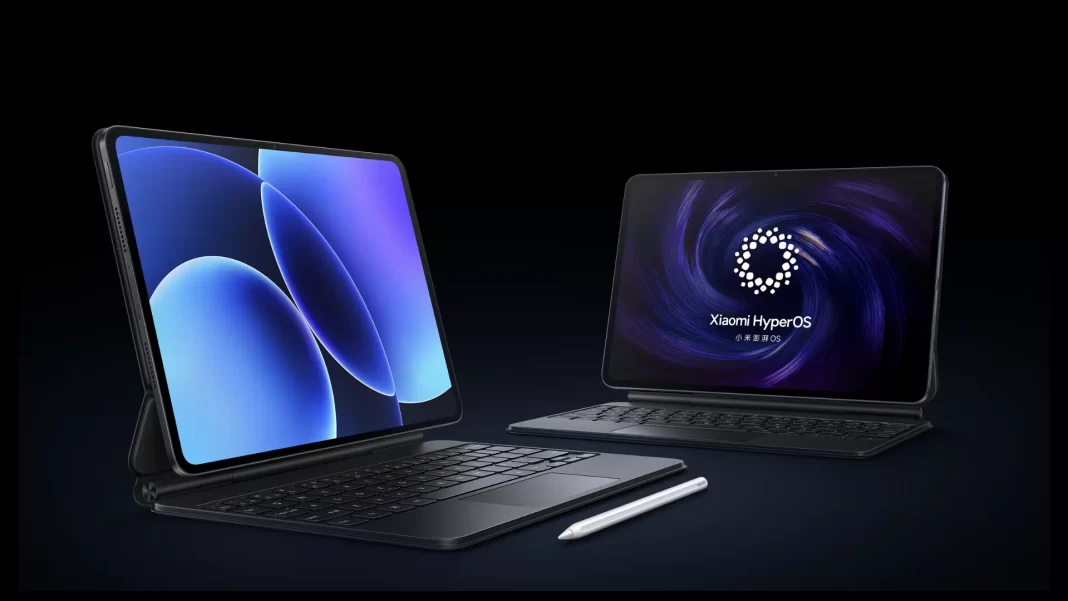
Xiaomi’s new Pad 8 and Pad 8 Pro share an 11.2-inch 3.2K LCD with 144Hz, quad speakers, and 9,200mAh batteries. Pad 8 uses Snapdragon 8s Gen 4 and 45W charging; Pad 8 Pro steps up to Snapdragon 8 Elite and 67W charging plus higher-res cameras. Prices start at CNY 2,199.
Table of Contents
What’s new
Xiaomi announced the Pad 8 pair alongside the Xiaomi 17 phones. Both tablets lean on a sharp 11.2-inch 3.2K panel at up to 144Hz, quad speakers with Dolby Atmos, and a slim 5.75mm metal body around 485g. They also share a big 9,200mAh battery.
Short Answer: Xiaomi Pad 8 and Pad 8 Pro bring 11.2″ 3.2K/144Hz screens, quad speakers, side fingerprint, and 9,200mAh batteries. Pad 8 runs Snapdragon 8s Gen 4 with 45W charging; Pad 8 Pro upgrades to Snapdragon 8 Elite and 67W. China prices start at CNY 2,199.
Display and the Soft Light (Matte) edition
Both slates use an 11.2-inch 3.2K LCD (2,136×3,200) with a 3:2 aspect ratio, up to 144Hz refresh, and up to 800 nits peak brightness. Dolby Vision is supported. The Soft Light edition applies an AG nano-texture + AR coating that cuts reflections by up to 70% for clearer viewing in bright rooms.
Real-world note: a matte layer lowers glare and makes stylus writing feel more “paper-like,” but it can soften perceived contrast a bit. If you edit photos or watch a lot of HDR in the dark, the standard glossy panel may look punchier. If you work under lights or near windows, Soft Light is worth it.
Performance, RAM, and storage
Pad 8 uses Snapdragon 8s Gen 4 with up to 12GB RAM and 256GB storage. Pad 8 Pro jumps to Snapdragon 8 Elite with up to 16GB RAM and 512GB storage. For gaming, heavy spreadsheets, or video timelines, the Pro’s headroom helps; casual users and students will be fine on the 8s Gen 4.
Battery and charging
Both house a 9,200mAh battery. Pad 8 charges at up to 45W; Pad 8 Pro at up to 67W. Expect quicker top-ups on the Pro, useful if you drain it with a keyboard or stylus in long sessions.
Cameras and audio
Pad 8 fits a 13MP rear camera and 8MP selfie. Pad 8 Pro raises that to 50MP rear and 32MP selfie. Both ship with quad speakers tuned for Dolby Atmos; the Pro adds Harman AudioEFX tweaks. Good for calls and Netflix; don’t expect phone-level night photos.
Connectivity and software
You get Wi-Fi 7, Bluetooth 5.4, USB-C, and a side-mounted fingerprint reader. Cellular 5G variants exist. The tablets run HyperOS 3 based on Android 16, bringing multi-window tweaks, PC-style apps, and Xiaomi’s AI tools.
Accessories: stylus and keyboard
Xiaomi’s Focus Touch Pen Pro offers low latency, squeeze/double-tap gestures, hover preview, and haptics. The floating keyboard magnetically docks and tilts through 0°–124° with a clicky touchpad. If you plan to replace a small laptop, budget for both.
Pricing and variants (China)
Pad 8
• 8/128GB – CNY 2,199
• 8/256GB – CNY 2,499
• 12/256GB – CNY 2,799
• Soft Light (Matte) 8/256GB – CNY 2,699
• Soft Light (Matte) 12/256GB – CNY 2,999
Pad 8 Pro
• 8/128GB – CNY 2,799
• 8/256GB – CNY 3,099
• 12/256GB – CNY 3,399
• 12/512GB – CNY 3,699
• 16/512GB – CNY 3,899
Soft Light (Matte) Pro starts at CNY 3,599 (12/256GB).
Launch note: Xiaomi publicly states “from CNY 2,199” and highlights the 11.2″ 3.2K display and 9,200mAh battery on its official channel.
Pad 8 vs Pad 8 Pro: quick picks
- Students, streaming, note-taking: Pad 8 (8s Gen 4, 45W) is plenty.
- Creators, gamers, multitaskers: Pad 8 Pro (8 Elite, 67W, higher-res cams) makes sense.
- Glare-sensitive users or stylus artists: consider Soft Light on either model.
Rivals to watch
Notebookcheck frames the Pad 8 Pro against OnePlus Pad 3 and Oppo Pad 4 Pro on performance and 144Hz displays. Expect head-to-head buying decisions once global availability arrives.
Comparison table
| Feature | Pad 8 | Pad 8 Pro |
|---|---|---|
| Display | 11.2″ 3.2K LCD, 144Hz, Dolby Vision | 11.2″ 3.2K LCD, 144Hz, Dolby Vision |
| Soft Light option | Yes (AG nano-texture, –~70% reflections) | Yes |
| Chipset | Snapdragon 8s Gen 4 | Snapdragon 8 Elite |
| RAM/Storage | up to 12/256GB | up to 16/512GB |
| Battery | 9,200mAh | 9,200mAh |
| Charging | 45W | 67W |
| Cameras | 13MP rear / 8MP front | 50MP rear / 32MP front |
| Audio | Quad speakers, Dolby Atmos | Quad speakers, Dolby Atmos, Harman AudioEFX |
| Connectivity | Wi-Fi 7, 5G, BT 5.4, USB-C | Wi-Fi 7, 5G, BT 5.4, USB-C |
| OS | HyperOS 3 (Android 16) | HyperOS 3 (Android 16) |
Frequently Asked Question
What’s the display resolution?
3.2K (2,136×3,200) at up to 144Hz
Do they support Dolby Vision?
Yes, both tablets list Dolby Vision support.
Battery size and charging speeds?
9,200mAh on both; 45W (Pad 8) and 67W (Pad 8 Pro).
What version of Android?
HyperOS 3 based on Android 16.
Colors?
Black, Turquoise/Green, and Ice Crystal/Pine Blue (names vary by translation).
Are stylus and keyboard included?
Sold separately: Focus Touch Pen Pro and the floating keyboard.
Featured Answer Boxes
How much is the Xiaomi Pad 8 in China?
Starts at CNY 2,199 for 8GB/128GB; 8GB/256GB is CNY 2,499; 12GB/256GB is CNY 2,799. Soft Light editions are CNY 2,699 and CNY 2,999.
What’s different on the Pad 8 Pro?
Snapdragon 8 Elite, 67W charging, 50MP rear + 32MP front cameras, optional higher RAM/storage and the same 11.2″ 144Hz screen.
What’s different on the Pad 8 Pro?
Snapdragon 8 Elite, 67W charging, 50MP rear + 32MP front cameras, optional higher RAM/storage and the same 11.2″ 144Hz screen.
Does the Soft Light (Matte) screen help?
Yes AG nano-texture with AR coating cuts reflections by up to 70%, improving visibility under bright lights.
Is 5G available?
Yes, alongside Wi-Fi 7 and Bluetooth 5.4. Check your region for band support when global units arrive.
Source: Xiaomi Pad 8 Pro | Xiaomi Pad 8

