

Key Takeaways
- Meta pays the full cost of all data center energy and water use so those expenses are never passed on to consumers
- A single Meta data center represents a multi-billion-dollar investment, supporting thousands of skilled trade and long-term operational jobs in local communities
- Meta has invested over $550 million in water and wastewater infrastructure across its data center communities
- Meta’s goal is to be water positive by 2030, restoring more water to local watersheds than it consumes
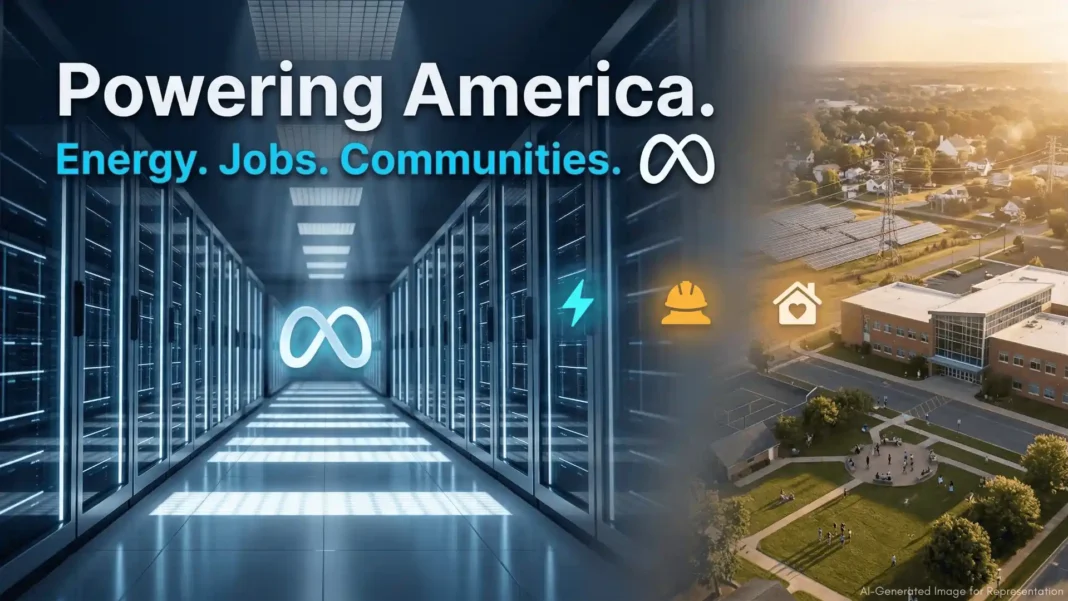
For 15 years, Meta has operated some of the most efficient AI-optimized data centers in the world, and the company’s commitment to host communities goes well beyond server infrastructure. Meta’s data centers create thousands of skilled jobs, fund schools and nonprofits, modernize local energy grids, and protect regional water supplies. This is what that investment actually looks like on the ground.
How Meta Protects Consumers From Energy Cost Increases
Meta pays the full cost of all energy its data centers consume, and those costs are never transferred to local utility customers. The company works closely with utilities years in advance to plan for and meet its energy needs before any facility comes online. This long-term planning prevents grid instability and shields neighboring households from rate increases caused by large industrial demand.
Meta also pays for all new and existing grid infrastructure required to serve its data centers, including new power sources and transmission lines. Through regulator-approved large load tariffs, the company is legally required to fund infrastructure added for its own benefit rather than socializing those costs across all ratepayers. Meta publicly reports annual energy usage for each operational data center through its sustainability reports.

Meta’s Nuclear Energy Commitment and Grid Modernization
Through multi-year energy agreements with energy companies, Meta has supported major infrastructure projects that benefit the grids where it operates. These projects represent billions in domestic capital energy investments and hundreds of energy jobs across the United States. Meta’s purchasing scale now makes it one of the most significant purchasers of nuclear energy in American history.
Meta also commits to supporting grid reliability during periods of emergency and heightened demand, including evaluating programs to reduce its own grid energy usage at those critical times. This means that when regional demand spikes during extreme weather events, Meta actively reduces its draw on shared infrastructure to protect other customers.
What a Meta Data Center Means for Local Jobs
Each Meta data center represents a multi-billion-dollar investment in the host community. Construction phases generate thousands of multi-year skilled trade jobs for steelworkers, pipefitters, electricians, fiber technicians, and foremen. Long-term operational roles include positions for electricians, HVAC specialists, server and network technicians, and engineers.
In many data center communities, Meta ranks among the biggest local employers. The company also supports billions of dollars in annual business for American employers across its supply chain, covering every company that provides products and services for building and operating data centers. Meta works hand-in-hand with community partners to hire local workers wherever possible.
Workforce Training: From Community Colleges to Skilled Trades
Meta partners with general contractors and national organizations like Be Pro Be Proud to connect community members with trade training programs. These partnerships extend into community colleges and technical schools, ensuring local workers gain access to high-quality, future-ready careers in technology, operations, and skilled trades. The goal is to build a pipeline of qualified workers who can fill data center roles for years after construction ends.
This workforce development focus addresses a real gap. As AI infrastructure buildout accelerates, demand for qualified trade workers, specifically electricians, HVAC technicians, and fiber specialists, exceeds local supply in many regions. Meta’s training investments help close that gap directly in the communities where its facilities are built.
The Water Challenge Meta Is Taking Seriously
Meta’s water-positive goal means restoring more water to local watersheds than the company consumes across all its operations by 2030. The company approaches water stewardship through three pillars: minimizing water use through efficient design, supporting water restoration projects in watersheds where it operates, and publishing detailed annual transparency reports on withdrawals and progress.
At its New Albany data center in Ohio, Meta’s cooling systems use less than half the water required to irrigate an average golf course in the American Southwest. Meta also pays the full cost of water and sewer usage so that no expense reaches other ratepayers, and has invested over $550 million in water and wastewater infrastructure that directly strengthens community water resilience.
How Meta Funds Schools, Nonprofits, and Small Businesses
The Meta Data Center Community Action Grant Program is an annual initiative providing direct funding to schools, registered nonprofits, and community organizations in every location where Meta operates a data center. Beyond grants, Meta provides free digital-skills training that supports local businesses, schools, and nonprofits in its data center communities.
Through the White House AI Youth Education Pledge, Meta is working with Pearson Education to build a suite of AI-powered tools supporting teachers in districts that serve military families. Community Accelerator events teach local small businesses how to use AI tools, including Meta AI, to drive growth. Meta also supports electricity bill assistance programs in each new data center community, specifically targeting low-income households to help cover heating and cooling costs.
Considerations
Meta’s sustainability commitments, including the water-positive target and community grant program, are self-reported metrics. Independent third-party verification of progress toward water restoration goals remains limited. The community impact figures, including the $550 million water infrastructure investment, are drawn from Meta’s own disclosures and have not been independently audited at this time.

Frequently Asked Questions (FAQs)
Does Meta pass data center energy costs to local utility customers?
No. Meta pays the full cost of all energy used by its data centers. The company also pays for all new and existing grid infrastructure required to serve its facilities. Regulator-approved large load tariffs legally prevent these costs from reaching local utility customers.
What is Meta’s water-positive target?
Meta’s goal is to be water positive by 2030, which means restoring more water to local watersheds than it consumes across all its global operations. The company publishes detailed annual sustainability reports tracking water withdrawals, restoration projects, and progress toward this target.
How much has Meta invested in water and wastewater infrastructure?
Meta has invested over $550 million in water and wastewater infrastructure across communities where its data centers operate. This covers new infrastructure and enhancements needed to serve its facilities and frequently strengthens overall community water resilience without passing costs to ratepayers.
What kinds of jobs do Meta data centers create?
Meta data centers create thousands of multi-year skilled trade jobs during construction, including roles for steelworkers, pipefitters, electricians, and fiber technicians. Long-term operational roles include HVAC specialists, server and network technicians, and engineers. In many host communities, Meta is among the top local employers.
What is the Meta Data Center Community Action Grant Program?
It is an annual program providing direct funding to schools, registered nonprofits, and community organizations in locations where Meta operates data centers. The program is separate from infrastructure investments and targets local civic priorities, education, and nonprofit operations.
How does Meta support workforce training in data center communities?
Meta partners with Be Pro Be Proud and works with community colleges and technical schools to offer training programs for skilled trades. These programs prepare local workers for careers in technology, operations, and construction roles tied directly to data center building and operation.
How does Meta handle energy demand during grid emergencies?
Meta is committed to supporting grid reliability during emergencies and periods of peak demand. This includes actively evaluating and participating in programs to reduce its own grid energy usage at critical times, lowering pressure on shared infrastructure during high-demand events like extreme heat or winter storms.

