

Key Takeaways
- Google Earth AI improved cholera forecasting accuracy by over 35% compared to standard models using WHO Integrated Disease Surveillance Data
- The Population Dynamics Foundation Model (PDFM) maps vaccination coverage down to ZIP-code level using privacy-preserving, aggregated data
- University of Oxford researchers used Earth AI to significantly improve six-month dengue fever forecasts in Brazil
- Google has active deployments in Malawi, Brazil, Australia, and through the WHO Regional Office for Africa
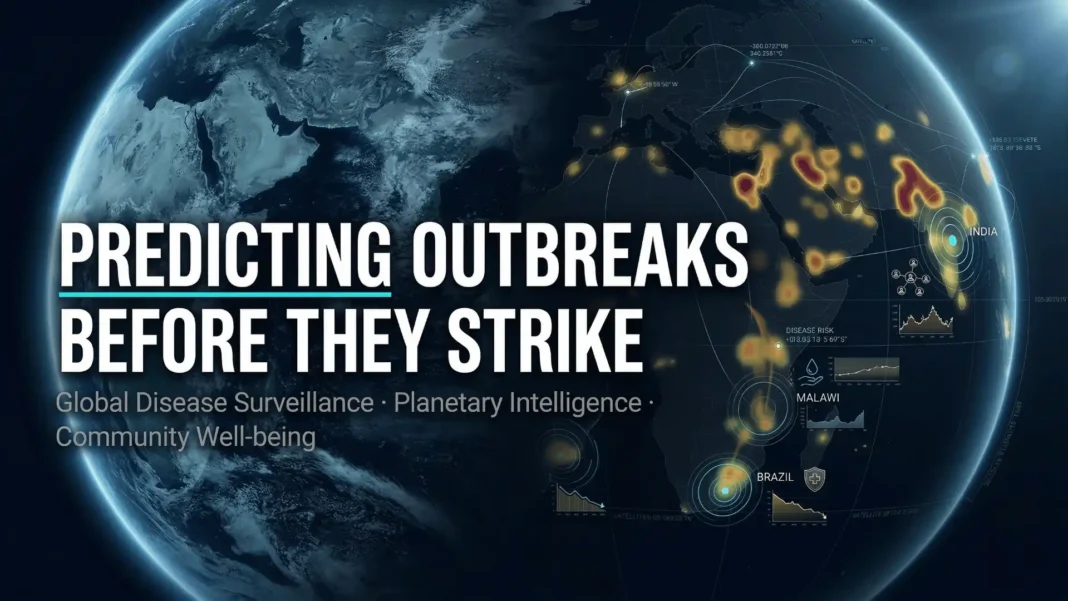
A mapping platform built on decades of geospatial research is now forecasting where disease outbreaks will strike weeks before they peak. Google Earth AI, published March 13, 2026, combines population dynamics, weather modeling, and satellite intelligence to help public health officials move from reacting to crises to anticipating them. This breakdown covers each active deployment, the models powering them, and the verified outcomes recorded so far.
How Google Earth AI Builds Its Health Intelligence
Google Earth AI applies two core models to public health forecasting. The Population Dynamics Foundation Model (PDFM) captures how populations interact with their environments, including factors like weather, air quality, and flooding. Mobility AI provides additional context on how communities move through and engage with their surroundings.
These models combine environmental data with region-specific health information to produce forecasts that can run weeks or months ahead of a potential crisis. The system is authored by Yossi Matias, VP and GM of Google Research, and Michael Howell, Chief Health Officer at Google, signaling this is a senior-level, research-backed initiative rather than an experimental side project.

Cholera and Dengue Forecasting: Verified Outcomes
Weather drives the pace of many infectious diseases. Summer rains cause dengue fever spikes, while flooding significantly increases cholera outbreaks. Google Earth AI addresses both by pairing population dynamics with predictive weather models to generate health emergency forecasts.
In collaboration with the WHO Regional Office for Africa, Google evaluated a sub-national forecasting model using the WHO’s centralized Integrated Disease Surveillance Data. Combining TimesFM (Google’s time-series forecasting model) with PDFM and weather data improved cholera forecasting accuracy by over 35% compared to standard models. Better accuracy means public health officials can pre-position life-saving rehydration supplies before a crisis erupts rather than after.
At the University of Oxford, researchers applied Earth AI models and datasets to dengue forecasting in Brazil. Including PDFM embeddings significantly raised the predictive accuracy of six-month dengue forecasts, giving local authorities more lead time to deploy preventative measures.
Predicting Clinic Demand in Malawi
In Malawi, Google.org grantee Cooper/Smith combined Earth AI’s PDFM and AlphaEarth satellite embeddings with local health data to predict health service utilization at individual clinics. The system helps decision-makers spot early warning signs of disease outbreaks and allocate limited resources more efficiently before demand surges.
This deployment addresses a fundamental operational gap in low-resource health systems: administrators typically discover shortages only after patients arrive. Accurate forward-looking demand forecasts allow clinic-level planning adjustments while there is still time to act.
Mapping Vaccination Gaps at ZIP-Code Level
To address the rise of measles, researchers at Mount Sinai and Boston Children’s Hospital/Harvard used Earth AI’s PDFM to produce what they call “superresolution” estimates of vaccination coverage. The methodology relies entirely on privacy-preserving, aggregated data, meaning individual health records are never exposed.
The output maps vaccination rates down to the ZIP-code level and identifies localized clusters of undervaccination that align with recent outbreaks. National vaccination averages routinely obscure dangerous pockets of low coverage at the neighborhood scale. This granular mapping gives health agencies a precise targeting tool for outreach campaigns.
Chronic Disease Needs in Rural Australia
Google partnered with the Victor Chang Cardiac Research Institute, Wesfarmers Health, and Latrobe Health Services in Australia to deploy Population Health AI (PHAI). PHAI uses PDFM embeddings alongside air quality data, pollen data, and places insights to uncover the health needs of communities in rural Australia, with a focus on chronic disease needs and prevention.
PHAI is currently available as a proof-of-concept to select partners. The initiative reflects a deliberate expansion of Earth AI beyond infectious disease forecasting into non-communicable conditions, where environmental exposure over long periods shapes health outcomes.
Limitations Worth Noting
Earth AI’s effectiveness depends on the quality of local health data it is combined with. All current deployments are either pilot-stage or proof-of-concept, meaning broad rollout timelines have not been confirmed. The platform’s published impact figures reflect evaluated models in specific regional contexts, not globally generalized performance guarantees.

Frequently Asked Questions (FAQs)
What is Google Earth AI and how does it support public health?
Google Earth AI is a geospatial intelligence platform that combines the PDFM and Mobility AI models with regional health data to forecast disease outbreaks, map vaccination gaps, and predict clinic demand. It is designed to help public health officials anticipate and prevent crises rather than react to them.
How does Google Earth AI predict disease outbreaks?
It layers population dynamics data with weather patterns, air quality readings, flood signals, and local health records. TimesFM generates time-series forecasts while PDFM captures how populations interact with environmental conditions that precede outbreaks, such as flooding before cholera or summer rains before dengue spikes.
How accurate is Google Earth AI’s cholera forecasting?
In collaboration with the WHO Regional Office for Africa, combining TimesFM, PDFM, and weather data against the WHO Integrated Disease Surveillance Data improved cholera forecasting accuracy by over 35% compared to standard epidemiological models. This was a formally evaluated result, not a lab estimate.
Which diseases and health challenges does Earth AI currently address?
Active use cases confirmed as of March 2026 include cholera sub-national forecasting (with WHO Africa), dengue fever six-month forecasting (Brazil, Oxford), measles vaccination gap mapping (Mount Sinai, Boston Children’s/Harvard), clinic utilization prediction (Malawi, Cooper/Smith), and chronic disease needs mapping in rural Australia (Victor Chang, Wesfarmers, Latrobe).
Does Google Earth AI use personal health data?
No. All deployments described by Google use privacy-preserving, aggregated data. The vaccination coverage mapping, for example, generates ZIP-code-level estimates without revealing or processing any individual’s health records.
Who are the confirmed partners in Google Earth AI’s health initiative?
Confirmed partners and research teams are: WHO Regional Office for Africa, University of Oxford, Cooper/Smith (Google.org grantee) in Malawi, Mount Sinai, Boston Children’s Hospital, Harvard, Victor Chang Cardiac Research Institute, Wesfarmers Health, and Latrobe Health Services in Australia.
Is PHAI available publicly or only to select organizations?
PHAI (Population Health AI), deployed in Australia with Victor Chang, Wesfarmers Health, and Latrobe Health Services, is currently available only as a proof-of-concept to select partners. No general availability date has been announced.
Who authored the Google Earth AI public health announcement?
The March 13, 2026 blog post was authored by Yossi Matias, VP and GM of Google Research, and Michael Howell, Chief Health Officer at Google. Both are senior Google executives with direct oversight of the initiative.

