

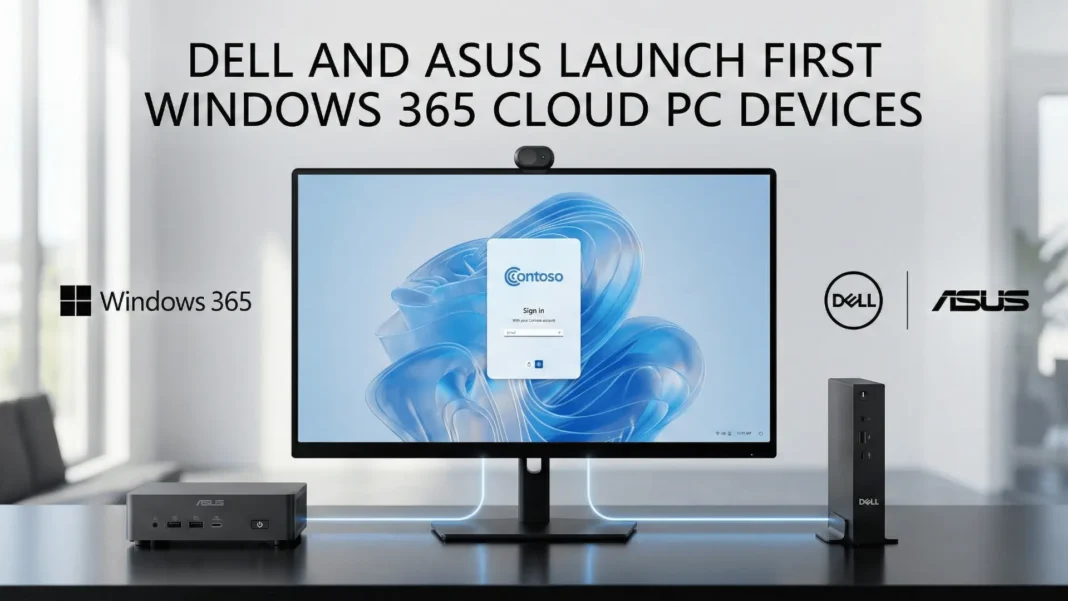
Quick Brief
- Dell Pro Desktop and ASUS NUC 16 are the first OEM-built Windows 365 Cloud PC devices, both launching Q3 2026
- ASUS NUC 16 uses an ultra-compact 0.7L form factor and supports up to three displays via HDMI and USB Type-C
- Dell Pro Desktop is fanless, supports up to three displays, and uses Intel N-series processors
- Both devices store no local data, no local apps, and allow no local admin users, managed through Microsoft Intune
Microsoft just opened the Windows 365 Cloud PC device category to third-party manufacturers for the first time. Dell and ASUS are building purpose-built hardware that boots directly into Windows 365, and the implications for enterprise IT go well beyond a simple hardware refresh. This article covers exactly what each device delivers, who it is built for, and what IT teams need to evaluate before Q3 2026.
Why Microsoft Is Expanding the Cloud PC Device Portfolio
Microsoft introduced Windows 365 Link in 2024 as the first device purpose-built to connect users directly to their Windows 365 Cloud PCs. The design principle was strict: no local data, no local apps, no local admin users, minimal configuration, and security features on by default that cannot be disabled.
Expanding to ASUS and Dell gives organizations more choice in secure, simple-to-manage endpoints as they move workloads to the cloud. Industries including manufacturing, retail, healthcare, professional services, and telecommunications have already adopted Windows 365 and Windows 365 Link for critical workloads.

Dell Pro Desktop for Windows 365: Built for Secure, Quiet Environments
The Dell Pro Desktop for Windows 365 is a compact, fanless desktop designed for durability and quiet operation. It supports up to three displays with versatile connectivity and flexible mount options, making it practical for multi-monitor workspaces.
Security shapes every aspect of the design. The locked-down OS stores no local data, so a lost or stolen device carries zero organizational exposure. Users authenticate with passwordless sign-in through Microsoft Entra using Microsoft Authenticator or FIDO2 security keys. Intel N-series processors power the device, optimized for cloud-streaming workloads.
The Dell Pro Desktop is especially suited for regulated industries and environments with dynamic staffing needs, including healthcare, finance, and the public sector. Because the Cloud PC runs entirely in the cloud, employees can pick up instantly on a replacement device, minimizing downtime.
General availability: Q3 2026, targeted across 58 countries.
ASUS NUC 16 for Windows 365: Ultra-Compact for Hot-Desking
ASUS brings its NUC engineering to the Cloud PC category with the NUC 16 for Windows 365, which occupies just 0.7 liters of physical space. Its ultra-compact form factor allows mounting directly behind a display, removing the device entirely from the desk surface, ideal for hot-desking and shared-workspace environments.
Display support extends to three screens via HDMI and USB Type-C connectivity. Microsoft Intune integration means provisioning at scale uses the same tools IT teams already operate, with no new consoles or complex workflows required.
General availability: Q3 2026, starting in Europe and the United States.
How These Devices Compare
| Feature | Windows 365 Link | Dell Pro Desktop | ASUS NUC 16 |
|---|---|---|---|
| Form Factor | Compact mini-PC | Compact fanless desktop | Ultra-compact 0.7L mini-PC |
| Processor | Not disclosed | Intel N-series | Not disclosed at announcement |
| Display Support | Not specified | Up to 3 displays | Up to 3 displays |
| Display Connectivity | Not specified | Versatile connectivity | HDMI and USB Type-C |
| Mount Options | Not specified | Flexible mount options | Mountable behind display |
| Auth Method | Not specified | Passwordless via Entra, FIDO2 | Microsoft Intune-managed |
| Local Data Storage | None | None | None |
| Local Apps | None | None | None |
| Local Admin | Not allowed | Not allowed | Not allowed |
| Management | Microsoft Intune | Microsoft Intune | Microsoft Intune |
| OS | Windows CPC | Windows CPC | Windows CPC |
| Availability | 20 countries, available now | Q3 2026, 58 countries | Q3 2026, US and Europe |
What Windows CPC Gets in Q2 2026
All Cloud PC devices run Windows CPC, a locked-down OS that receives automatic updates and stores nothing locally. Microsoft has targeted Q2 2026 for two specific updates to this OS :
- Support for pairing Bluetooth devices during the out-of-box setup experience
- Support for tenant branding, including setting a custom wallpaper, logo, and name on the sign-in screen
These updates address two genuine friction points in enterprise deployment: the first-boot experience for end users, and the need to deliver branded, consistent environments across shared hardware fleets.
Industries Where Cloud PC Devices Fit Best
Microsoft has confirmed real-world adoption of the Cloud PC device model across specific verticals :
- Manufacturing: Rapid provisioning and no re-imaging requirements support fast staffing cycles
- Retail: Simple management and consistent experiences across distributed locations
- Healthcare: No local patient data on endpoints reduces compliance exposure
- Professional services: Cloud-resident user state enables seamless continuity across devices
- Telecommunications: Large-scale deployment simplified by centralized Intune management
Considerations Before Deploying Cloud PC Devices
Cloud PC devices store no local data and run no local apps. This is a security strength, but it means these devices are entirely dependent on a stable cloud connection. Organizations must assess their network infrastructure before committing to a Cloud PC endpoint strategy.
IT management consolidates through Microsoft Intune, which is an advantage for teams already using it, but represents an adoption requirement for organizations that have not standardized on Intune. Dell’s Pro Desktop is targeted at 58 countries in Q3 2026, while ASUS is launching first in the US and Europe, so regional availability should be confirmed before procurement planning begins.
Windows 365 Pricing Reference (India, Per User/Month)
Windows 365 subscription costs are separate from device hardware costs. The following plans are sourced directly from Microsoft’s official India pricing page:
| vCPU | RAM | Storage | Monthly Cost (INR) |
|---|---|---|---|
| 2 vCPU | 4 GB | 64 GB | Rs. 2,515 |
| 2 vCPU | 4 GB | 128 GB | Rs. 2,785 |
| 4 vCPU | 16 GB | 256 GB | Rs. 6,740 |
| 8 vCPU | 32 GB | 256 GB | Rs. 11,860 |
| 16 vCPU | 64 GB | 1 TB | Rs. 28,305 |
What This Means for IT Decision-Makers in 2026
Microsoft opening the Cloud PC device category to OEM partners signals a clear strategic direction: Windows 365 is being positioned as a mainstream endpoint model, not a niche experiment. Dell’s 58-country availability and ASUS’s established NUC manufacturing scale both support deployment at a scope Microsoft’s own Link device alone could not reach.
For IT teams evaluating endpoints, the practical question is whether the network infrastructure, workload profile, and Intune maturity match the Cloud PC model’s requirements. Organizations that clear those thresholds have a credible case for replacing traditional thick clients with devices that provision in minutes, carry zero local risk, and replace without re-imaging.

Frequently Asked Questions (FAQs)
What is the Dell Pro Desktop for Windows 365?
The Dell Pro Desktop for Windows 365 is a compact, fanless desktop designed to connect directly to Microsoft’s Windows 365 Cloud PC service. It stores no local data, supports up to three displays, uses Intel N-series processors, and is managed through Microsoft Intune. General availability is targeted for Q3 2026 across 58 countries.
What are the confirmed specs of the ASUS NUC 16 for Windows 365?
At announcement, Microsoft and ASUS confirmed the NUC 16 for Windows 365 features an ultra-compact 0.7L form factor, support for up to three displays via HDMI and USB Type-C, and management through Microsoft Intune. Full processor and memory specifications had not been published as of the February 26, 2026 announcement.
How does a Windows 365 Cloud PC device differ from a regular PC?
A Cloud PC device runs a locked-down OS called Windows CPC with no local apps, no local data, and no local admin access. All computing runs in Microsoft’s Azure cloud and streams to the device. This reduces endpoint security risk and simplifies IT management through Microsoft Intune.
What is Windows CPC and how does it work?
Windows CPC is the locked-down operating system preinstalled on all Cloud PC devices. It boots directly to the Windows 365 connection client, receives automatic updates, and stores nothing locally. Upcoming Q2 2026 updates add Bluetooth pairing during setup and tenant branding support on the sign-in screen.
When will the Dell and ASUS Windows 365 devices be available?
Both devices target Q3 2026 general availability. Dell’s Pro Desktop is planned for 58 countries. The ASUS NUC 16 is launching first in the United States and Europe. Broader regional rollout details for ASUS had not been confirmed at the time of the February 2026 announcement.
What industries are already using Windows 365 Cloud PC devices?
Microsoft confirmed adoption of Windows 365 and Windows 365 Link across manufacturing, retail, healthcare, professional services, and telecommunications as of February 2026. These are the five industries specifically cited in Microsoft’s announcement of the expanded Cloud PC device portfolio.
How is a Windows 365 Cloud PC device managed by IT teams?
Both the Dell Pro Desktop and ASUS NUC 16 are managed through Microsoft Intune. Policies, updates, and compliance controls are centralized in one platform. IT teams can manage Cloud PC devices alongside existing endpoints without additional consoles or new workflows.
What is Windows 365 Link and how does it compare to the new devices?
Windows 365 Link is Microsoft’s own Cloud PC device, currently available in 20 countries via Microsoft or authorized resellers, with availability continuing to expand. The Dell Pro Desktop and ASUS NUC 16 are the first OEM-built alternatives. All three run Windows CPC, store no local data, allow no local admin access, and are managed through Microsoft Intune.

