

What You Need to Know
- Pentagon designated Anthropic a supply chain risk on February 27, 2026, over two refused contract exceptions
- The standoff centers on Anthropic’s refusal to allow mass domestic surveillance of Americans and fully autonomous lethal weapons
- Anthropic holds a $200 million DOD contract awarded July 2025 and is the only AI company deployed on Pentagon classified networks
- OpenAI struck a Pentagon agreement the same evening, explicitly including the same two safeguards Anthropic demanded
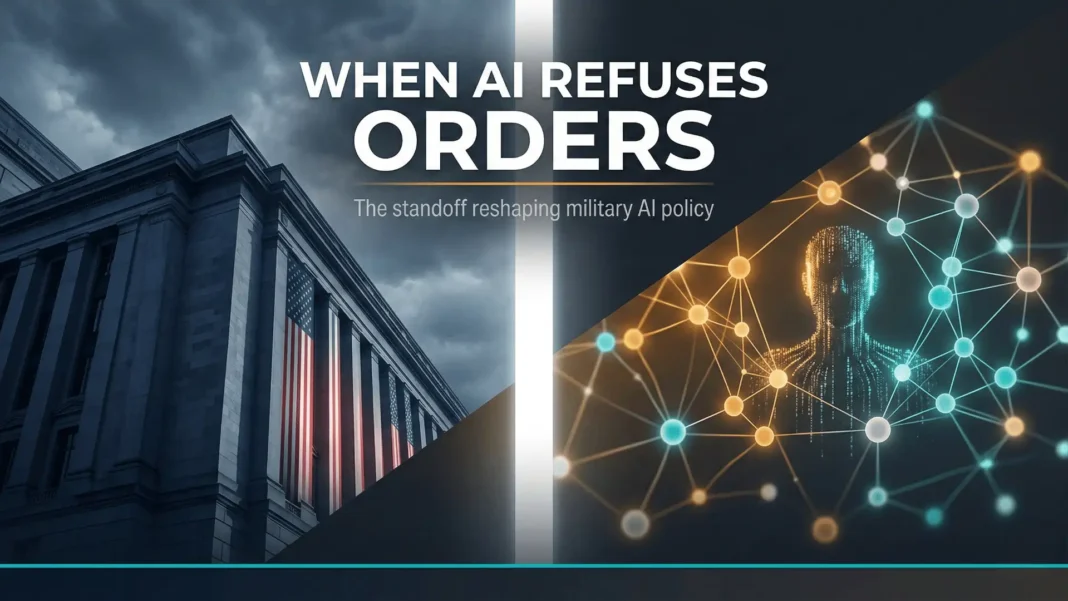
The US government designated an American AI company a national security supply chain risk for the first time in history, and the company said it will see the government in court. Anthropic refused a Pentagon ultimatum to remove two specific restrictions on its Claude AI model, and within hours both President Trump and Defense Secretary Pete Hegseth moved to cut the company off. What happened, what it means legally, and what it means for every organization using Claude is laid out in full below.
The $200 Million Contract Behind the Crisis
Anthropic is not a newcomer to US national security work. The company received a $200 million contract from the Pentagon in July 2025 to develop AI capabilities advancing national security. It is currently the only AI company with its model deployed on the Pentagon’s classified networks, a deployment that began in June 2024 through a partnership with data analytics company Palantir.
That depth of integration made the negotiation breakdown all the more consequential. Pentagon Chief Technology Officer Emil Michael told CBS News on Thursday that the military “made some very good concessions” in the attempt to reach a deal. Anthropic’s spokesperson disagreed, stating that new contract language “made virtually no progress on preventing Claude’s use for mass surveillance of Americans or in fully autonomous weapons” and that compromise language “was paired with legalese that would allow those safeguards to be disregarded at will.”
The Two Exceptions Anthropic Would Not Remove
Months of negotiations collapsed over two specific carve-outs Anthropic had built into its contract terms. Both are documented in the company’s official statement.
- Mass domestic surveillance of Americans: Anthropic stated this constitutes a violation of fundamental rights and refused to remove the restriction under any offered contract language
- Fully autonomous lethal weapons: Anthropic argued that current frontier AI models, including Claude, are not reliable enough to make autonomous targeting decisions, and that using them this way “would endanger America’s warfighters and civilians”
Pentagon Chief Spokesman Sean Parnell stated Thursday that the department sought to use Claude “for all lawful purposes.” The Pentagon offered to acknowledge in writing existing federal laws that restrict military surveillance of Americans and existing Pentagon policies on autonomous weapons. Anthropic rejected that framing, saying the offered language could still be disregarded at will.
The Pentagon also threatened to invoke the Defense Production Act to force removal of Anthropic’s standards, a threat Anthropic CEO Dario Amodei publicly disclosed.
How the Final 24 Hours Unfolded
Hegseth set a hard deadline of 5:01 PM ET on Friday, February 27, 2026, for Anthropic to drop its guardrails. Anthropic did not comply.
Approximately an hour and a half before that deadline, President Trump posted on Truth Social: “I am directing EVERY Federal Agency in the United States Government to IMMEDIATELY CEASE all use of Anthropic’s technology. We don’t need it, we don’t want it, and will not do business with them again!” Trump added that agencies with existing Anthropic deployments, such as the Department of Defense, would be given six months to phase out use of its products. He also threatened “major civil and criminal consequences” if Anthropic was not cooperative during the transition period.
About an hour and a half after Trump’s post, Hegseth followed through on X: “I am directing the Department of War to designate Anthropic a Supply-Chain Risk to National Security. Effective immediately, no contractor, supplier, or partner that does business with the United States military may conduct any commercial activity with Anthropic.”
What the Designation Legally Covers and Does Not Cover
Hegseth’s post implied that any military contractor doing commercial business with Anthropic anywhere would be barred from doing so. Anthropic’s statement directly challenged that scope, and the statutory basis matters.
The designation invokes 10 USC 3252. Anthropic’s legal position is that this statute can only restrict the use of Claude within Department of War contracts. It cannot extend to how contractors use Claude in their own commercial work unrelated to Pentagon contracts.
The practical impact, according to Anthropic’s statement, breaks down as follows:
| Customer Type | Impact |
|---|---|
| Individual users and commercial API or claude.ai customers | Completely unaffected |
| Department of War contractors | Designation only affects Claude use on DoW contract work; all other use unaffected |
| Other US federal agencies | Covered by Trump’s separate Truth Social directive to immediately cease use |
Anthropic confirmed it had not yet received direct communication from the Department of War or the White House on the formal status of negotiations as of Friday evening.
Amodei’s Position and Anthropic’s Legal Commitment
Anthropic CEO Dario Amodei stated Thursday that the Pentagon’s threats “would do nothing to change its position on the need for guardrails.” Anthropic’s official statement said: “No amount of intimidation or punishment from the Department of War will change our position on mass domestic surveillance or fully autonomous weapons. We will challenge any supply chain risk designation in court.”
Amodei also stated the company’s “strong preference” was to continue serving the Department and warfighters with both safeguards in place, and pledged to enable a smooth transition to another provider if the DOD chose to offboard Anthropic, “avoiding any disruption to ongoing military planning, operations, or other critical missions.”
Anthropic described the designation as “unprecedented” and “historically reserved for US adversaries, never before publicly applied to an American company,” calling it “legally unsound” and “a dangerous precedent for any American company that negotiates with the government.”
OpenAI Steps In the Same Evening
OpenAI CEO Sam Altman posted Friday night that his company “reached an agreement with the Department of War to deploy our models in their classified network.” Altman’s post specified that two of OpenAI’s “most important safety principles are prohibitions on domestic mass surveillance and human responsibility for the use of force, including for autonomous weapon systems,” and that the Department of War “agrees with these principles, reflects them in law and policy, and we put them into our agreement.”
Altman also stated that OpenAI is asking the Defense Department “to offer these same terms to all AI companies, which in our opinion we think everyone should be willing to accept.” A senior Pentagon official had previously told CBS News that Grok, the model owned by Elon Musk’s xAI, could also be used in a classified setting.
Political Reaction
Democratic Senator Mark Warner of Virginia, vice chair of the Senate Intelligence Committee, criticized the administration’s actions. Warner accused Trump and Hegseth of “bullying” Anthropic to deploy “AI-driven weapons without safeguards,” and said it should “scare the hell out of all of us.” He stated the president’s directive “raises serious concerns about whether national security decisions are being driven by careful analysis or political considerations.”
Considerations
The dispute leaves real operational uncertainty. Anthropic is the only company currently deployed on the Pentagon’s classified networks, meaning a full offboarding affects active military operations, not just future procurement. The six-month transition period Trump ordered addresses this, but it also means the legal challenge and the transition will run simultaneously, creating prolonged ambiguity for DOD contractors who rely on Claude today. Anthropic’s legal argument has not yet been tested in court, and the outcome of any 10 USC 3252 challenge involving an American company is genuinely without precedent.
AdwaitX Take: We tracked this story from the first public reporting through the Friday designations. The factual record shows Anthropic was not refusing to serve the military. It was refusing two specific use cases it considers both technically unsafe and rights-violating. The fact that OpenAI agreed to the same two safeguards and still closed a deal suggests the impasse was less about the substance of the restrictions and more about who controls the language that defines them.

Frequently Asked Questions (FAQs)
What exactly did the Pentagon want Anthropic to agree to?
The Pentagon sought contract language permitting Claude to be used “for all lawful purposes,” a standard phrase it uses with other AI vendors. Pentagon CTO Emil Michael said the military offered written acknowledgment of existing federal laws restricting domestic surveillance and existing policies on autonomous weapons, but Anthropic said that language still allowed the safeguards to be overridden.
Why did Anthropic refuse to remove its restrictions?
Anthropic cited two reasons in its official statement: it believes current frontier AI models are not reliable enough to make autonomous lethal targeting decisions safely, and it considers mass domestic surveillance of Americans a violation of fundamental rights. The company said these exceptions have not blocked a single government mission to date.
Does this affect my access to Claude as an individual or business user?
No. Anthropic confirmed that individual users, claude.ai subscribers, and commercial API customers face zero impact. The legal scope of 10 USC 3252 is limited to Department of War contract work and cannot restrict contractors’ independent commercial use of Claude.
What did OpenAI agree to that Anthropic would not?
OpenAI agreed to deploy its models on Pentagon classified networks under a contract that explicitly includes prohibitions on domestic mass surveillance and requires human responsibility for use of force including autonomous weapons. These are the same two principles Anthropic fought for, but OpenAI accepted the DOD’s framing and language rather than insisting on its own.
What is the six-month transition period Trump ordered?
Trump’s Truth Social post directed all federal agencies to immediately stop using Anthropic technology but gave agencies like the Department of Defense, which have active Anthropic deployments, six months to phase out use. Trump also threatened “major civil and criminal consequences” if Anthropic was not cooperative during that transition.
Can Hegseth legally ban all military contractors from using Anthropic commercially?
Anthropic argues no. Its statement says the Secretary of Defense does not have statutory authority under 10 USC 3252 to extend a supply chain risk designation beyond Department of War contract work. Anthropic has committed to challenging any formal designation in court.
Has Anthropic received official legal notice of the designation?
As of Friday evening, February 27, 2026, Anthropic stated it had “not yet received direct communication from the Department of War or the White House on the status of our negotiations,” despite Hegseth’s public X post declaring the designation effective immediately.

