

Quick Brief
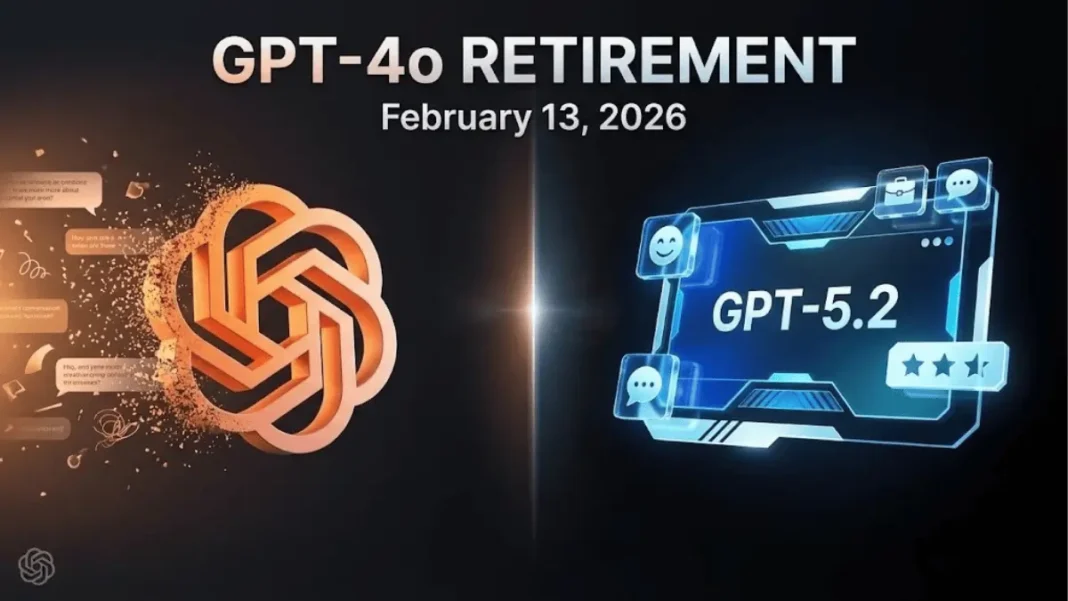
- The Announcement: OpenAI will retire GPT-4o, GPT-4.1, GPT-4.1 mini, and OpenAI o4-mini from ChatGPT on February 13, 2026, affecting only 0.1% of daily active users.
- The Impact: ChatGPT users must transition to GPT-5.2, while API developers receive separate deprecation timelines with no changes announced for API access at this time.
- The Context: This marks the second attempt to retire GPT-4o after user pushback during GPT-5’s launch led OpenAI to restore access and incorporate user feedback into GPT-5.1 and GPT-5.2.
OpenAI confirmed on January 29, 2026, that it will permanently retire GPT-4o, GPT-4.1, GPT-4.1 mini, and OpenAI o4-mini from its ChatGPT interface on February 13, 2026, alongside the previously announced GPT-5 (Instant and Thinking) models. The company stated that only 0.1% of users still select GPT-4o daily, with the vast majority migrating to GPT-5.2. OpenAI emphasized that “in the API, there are no changes at this time,” indicating the retirement applies specifically to ChatGPT’s model selector interface.
GPT-4o Restoration and User-Driven Development
GPT-4o’s retirement carries unique significance as OpenAI initially deprecated the model following GPT-5’s launch but restored access after Plus and Pro users demanded more time to transition creative workflows. Users specifically cited GPT-4o’s conversational style, warmth, and creative ideation capabilities as reasons they resisted the initial deprecation. This direct feedback shaped the development priorities for GPT-5.1 and GPT-5.2, leading OpenAI to implement extensive personality customization features.
The company now offers base personality styles including Friendly, Professional, Candid, and Quirky, plus granular controls for warmth, enthusiasm, and conciseness. OpenAI stated its goal is “to give people more control and customization over how ChatGPT feels to use not just what it can do“. The improvements directly address the conversational qualities users valued in GPT-4o.
API Deprecation Timeline and Enterprise Impact
While the ChatGPT interface retirement takes effect February 13, 2026, OpenAI has not announced changes to API access in the January 29 announcement. However, separate communications to API developers in November 2025 indicated that the chatgpt-4o-latest endpoint would be deprecated, with developers receiving a three-month transition window. API developers using GPT-4o endpoints should monitor OpenAI’s deprecation documentation for specific timelines affecting their integrations.
An OpenAI spokesperson stated in November 2025 that there was “no schedule for the removal of GPT-4o from ChatGPT,” but the company reversed this position with the January 29, 2026 announcement after usage data showed only 0.1% daily selection rates. This policy shift reflects OpenAI’s infrastructure consolidation strategy around fewer, more capable model endpoints.
Personality Customization in GPT-5.2
| Feature | GPT-4o | GPT-5.2 |
|---|---|---|
| Personality Presets | Fixed conversational style | Friendly, Professional, Candid, Quirky base styles |
| Customization Controls | None | Warmth, enthusiasm, conciseness sliders |
| Creative Ideation | User-preferred capability | Enhanced with stronger support |
| Usage (Jan 2026) | 0.1% daily ChatGPT users | Vast majority of users |
| Conversational Tone | Warm, preferred by creative users | Customizable to match GPT-4o warmth |
Platform Strategy and Adult Experience Development
OpenAI continues addressing user feedback on unnecessary refusals and overly cautious responses, with updates targeting an adult-over-18 experience grounded in treating users with greater autonomy. The company deployed age prediction systems for users under 18 in most markets to support differentiated content policies. OpenAI stated it is “continuing to make progress toward a version of ChatGPT designed for adults over 18, grounded in the principle of treating adults like adults, and expanding user choice and freedom within appropriate safeguards“.
The company acknowledged that “losing access to GPT-4o will feel frustrating for some users” and emphasized it “didn’t make this decision lightly”. OpenAI framed the retirement as necessary to “focus on improving the models most people use today” rather than maintaining parallel infrastructure for legacy systems with minimal usage. The February 13 cutoff provides users two weeks to adjust workflows and migrate custom instructions to GPT-5.2’s personality system.
Frequently Asked Questions (FAQs)
When does OpenAI retire GPT-4o from ChatGPT?
OpenAI retires GPT-4o from ChatGPT on February 13, 2026. API access timelines were not specified in the January 29 announcement.
What replaces GPT-4o for ChatGPT users?
GPT-5.2 replaces GPT-4o with personality customization including Friendly, Professional, Candid, and Quirky styles, plus warmth and enthusiasm controls.
Why is OpenAI retiring GPT-4o a second time?
Only 0.1% of users select GPT-4o daily, and GPT-5.2 now incorporates the conversational warmth and creative ideation features users valued.
How many ChatGPT users still use GPT-4o?
Only 0.1% of ChatGPT users select GPT-4o daily as of January 2026, with the vast majority using GPT-5.2.

