

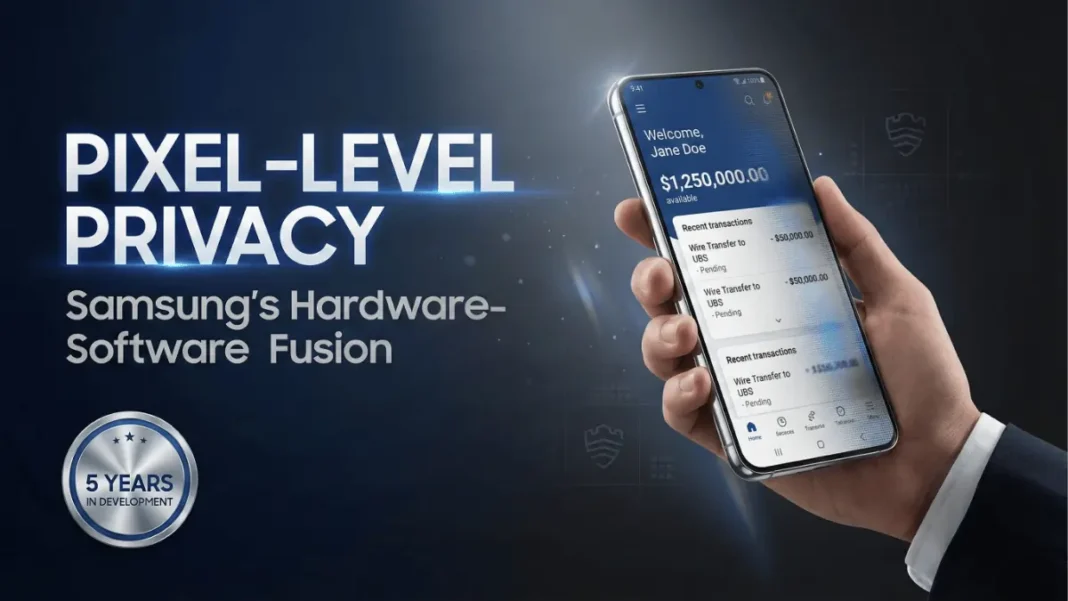
The Quick Brief
- The Technology: Samsung unveils pixel-level privacy display after 5 years of engineering, blocking shoulder surfing through hardware-software fusion
- The Launch: Feature arrives on upcoming Galaxy devices “very soon” with Galaxy Unpacked branding; specific models and dates not disclosed
- The Controls: Users customize app-level privacy settings and protect specific screen elements including notification pop-ups
- The Integration: Extends Samsung Knox, Knox Vault, and Knox Matrix security ecosystem with visual privacy layer
Samsung Electronics announced a hardware-software privacy display technology on January 28, 2026, designed to prevent shoulder surfing through pixel-level visibility controls. The feature, developed over five years of engineering and testing, will arrive on Galaxy devices “very soon” according to the company’s official statement.
Hardware-Software Fusion Architecture
Samsung’s privacy display operates through integrated hardware and software that manage screen visibility at the pixel level. The system shields smartphones from shoulder surfing by controlling what remains visible from off-angle viewpoints while maintaining normal usability for the primary user. Samsung describes the implementation as providing “privacy at a pixel level,” representing a fusion of hardware components and software controls.
The technology extends Samsung’s existing security framework, which includes Knox for defense-grade protection, Knox Vault for hardware-isolated security, and Knox Matrix for connected device security. This privacy layer addresses visual exposure rather than focusing solely on data encryption or access controls.

Customizable App-Level Privacy Controls
Users configure which applications trigger privacy display automatically. The system allows selective protection of screen elements, including the ability to obscure specific interface components such as notification pop-ups. Samsung positions the feature as customizable, enabling users to determine protection levels based on individual security requirements.
The company emphasizes that the privacy layer addresses growing concerns about visual data exposure as smartphones store increasing volumes of personal information. The technology targets scenarios where devices operate in public environments including transit systems, queues, and shared workspaces.
Five-Year Development Timeline and Market Context
Samsung invested over five years in engineering, testing, and refining the privacy display technology. This extended development cycle reflects the technical complexity of implementing hardware-level privacy controls that maintain device usability while restricting viewing angles. The company has not disclosed specific technical specifications, manufacturing partners, or cost implications for the hardware integration.
The announcement arrives as smartphone manufacturers face increased scrutiny over privacy protection capabilities beyond traditional software-based security measures. Samsung’s approach combines physical hardware modifications with software management, differentiating from screen filter accessories or software-only solutions available on competing platforms.
Knox Ecosystem Integration and Enterprise Applications
The privacy display builds on Samsung Knox, the company’s multi-layered security platform deployed across Galaxy devices. Knox provides hardware-based security features including secure boot, trusted execution environments, and containerization for sensitive enterprise data. The visual privacy layer complements these capabilities by addressing scenarios where encrypted data remains vulnerable to observation during active use.
Enterprise customers represent a primary target for the technology, particularly organizations operating in sectors with stringent visual privacy requirements including finance, healthcare, and government. The feature integrates with Knox Vault, which provides hardware-isolated storage for biometric data and cryptographic keys, and Knox Matrix, which extends security across connected Samsung devices.
Device Availability and Rollout Strategy
Samsung confirmed the privacy display will arrive on Galaxy devices “very soon” but has not specified which models will receive the feature. The company’s announcement includes Galaxy Unpacked branding, suggesting a connection to an upcoming product launch event. Samsung has not clarified whether the technology will deploy across multiple device tiers or remain exclusive to flagship models.
The hardware requirements for pixel-level privacy controls suggest the feature may not arrive on existing devices through software updates. Samsung has not addressed backward compatibility, upgrade paths for current Galaxy owners, or regional availability restrictions.
Technical Implementation and User Experience
Samsung describes the privacy display as providing protection while maintaining device functionality for the primary user. The system operates by controlling screen visibility characteristics at the pixel level, though the company has not disclosed whether this involves display panel modifications, optical filters, or dynamic brightness adjustments.
Users activate and configure the privacy layer through device settings, selecting specific applications and screen elements for protection. The announcement does not detail whether the feature operates continuously, activates automatically based on context, or requires manual triggering for each use. Samsung has not disclosed performance impacts, battery consumption effects, or display brightness reductions associated with privacy mode operation.
 UK Ministry of Defence and Red Hat Build Unified AI Platform to Modernize Military Operations
Frequently Asked Questions (FAQs)
What is Samsung’s new privacy display technology?
A hardware-software fusion system that provides pixel-level screen privacy, blocking shoulder surfing while maintaining usability for the primary user through customizable controls.
When will Samsung’s privacy display launch?
Samsung states the feature arrives on Galaxy devices “very soon” with Galaxy Unpacked branding but has not announced specific launch dates or device models.
How was the privacy screen developed?
Samsung invested over five years in engineering, testing, and refining the technology to create a hardware-software integrated privacy solution.
Can users customize the privacy feature?
Yes. Users configure app-level privacy settings and select specific screen elements for protection, including notification pop-ups.
Does this work with Samsung Knox security?
Yes. The privacy display extends Samsung’s Knox ecosystem, which includes Knox, Knox Vault, and Knox Matrix security platforms.

