


Samsung Galaxy Z Trifold is the company’s first triple-folding smartphone, featuring a massive 10-inch QXGA+ main display that folds twice into a pocketable 6.5-inch device. Powered by Snapdragon 8 Elite and equipped with a 200MP camera system, 5,600mAh battery, and standalone Samsung DeX, it launches December 12, 2025 in Korea with subsequent global rollout. The device uses dual Armor FlexHinge technology, weighs 309g, measures just 3.9mm at its thinnest point, and runs Android 16 with One UI 8.
Samsung has officially launched the Galaxy Z Trifold, its first smartphone that folds twice to reveal a massive 10-inch display, the largest screen ever on a Galaxy phone. Announced December 2, 2025, this triple-folding device challenges Huawei’s Mate XT while bringing Samsung’s decade of foldable expertise into a new category that balances tablet-sized productivity with pocket-friendly portability.
What Is the Galaxy Z Trifold?
The Galaxy Z Trifold is Samsung’s answer to the growing tri-fold smartphone market, using an inward-folding design that protects the main display when closed. Unlike traditional foldables that open once, this device unfolds twice transforming from a standard 6.5-inch smartphone into a 10-inch workspace roughly equivalent to three side-by-side 6.5-inch phones. Samsung designed it for power users who need tablet-level multitasking without carrying a separate device, targeting mobile professionals, content creators, and early adopters willing to embrace cutting-edge form factors.
The device will first launch in South Korea on December 12, 2025, followed by China, Taiwan, Singapore, the UAE, and the United States. Samsung is positioning this as a limited market test to gather real-world feedback on durability, hinge mechanics, and software optimization before potential broader commercialization.
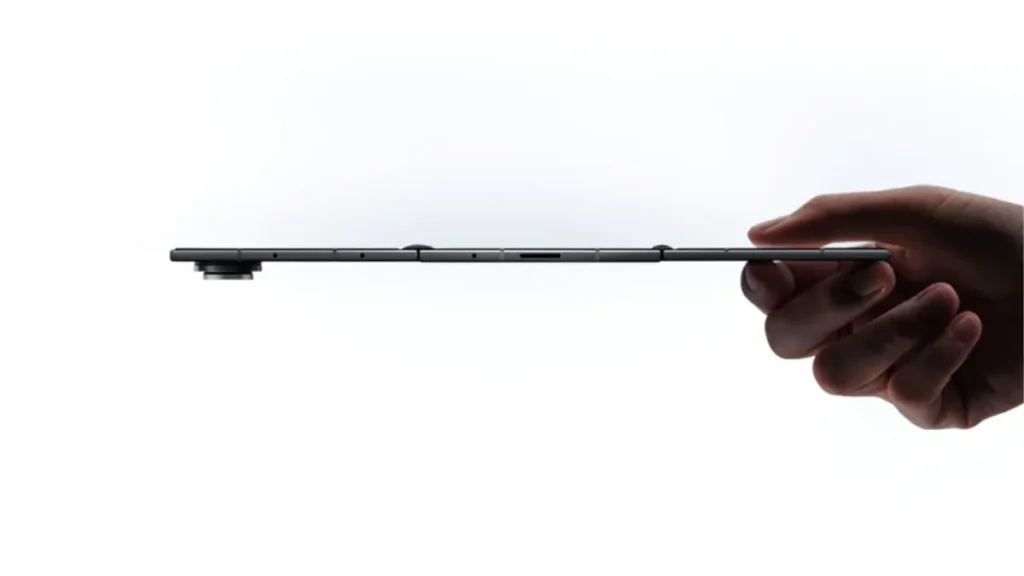
Design and Build Engineering
Samsung engineered the Galaxy Z Trifold with two differently sized hinges using a dual-rail Armor FlexHinge structure, the most advanced hinge system Samsung has created. This dual-hinge design compensates for varying weight distribution across the three panels, creating smoother folding action despite the complexity of a multi-fold mechanism. The hinge structure allows the screen panels to meet with minimal gap, enabling the device to fold down to just 12.9mm thickness when closed.
At its thinnest point, the unfolded device measures only 3.9mm (excluding the camera bump), achieved through material optimization including titanium hinge housing and an Advanced Armor Aluminum frame. The frame prevents the internal screens from contacting each other during folding, while a ceramic-glass fiber-reinforced polymer back panel adds crack resistance without bulk. The front cover uses Corning Gorilla Glass Ceramic 2 for scratch protection.
Samsung applies rigorous quality control uncommon in smartphones: every unit undergoes CT scanning of the flexible printed circuit board to verify manufacturing accuracy, plus laser scanning to confirm all internal components are mounted at precise heights. However, the device carries only IP48 water resistance adequate for brief freshwater submersion up to 1.5 meters but not recommended for pool or beach use, and offers no sand resistance.

Display Technology Breakdown
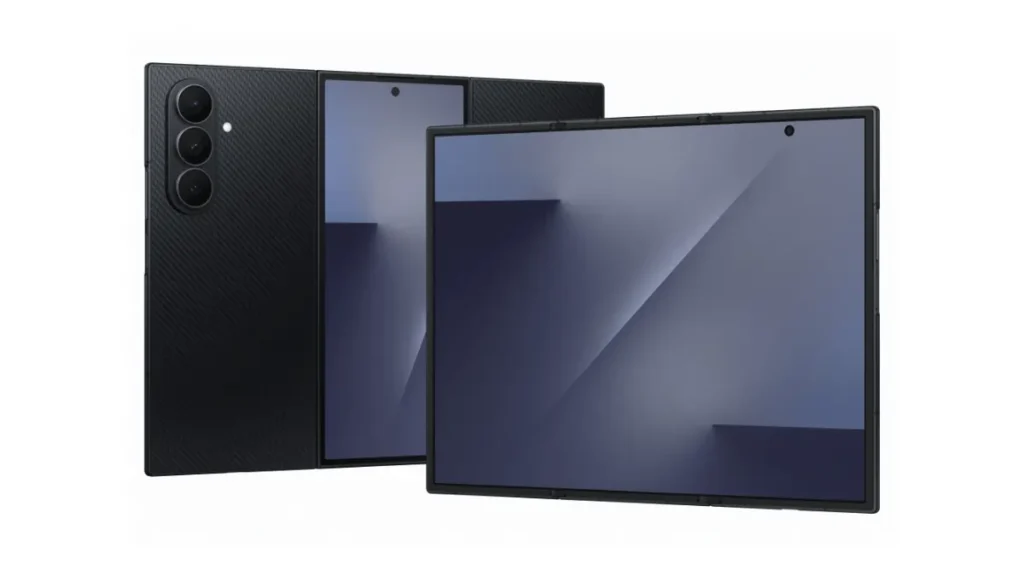
The centerpiece is a 10-inch QXGA+ (2160×1584) Dynamic AMOLED 2X main display with 269 ppi pixel density and 1600 nits peak brightness. Samsung applied a reinforced overcoat to a shock-absorbing display layer specifically engineered for the stress of dual-folding, with minimized crease visibility compared to earlier foldables. The screen supports a 120Hz adaptive refresh rate (1-120Hz) for smooth scrolling and battery efficiency.
When folded, users interact with a 6.5-inch FHD+ (2520×1080, 21:9 aspect ratio) cover display delivering 422 ppi and an impressive 2600 nits peak brightness brighter than the main screen and most flagship phones. This cover display also features 120Hz adaptive refresh and Dynamic AMOLED 2X technology with 100% mobile color volume in the DCI-P3 color range. Both displays use Vision Booster technology to optimize color and contrast in varying lighting conditions, crucial for outdoor visibility.
Performance and Hardware Specs
The Galaxy Z Trifold runs on the customized Snapdragon 8 Elite Mobile Platform for Galaxy built on 3nm process technology, Qualcomm’s most powerful mobile chip. Samsung pairs this with a standard 16GB of RAM across both storage configurations (512GB and 1TB), with no microSD card slot for expansion. This RAM allocation enables the device’s signature multitasking capability: running up to 20 apps simultaneously across four Samsung DeX workspaces.
The device runs Android 16 with One UI 8 out of the box, making it one of the first smartphones shipping with Android 16. Connectivity includes 5G, Wi-Fi 7 (requiring compatible router and network), Bluetooth 5.4, and dual SIM support via nano-SIM plus eSIM. The device weighs 309g heavier than standard phones but lighter than carrying a phone plus tablet.
Camera System Details
Samsung equipped the Galaxy Z Trifold with a 200MP wide-angle main camera featuring Quad Pixel AF, optical image stabilization (OIS), F1.7 aperture, and 0.6μm pixel size. The sensor uses an Adaptive Pixel Sensor enabling 2x optical quality zoom without a dedicated telephoto lens, though Samsung also includes a separate telephoto camera. The rear array includes a 12MP ultra-wide camera (F2.2, 120° field of view, 1.4μm pixels) and a 10MP telephoto with 3x optical zoom, OIS, and F2.4 aperture.
Samsung’s “Space Zoom” technology extends to 30x digital zoom combining the 3x optical telephoto with AI Super Resolution processing, though image quality degrades beyond 3x. For selfies and video calls, the device houses two separate 10MP cameras: one embedded in the cover screen (F2.2, 85° FOV) and another in the main screen (F2.2, 100° FOV for wider group selfies when unfolded). Video recording supports 8K at 30fps, 4K at 60fps, and 1080p up to 240fps with gyro-EIS stabilization plus 10-bit HDR and HDR10+.
Battery and Charging
Samsung installed a 5,600mAh three-cell battery system, the largest battery in any Samsung foldable phone. The three-cell design places one battery in each of the device’s three panels for balanced weight distribution and power delivery. This capacity targets all-day endurance despite the power demands of a 10-inch 120Hz display and flagship processor.
Charging speeds reach 45W via wired Super-Fast Charging 2.0, delivering approximately 50% charge in 30 minutes using Samsung’s 45W adapter and 3A USB-C cable. Wireless charging tops out at 15W Fast Wireless Charging 2.0 (WPC Qi compatible), plus the device supports Wireless PowerShare for reverse charging other devices like Galaxy Buds or Galaxy Watches. Actual charging speeds and battery life vary based on usage patterns, network conditions, and settings.
Samsung DeX and Productivity
The Galaxy Z Trifold becomes the first mobile phone to offer standalone Samsung DeX without requiring an external display. Users activate DeX through the Quick Settings panel, transforming the 10-inch screen into a desktop-like computing environment. Samsung DeX on the Z Trifold supports up to four separate workspaces, each capable of running five apps simultaneously theoretically enabling 20 concurrent applications across multiple desktops.
For expanded productivity, Extended Mode allows users to connect an external monitor as a secondary display, enabling drag-and-drop functionality between the phone and monitor for true dual-screen desktop efficiency. Adding a Bluetooth keyboard and mouse creates a portable workstation capable of handling complex projects Samsung markets toward architects, designers, and mobile professionals. Certain apps may not run in DeX mode or require separate licenses, and wireless DeX connection works only with Miracast-compatible TVs (Samsung recommends its Smart TVs from 2019 onward).
The standard multitasking experience without DeX remains impressive: users can run three portrait-oriented apps side-by-side, resize windows for optimal viewing, or rotate the device vertically for focused document review. The Taskbar along the bottom edge provides quick access to recently used apps, and apps optimized for large screens include My Files and Samsung Health.
Galaxy AI Integration
Samsung built Galaxy AI features throughout the Z Trifold experience, requiring Samsung Account login for most AI capabilities. Photo Assist includes Generative Edit for removing unwanted objects and Sketch to Image for converting rough drawings into polished images both tools benefit from the large canvas for detailed editing. The expansive screen enables side-by-side before/after comparisons when editing photos, a workflow improvement over smaller phones.
Browsing Assist in Samsung Internet provides instant webpage summaries and translations, useful when researching across multiple tabs. Gemini Live receives special optimization for the Z Trifold with multimodal AI that understands visual input from the camera plus spoken queries. Users can share their screen or camera feed with Gemini Live for contextual assistance for example, showing it a room, a shopping website, and paint swatches to receive custom interior design recommendations.
Galaxy AI feature availability varies by region, OS version, device model, and carrier. Samsung makes no guarantees regarding accuracy, completeness, or reliability of AI-generated outputs.
Galaxy Z Trifold vs Huawei Mate XT
Samsung enters a competitive tri-fold market where Huawei launched the Mate XT in China on September 4, 2025. Key differences favor Samsung in several areas: the Galaxy Z Trifold uses the newer Snapdragon 8 Elite processor versus Huawei’s Kirin 9020, runs on Android 16 with full Google app ecosystem versus HarmonyOS with limited Western app access, and features a 200MP main camera compared to Huawei’s lower-resolution sensor.
Huawei’s device is slightly slimmer and lighter, and it supports stylus input which Samsung’s version lacks. However, the Galaxy Z Trifold benefits from Samsung’s rigorous internal quality checks including CT and laser scanning, dual SIM support with both nano-SIM and eSIM options, and integrated Samsung DeX functionality. Both devices target users seeking maximum screen real estate with foldable flexibility, but Samsung’s broader Android app ecosystem and global market availability (Huawei faces ongoing restrictions in many markets) position the Z Trifold as more practical for international users.
Pricing and Availability
Samsung hasn’t disclosed official pricing yet, though as the company’s most advanced foldable with cutting-edge engineering, expect premium pricing exceeding the Galaxy Z Fold 7. The device launched first in South Korea on December 12, 2025, followed by phased rollout to China, Taiwan, Singapore, the UAE, and the United States. Samsung plans selective retail availability for hands-on demonstrations given the device’s novel form factor.
Early buyers receive a 6-month trial of Google AI Pro (normally $19.99/month in the US, pricing varies by country), including access to Veo3-powered video generation and 2TB of cloud storage. Samsung also offers a one-time 50% discount on display repair costs for all Galaxy Z Trifold purchasers, significant given replacement costs on foldable displays. Available only in Crafted Black at launch, additional color options may follow based on market response.
Technical Specs Section Samsung Galaxy Z Trifold
Display
- Main Screen: 10.0″ QXGA+ (2160×1584) Dynamic AMOLED 2X, 269ppi, 1600 nits, 120Hz (1-120Hz adaptive)
- Cover Screen: 6.5″ FHD+ (2520×1080, 21:9) Dynamic AMOLED 2X, 422ppi, 2600 nits, 120Hz (1-120Hz adaptive)
- Protection: Reinforced overcoat on shock-absorbing layer, minimized crease visibility
Dimensions & Weight
- Folded: 159.2 × 75.0 × 12.9mm
- Unfolded: 159.2 × 214.1 × 3.9mm (thinnest point, excluding camera)
- Weight: 309g (excluding pre-installed protective film)
Processor & Memory
- Chipset: Snapdragon 8 Elite Mobile Platform for Galaxy (3nm)
- CPU: Octa-core Oryon (2×4.6GHz + 6×3.62GHz)
- GPU: Adreno 840
- RAM: 16GB
- Storage: 512GB / 1TB (UFS, no microSD)
Camera System
- Rear Ultra-Wide: 12MP, F2.2, 1.4μm pixels, 120° FOV, Dual Pixel AF
- Rear Wide: 200MP, F1.7, 0.6μm pixels, 85° FOV, Quad Pixel AF, OIS, 2x optical quality zoom
- Rear Telephoto: 10MP, F2.4, 1.0μm pixels, 36° FOV, PDAF, OIS, 3x optical zoom, 30x digital Space Zoom
- Front Cover: 10MP, F2.2, 1.12μm pixels, 85° FOV
- Front Main: 10MP, F2.2, 1.12μm pixels, 100° FOV
- Video: 8K@30fps, 4K@60fps, 1080p@240fps, gyro-EIS, 10-bit HDR, HDR10+
Battery & Charging
- Capacity: 5,600mAh three-cell system (5437mAh rated)
- Wired: 45W Super-Fast Charging 2.0 (50% in ~30min)
- Wireless: 15W Fast Wireless Charging 2.0
- Reverse: Wireless PowerShare
Connectivity
- Network: 5G SA/NSA, LTE, Wi-Fi 7 (tri-band), Bluetooth 5.4
- SIM: Dual nano-SIM + multi-eSIM support
- Port: USB Type-C 3.2 with OTG
- Location: GPS, GALILEO, GLONASS, BDS, QZSS
- NFC: Yes
Build Materials
- Front: Corning Gorilla Glass Ceramic 2
- Back: Ceramic-Glass Fiber Reinforced Polymer
- Frame: Titanium Hinge Housing, Advanced Armor Aluminum frame
- Hinge: Dual Armor FlexHinge (two differently sized hinges with dual-rail structure)
Software & AI
- OS: Android 16, One UI 8
- AI Features: Galaxy AI (Photo Assist, Generative Edit, Sketch to Image, Browsing Assist), Gemini Live with multimodal AI
- DeX: Standalone Samsung DeX (4 workspaces × 5 apps), Extended Mode for dual displays
Security & Biometrics
- Security: Samsung Knox with Knox Vault
- Biometrics: Side-mounted capacitive fingerprint sensor
- Sensors: Accelerometer, barometer, gyro, geomagnetic, Hall sensor, proximity, light
Durability
- Water Resistance: IP48 (1.5m freshwater for 30min, objects >1mm)
- Quality Control: CT scanning of circuit boards, laser scanning of component heights
- Limitations: Not beach/pool/sand resistant
Audio
- Speakers: Stereo speakers
- Headphone Jack: No (USB-C audio or Bluetooth)
Colors
- Crafted Black (launch color)
Comparison Samsung Galaxy Z Trifold vs Huawei Mate XT
| Feature | Samsung Galaxy Z Trifold | Huawei Mate XT |
|---|---|---|
| Main Display | 10.0″ QXGA+ (2160×1584), 1600 nits | 10.2″ triple-fold, higher resolution |
| Processor | Snapdragon 8 Elite (3nm) | Kirin 9020 |
| Operating System | Android 16, One UI 8 | HarmonyOS |
| RAM | 16GB | 16GB |
| Main Camera | 200MP | Lower resolution sensor |
| Battery | 5,600mAh | Similar capacity |
| Stylus Support | No | Yes |
| Desktop Mode | Samsung DeX (standalone) | Desktop mode available |
| Global Availability | Korea, US, UAE, Singapore, China | China primarily |
| Launch Date | December 12, 2025 | September 4, 2025 |
Galaxy Z Trifold Display Specifications
| Specification | Main Screen | Cover Screen |
|---|---|---|
| Size | 10.0 inches (9.9″ with corners) | 6.5 inches |
| Resolution | 2160 × 1584 (QXGA+) | 2520 × 1080 (FHD+) |
| Pixel Density | 269 ppi | 422 ppi |
| Technology | Dynamic AMOLED 2X | Dynamic AMOLED 2X |
| Peak Brightness | 1600 nits | 2600 nits |
| Refresh Rate | 120Hz adaptive (1-120Hz) | 120Hz adaptive (1-120Hz) |
| Aspect Ratio | Standard unfolded | 21:9 (tall) |
Storage and Memory Configurations
| Configuration | RAM | Internal Storage | Price |
|---|---|---|---|
| Base Model | 16GB | 512GB | TBA |
| High Capacity | 16GB | 1TB | TBA |
| MicroSD Support | No | No | N/A |
Pros & Cons
Pros
- Massive productivity canvas: 10-inch display offers tablet-level multitasking in a pocketable device
- Standalone Samsung DeX: First phone with built-in desktop mode without external display
- Flagship performance: Snapdragon 8 Elite with 16GB RAM handles demanding workflows
- Best-in-class camera: 200MP main sensor with 2x optical quality zoom plus dedicated 3x telephoto
- Largest foldable battery: 5,600mAh three-cell system with 45W fast charging
- Advanced engineering: Dual Armor FlexHinge, titanium housing, CT scanning quality control
- Bright displays: 2600 nits cover screen for excellent outdoor visibility
- Android ecosystem: Full Google app access and Play Store support
- Display repair protection: 50% one-time discount for early buyers
Cons
- Limited water resistance: IP48 rating inadequate for beach/pool use, no sand protection
- No stylus support: Missing S Pen functionality despite large screen benefiting from precision input
- Heavy weight: 309g is noticeably heavier than standard smartphones
- No storage expansion: Locked to 512GB or 1TB with no microSD slot
- Limited initial availability: Selective markets only with gradual rollout
- Premium pricing expected: Likely to exceed already-expensive Z Fold 7
- Durability concerns: Complex multi-fold mechanism may face long-term reliability questions
- Thick when folded: 12.9mm folded thickness makes it bulkier than traditional phones
Frequently Asked Questions
How does the Galaxy Z Trifold folding mechanism work?
The device uses two differently sized Armor FlexHinges with dual-rail structures that fold inward to protect the main display. An auto-alarm alerts users via on-screen messages and vibrations if folding incorrectly.
Can the Galaxy Z Trifold survive daily use?
It features titanium hinge housing, Advanced Armor Aluminum frame, and IP48 water resistance for freshwater submersion up to 1.5 meters. However, it’s not sand-resistant and not recommended for beach or pool environments.
Does it support S Pen stylus input?
Samsung has not confirmed S Pen support for the Galaxy Z Trifold, unlike the competing Huawei Mate XT which supports stylus input.
How many apps can run simultaneously?
In standard mode, three apps can run side-by-side in portrait orientation. Using Samsung DeX, up to four workspaces each running five apps enables 20 concurrent applications.
What’s the actual screen size when unfolded?
The main display measures 10.0 inches diagonally in a full rectangle, or 9.9 inches accounting for rounded corners. Actual viewable area is slightly smaller due to corners and camera hole.
Is the Galaxy Z Trifold coming to India?
Samsung hasn’t confirmed India launch dates or pricing yet, though reports suggest potential India availability following initial markets. Check Samsung India’s official channels for updates.
How does battery life compare to other foldables?
The 5,600mAh capacity is the largest in Samsung’s foldable lineup, designed for all-day use despite the power-hungry 10-inch display. Actual battery life depends on usage patterns and settings.
Can I expand storage with microSD cards?
No, the Galaxy Z Trifold doesn’t support microSD expansion. Choose between 512GB or 1TB internal storage at purchase.
Featured Snippet Boxes
What is Samsung Galaxy Z Trifold?
Samsung Galaxy Z Trifold is a triple-folding smartphone that unfolds twice to reveal a 10-inch QXGA+ display (2160×1584) while folding down to a standard 6.5-inch phone. Powered by Snapdragon 8 Elite with 16GB RAM, it features dual Armor FlexHinges, 200MP camera, 5,600mAh battery, and standalone Samsung DeX.
Galaxy Z Trifold Key Specifications
Display: 10-inch main (1600 nits), 6.5-inch cover (2600 nits), both 120Hz | Processor: Snapdragon 8 Elite (3nm) | RAM: 16GB | Storage: 512GB/1TB | Camera: 200MP main, 12MP ultra-wide, 10MP telephoto | Battery: 5,600mAh with 45W charging | Weight: 309g | Thickness: 3.9mm unfolded, 12.9mm folded.
How much does the Galaxy Z Trifold cost?
Samsung hasn’t announced official pricing for the Galaxy Z Trifold yet. As the company’s most advanced foldable with cutting-edge engineering including dual hinges, 10-inch display, and Snapdragon 8 Elite, expect premium pricing above the Galaxy Z Fold 7.
Galaxy Z Trifold vs Huawei Mate XT difference
Galaxy Z Trifold uses Snapdragon 8 Elite vs Mate XT’s Kirin 9020, runs Android 16 vs HarmonyOS, features 200MP camera vs Huawei’s lower resolution, and includes Samsung DeX functionality. Mate XT is slimmer and supports stylus input.
Does Galaxy Z Trifold support Samsung DeX?
Yes, Galaxy Z Trifold is the first mobile phone with standalone Samsung DeX without external display. It supports up to 4 workspaces running 5 apps each (20 total apps). Extended Mode allows connecting external monitors for dual-screen productivity.
Galaxy Z Trifold battery and charging speed
The 5,600mAh three-cell battery system is Samsung’s largest in any foldable phone, with one cell in each panel for balanced power delivery. 45W wired charging reaches approximately 50% in 30 minutes. It supports 15W Fast Wireless Charging 2.0 plus Wireless PowerShare.

