

Quick Brief
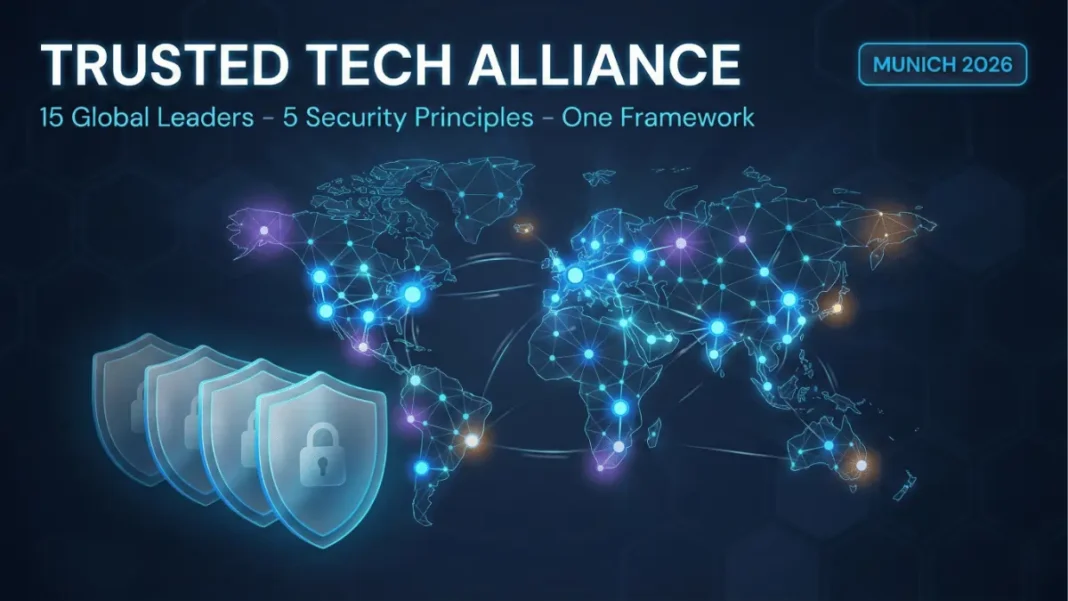
- 15 companies from Africa, Asia, Europe, and North America launched Trusted Tech Alliance at Munich Security Conference 2026
- Members include Nokia, Microsoft, AWS, Google Cloud, Jio Platforms, Ericsson, and Anthropic
- Alliance establishes five verifiable principles covering transparency, security, and data protection
- Framework spans entire tech stack from semiconductors to AI and cloud infrastructure
The Alliance Reshaping Global Tech Trust
Fifteen technology leaders from Africa, Asia, Europe, and North America announced the Trusted Tech Alliance (TTA) at the Munich Security Conference on February 13, 2026. The coalition addresses mounting concerns about digital security, supply chain resilience, and technological sovereignty in an era where geopolitical divisions threaten innovation. Unlike traditional industry groups, this alliance operates on verifiable commitments rather than corporate nationality, establishing a framework that prioritizes operational standards over country of origin.
The timing reflects urgent market demands. Countries and enterprises increasingly seek reliability across technology providers as AI accelerates change and critical infrastructure becomes more interconnected. Brad Smith, Microsoft’s Vice Chair and President, emphasized that the alliance demonstrates “technology can be secure, reliable, and responsibly operated wherever it is deployed“.

Who Joined the Alliance
The founding members represent the complete technology stack, from hardware manufacturing to AI development:
- Cloud & Infrastructure: AWS, Google Cloud, Microsoft, NTT, Nscale
- Connectivity: Nokia, Ericsson, Jio Platforms
- AI & Software: Anthropic, Cohere, SAP
- Hardware & Manufacturing: Rapidus, Hanwha, Saab
- Regional Leaders: Cassava Technologies (Africa)
This diversity matters because trust failures in one layer semiconductors, networks, or applications compromise the entire digital ecosystem. Ericsson CEO Börje Ekholm stated, “No single company or country can build a secure and trusted digital stack alone“.
Five Core Principles Driving the Framework
Transparent Corporate Governance and Ethical Conduct
Members commit to clear decision-making structures and ethical business practices that customers can verify. This principle requires disclosure of ownership structures, leadership accountability mechanisms, and ethical AI development protocols.
Operational Transparency, Secure Development and Independent Assessment
Companies agree to secure development practices and external audits of security processes. Independent assessments validate that systems meet stated standards throughout their lifecycle, from design through deployment.
Robust Supply Chain and Security Oversight
Alliance members must enforce contractually binding security requirements with suppliers. This extends trust beyond individual companies to their entire vendor networks, addressing vulnerabilities in global supply chains.
Open, Cooperative, Inclusive and Resilient Digital Ecosystem
The framework supports interoperability, innovation, and competition rather than closed proprietary systems. This principle counters technological fragmentation while maintaining security standards and ensuring inclusive access.
Respect for Rule of Law and Data Protection
Members adhere to local regulations while applying consistent data protection practices across markets. This balances sovereignty requirements with global operational consistency.
Why This Alliance Matters Now
What is driving the need for technology trust alliances in 2026?
Countries face accelerating technological change while managing concerns about data sovereignty, supply chain dependencies, and AI safety. The Trusted Tech Alliance responds to skepticism about digital technologies’ impact on individuals and societies by creating verifiable standards. According to Fortune India’s analysis, heightened scrutiny of cross-border data flows and semiconductor dependencies pushed governments to seek technological sovereignty while maintaining global interoperability.
Industry Leaders Explain Their Commitment
Sarah Heck, Anthropic’s Head of External Affairs, highlighted AI-specific concerns: “As AI systems grow more powerful driving innovation, accelerating economic growth, and reshaping national security the United States and its allies must ensure the world’s most widely adopted models are safe, reliable, and trustworthy“.
Kiran Thomas, CEO of Jio Platforms, emphasized emerging market priorities: “Trusted, secure, and transparent technology is essential to unlocking inclusive digital growth at global scale“. This perspective reflects how trust frameworks enable technology adoption in regions previously hesitant due to security concerns.
Google Cloud’s Marcus Jadotte noted the alliance codifies existing practices: “Through the Trusted Tech Alliance, we aim to champion the principles we already adhere to: promoting customer choice and providing solutions to meet strict sovereignty requirements“.
Comparison: Trusted Tech Alliance vs Traditional Industry Groups
| Dimension | Trusted Tech Alliance | Traditional Tech Consortiums |
|---|---|---|
| Foundation | Verifiable operating principles | Member coordination, standards development |
| Scope | Full stack (semiconductors to AI) | Typically single-layer focus |
| Geographic Model | Cross-border, principle-based | Often region-specific alliances |
| Trust Basis | Independent assessment requirements | Self-certification common |
| Supply Chain | Contractual security obligations | Voluntary best practices |
What Happens Next
The alliance will expand its membership and develop implementation frameworks for the five principles. Members plan to work with governments to align these standards with national security requirements and digital sovereignty goals.
Future priorities include creating measurement systems to verify compliance with alliance principles and establishing processes for addressing member violations. The group emphasized that principles must remain verifiable and consistently applied across markets to maintain credibility.
Strive Masiyiwa, Founder and Executive Chairman of Cassava Technologies, framed the long-term vision: “Responsible leadership and collaboration at a global level will ensure that technology continues to enable human progress and inclusive economic development, especially important for our youth and future generations“.
Frequently Asked Questions (FAQs)
What is the Trusted Tech Alliance?
The Trusted Tech Alliance is a coalition of 15 global technology companies from Africa, Asia, Europe, and North America committed to shared principles for transparency, security, and data protection across the technology stack. Announced at the Munich Security Conference on February 13, 2026, it includes Nokia, Microsoft, AWS, Google Cloud, Ericsson, and Jio Platforms.
Who are the founding members of the Trusted Tech Alliance?
The 15 founding members are Anthropic, AWS, Cassava Technologies, Cohere, Ericsson, Google Cloud, Hanwha, Jio Platforms, Microsoft, Nokia, Nscale, NTT, Rapidus, Saab, and SAP. These companies span connectivity, cloud infrastructure, semiconductors, software, and AI sectors.
What are the five principles of the Trusted Tech Alliance?
The principles are: transparent corporate governance and ethical conduct; operational transparency, secure development and independent assessment; robust supply chain and security oversight; support for an open, cooperative, inclusive and resilient digital ecosystem; and respect for the rule of law and data protection. These require verifiable practices throughout technology development and deployment.
Why was the Trusted Tech Alliance created?
The alliance addresses increasing concerns about digital security, supply chain resilience, and technological sovereignty during rapid technological change. It provides customers and governments with reliability standards based on shared commitments rather than supplier nationality, building trust across borders.
How does the Trusted Tech Alliance ensure members follow its principles?
Members commit to independent assessments of their security practices and development processes. The framework requires verifiable, contractually binding security assurances with suppliers and support for external audits, ensuring commitments translate into operational reality.
What impact will the Trusted Tech Alliance have on global technology?
The alliance establishes cross-border standards for the entire technology stack, from semiconductors to AI systems. By prioritizing verifiable practices over geographic origin, it aims to reduce technological fragmentation while strengthening security, enabling countries to maintain sovereignty without sacrificing interoperability.
Can other companies join the Trusted Tech Alliance?
Yes, the alliance plans to grow its community of global providers dedicated to advancing trusted, interoperable, and open technology. The framework allows expansion while maintaining commitment to the five core principles and verification requirements.
How does this alliance differ from existing tech industry groups?
Unlike traditional consortiums focused on technical standards, the Trusted Tech Alliance establishes operational principles covering governance, security, supply chains, and data protection across the full technology stack. It requires independent verification and applies standards consistently regardless of where technology is built or deployed.

