

Key Takeaways
- Google launched February 2026 Discover core update on February 5 at 9:00 AM PST, targeting English US users first
- Algorithm now prioritizes locally relevant content from country-based websites while reducing clickbait and sensational headlines
- Topic-level expertise evaluation means specialized sections can rank independently local news sites with strong gardening coverage compete equally with dedicated gardening domains
- Rollout completes within 2 weeks with traffic fluctuations expected some sites gain, others decline, many remain unchanged
Google has fundamentally rewritten how content surfaces in Discover feeds and the implications reach far beyond typical algorithm adjustments. The February 2026 Discover core update, announced February 5 by John Mueller, represents the first major update of 2026 and specifically targets the personalized content carousel seen by millions on Google app and Android devices. Testing data shows users find the experience “more useful and worthwhile,” signaling Google’s commitment to prioritizing user satisfaction over publisher preferences.
What Changed in the February 2026 Discover Algorithm
The update restructures Discover’s content surfacing systems across three distinct dimensions, each addressing specific user experience pain points identified through Google’s internal testing.
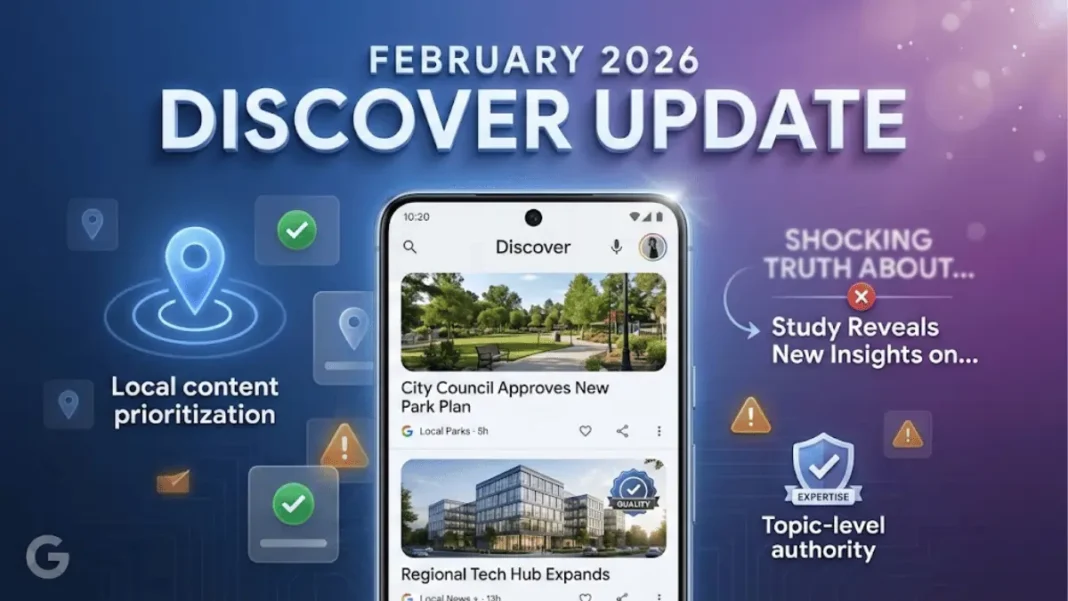
Local Content Prioritization
Discover now emphasizes geographic relevance by surfacing content from websites based in the user’s country. Google’s systems will prioritize showing content to users from websites in their own country, directly impacting international publishers who previously targeted audiences outside their home geography. A publisher in India writing about US topics will face reduced visibility to US Discover users compared to US-based outlets covering the same subjects.
Clickbait and Sensationalism Reduction
Google’s systems actively de-prioritize sensational headlines, misleading titles, and content that overpromises or uses manipulative language. The algorithm evaluates whether headlines accurately represent article substance, rewarding alignment and reducing visibility for exaggerated claims. Publishers relying on curiosity gaps without delivering substantive content will see measurable traffic changes.
Expertise Evaluation by Topic
Discover now assesses expertise at the topic level rather than domain-wide authority. A local news site with a dedicated gardening section staffed by horticulture experts can compete equally with dedicated gardening websites, even though the news site covers multiple subjects. Conversely, a high-authority movie review site publishing one gardening article won’t receive expertise credit for that isolated content.
How does Google evaluate topic-level expertise in Discover?
Google’s systems analyze content depth, author credentials, publishing frequency, and topical consistency within specific subject areas. A website demonstrates expertise through sustained, original coverage backed by verifiable knowledge such as a local news outlet maintaining a staffed gardening section with regular expert contributions.

Rollout Timeline and Geographic Expansion
The February 2026 Discover core update launched February 5, 2026 at 9:00 AM Pacific Time, initially targeting English-language users in the United States. The complete rollout requires up to 2 weeks, with Google planning expansion to all countries and languages in the months ahead. This phased approach allows Google to monitor user satisfaction metrics before global deployment.
Publishers outside the US should anticipate delayed impact, with international rollout timelines remaining unspecified beyond “months ahead”. The Google Search Status Dashboard confirms the update is “partially resolved” as the rollout progresses through its 2-week window.
Expected Traffic Impact on Publishers
Traffic fluctuations represent the most immediate concern for content creators and website owners. Google explicitly states that “some sites might see increases or decreases; many sites may see no change at all”. The company does not provide specific percentage ranges or traffic forecasts, emphasizing that impact varies based on how well existing content aligns with the new quality signals.
Three publisher categories face distinct outcomes based on the update’s core priorities:
Publishers Likely to Gain:
- US-based publishers creating in-depth, original content on specialized topics
- Local news outlets with established expertise in niche coverage areas
- Sites prioritizing accurate headlines over sensational clickbait
Publishers Likely to Decline:
- International publishers targeting US audiences without US operations
- Content publishers relying on curiosity-gap headlines and thin content
- Sites without demonstrated topic-level expertise despite high domain authority
Publishers Likely Unaffected:
- Sites already adhering to Google’s quality guidelines
- Publishers with minimal Discover traffic prior to the update
Strategic Responses for Content Creators
Publishers seeking to maintain or improve Discover visibility must align content strategies with the update’s three core priorities.
Geographic Targeting Adjustments
Content creators should match website location with target audience geography. International publishers targeting US users should consider establishing US-based operations or refocusing content on their home country audiences. Location-specific content addressing regional events, cultural references, and local concerns will receive prioritization over generic international coverage.
Headline and Content Quality Standards
Eliminate sensational language, curiosity gaps without payoff, and misleading promises from headlines. Headlines must accurately reflect article substance overpromising reduces visibility under the new algorithm. Content depth matters more than keyword density; Discover prioritizes original research, first-hand reporting, and substantive analysis over aggregated summaries.
Building Topic-Level Expertise
Establish clear expertise through consistent, authoritative coverage in specific subject areas. A generalist website should develop dedicated sections with specialized contributors rather than publishing scattered one-off articles. Google’s example highlights how a local news site with a strong gardening section competes equally with dedicated gardening domains for gardening-related Discover placements.
Will this update affect Google Search rankings?
This is a Discover-specific core update. Google’s announcement focuses on changes to Discover content surfacing and does not mention modifications to traditional Search ranking algorithms. The update targets the personalized Discover feed experience rather than search results pages.
Technical Implementation Guidance
Google’s official guidance directs publishers to existing resources on core updates and Discover optimization. The company emphasizes that standard quality principles apply no special technical changes beyond fundamental best practices.
Monitoring Performance Changes
Google Search Console remains the primary tool for tracking Discover traffic fluctuations. Publishers should monitor the Discover report for impressions, clicks, and CTR changes throughout the 2-week rollout period. Google recommends comparing performance data before and after the February 5 launch date to identify specific impact.
Content Audit Priorities
Review existing Discover-surfaced content for clickbait headlines, sensational language, and geographic misalignment with target audiences. Articles with high Discover traffic should be evaluated against the new quality standards for local relevance, headline accuracy, and topic-level expertise. Update headlines to accurately reflect content substance while maintaining compelling language.
Long-Term Adaptation Strategy
The global rollout planned for coming months means international publishers should prepare proactive adjustments before their regions receive the update. Establishing topic-level expertise, building local content libraries, and eliminating clickbait provides competitive advantage when the algorithm reaches new markets.
Industry Context and Broader Implications
This update represents Google’s continued emphasis on user satisfaction metrics over publisher preferences. The local content prioritization aligns with broader trends toward geographic relevance in personalized content systems. Reducing clickbait addresses user feedback about Discover feed quality and sensationalism.
Topic-level expertise evaluation challenges traditional assumptions about domain authority. Large, established websites no longer receive automatic preference over smaller specialized publishers in their areas of demonstrated expertise. This democratizes Discover visibility for niche content creators with deep subject matter knowledge.

Frequently Asked Questions (FAQs)
When did the February 2026 Discover core update start rolling out?
The update launched February 5, 2026 at 9:00 AM Pacific Time for English-language US users. The complete rollout takes up to 2 weeks, with global expansion planned for coming months.
Which content types are most affected by this update?
Clickbait headlines, sensational content, and international publishers targeting US audiences without US-based operations face potential declines. In-depth original content from local sources with demonstrated topic-level expertise may see increased visibility.
How does Google determine local relevance in Discover?
Google’s systems evaluate website location and prioritize showing content to users from websites based in their own country. Publishers located in the user’s country receive prioritization over international sources.
Can websites with multiple topics still succeed in Discover?
Yes. Google evaluates expertise on a topic-by-topic basis rather than domain-wide. A local news site with a strong gardening section competes equally with dedicated gardening websites for gardening-related Discover placements.
Should publishers make immediate changes to respond to this update?
Google recommends focusing on quality content that aligns with the update’s priorities: accurate headlines, locally relevant topics for your website’s location, and demonstrated expertise in specific subject areas. Publishers should avoid making reactive changes and instead ensure existing content meets these quality standards.
How long will the rollout take?
The rollout completes within up to 2 weeks from the February 5 launch date. Global expansion to all countries and languages will occur in the months ahead without a specific timeline.
Does this update apply to Google Search results?
This is a Discover-specific core update. Google’s announcement focuses on the Discover feed experience and does not mention changes to traditional Google Search ranking algorithms.
What resources should publishers use for guidance?
Google recommends reviewing the “What publishers should know about Google’s core updates” documentation and the “Get on Discover” help page. Publishers can join the Search Central help community or connect via LinkedIn for specific questions.

