

Essential Points
- Ericsson commits $1M over three years to advance AI-powered wireless communications research at the University of Toronto
- The partnership was awarded following a formal national process in which Ericsson evaluated Canadian universities against specific benchmarks
- Research targets mobile communications, advanced computing, and applied AI, with faculty collaborations active since 2013
- Ericsson Ottawa is the largest R&D centre for wireless communications in the Ericsson Americas, with one of the most advanced R&D labs in North America
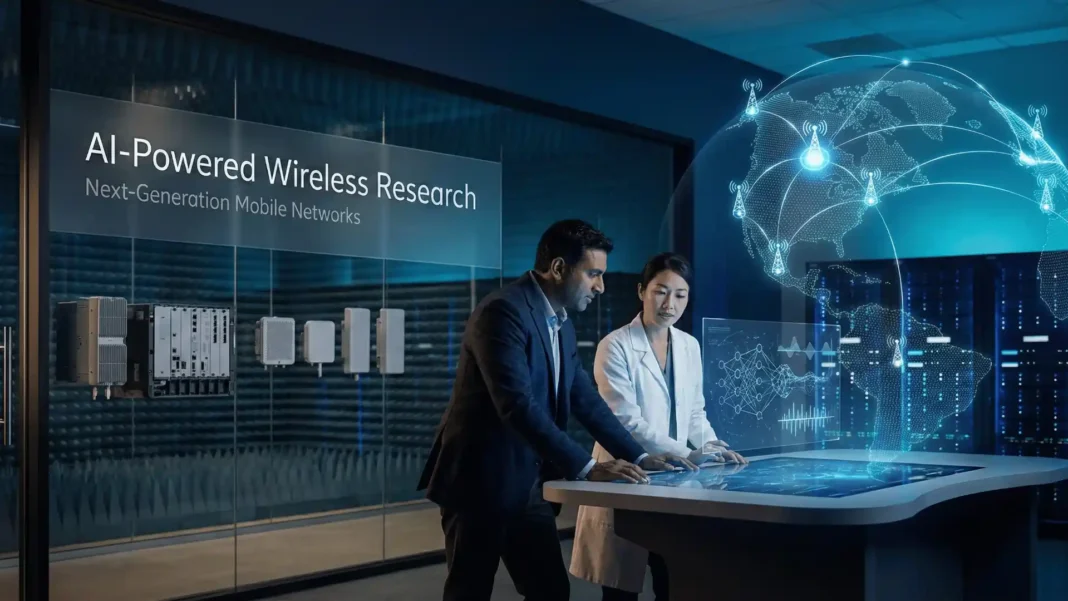
The network powering your phone call in 2030 is being designed right now in a Toronto lab. On February 18, 2026, Ericsson and the University of Toronto signed a multi-year partnership to accelerate research in AI-powered mobile communications, advanced computing, and applied machine learning. This breakdown covers what the deal commits to, who is driving it, and why the work already underway makes this more than a ceremonial announcement.
A $1M Investment With a Decade of Work Behind It
Ericsson signed the agreement at a ceremony held at Simcoe Hall on U of T’s St. George campus on February 18, 2026. Under the initial three-year framework, Ericsson invests $1 million to advance the technological infrastructure that underlies wireless communications.
This is not a new relationship. U of T Professor Ben Liang’s team has worked with Ericsson since 2013, starting when one of his PhD students began an internship. Professor Ravi Adve’s team joined the collaboration in 2017. The formal partnership agreement formalizes what has been a decade of productive but informal engagement, elevating both the scope and the funding behind it.
Ericsson selected U of T through a formal national process, evaluating Canadian universities against benchmarks for research strength, institutional culture, and alignment with Ericsson’s innovation priorities. “After that, they had a national call for proposals, and our team was successful with that,” said Liang.

What the Research Actually Covers
The partnership targets three connected domains: advanced mobile communications, mobile computing, and synergistic machine learning solutions.
Professor Liang’s team focuses on resource optimization within wireless infrastructure:
- Spectrum allocation to move more data through networks, increasing download and upload speeds
- Power optimization to reduce operational costs for network service providers
- Shared hardware infrastructure models allowing multiple network operators to co-use equipment in densely populated venues
- Closer integration of AI and wireless networking in next-generation systems
Professor Adve’s team works in parallel on system architecture, specifically investigating small cell models as an alternative to large, high-power base stations. The premise is that deploying more, smaller stations reduces power consumption and improves efficiency because users are statistically closer to a node. The challenge is that this architecture introduces new coordination problems that require active research to resolve.
Both professors and additional faculty members from across U of T are expected to participate under the new agreement.
The 5G and 6G Horizon
Nishant Grover, President of Ericsson Canada, named both the immediate and forward-looking scope of this work. “As 5G continues to transform industries and societies, and as we look ahead to 6G, Ericsson and the University of Toronto are working together to help shape the future of connectivity in Canada and globally.”
Marcos Cavaletti, Head of Ericsson’s Ottawa site, framed the near-term priority clearly: “As 5G continues to drive profound changes across industries and societies, Ericsson and the University of Toronto are committed to tackling these challenges together.” The current phase centers on solving live 5G infrastructure problems through industry-linked research projects, with foundational thinking extending toward what comes next.
Ericsson Ottawa anchors this work industrially. It is the largest R&D centre for wireless communications in the Ericsson Americas region and operates one of the largest, most advanced R&D labs in North America. Having academic research running in direct proximity to a live industrial R&D operation compresses the distance between theoretical output and deployable solutions.
Talent Development: The Structural Layer
Beyond research, the partnership builds a formal talent strategy. The talent development stream draws on three institutional resources within U of T’s Faculty of Applied Science and Engineering:
- The Centre for Analytics and Artificial Intelligence Engineering (CARTE)
- The Institute for Studies in Transdisciplinary Engineering Education and Practice (ISTEP)
- The MEng Extended Full-Time Co-op program, which launched in the fall of 2025
The goal is to train graduates who combine technical depth in wireless communications with the leadership and sector perspective required to oversee implementation at scale. Students working under industry-linked projects gain exposure to real-world network constraints rather than simulated academic problems.
Professor Leah Cowen, Vice President of Research and Innovation at U of T, captured the mutual benefit: “It’s a win-win proposition, enabling us to apply the expertise of our researchers, enhance the skills of our students, and elevate the global competitiveness of a major global technology innovator with major R&D operations right here in our own backyard.”
Canada’s National Research Ecosystem
Ontario’s Minister of Colleges, Universities, Research Excellence and Security, Nolan Quinn, formally endorsed the partnership: “Ontario is proudly home to a robust sector of researchers whose ground-breaking discoveries cement the province as a global innovator in technology. Our government proudly supports this partnership between Ericsson and the University of Toronto, which will equip our researchers with the cutting-edge tools they need to design, drive and lead the future of mobile communications technology.”
The partnership’s scope extends beyond Ontario. The official Ericsson announcement frames the expected impact as national, with connectivity improvements and stronger infrastructure expected to benefit Canada broadly. U of T’s St. George campus becomes a formal R&D node in Ericsson’s global innovation network, connecting Canadian academic research to Ericsson’s worldwide operations.
Considerations
The $1M figure covers the initial three-year framework. Long-term continuation depends on research output, alignment with Ericsson’s evolving product priorities, and the pace of 5G and next-generation deployment globally. Academic research timelines and industry deployment cycles do not always move at the same speed, which requires active coordination between both organizations to keep project outcomes commercially relevant.

Frequently Asked Questions (FAQs)
What is the Ericsson and University of Toronto partnership?
It is a formal multi-year research agreement signed on February 18, 2026, in which Ericsson invests $1 million over three years to advance AI-powered wireless communications research at U of T, covering mobile communications, advanced computing, and applied machine learning.
How much is Ericsson investing in the University of Toronto?
Ericsson committed $1 million under the initial three-year framework agreement. The investment targets wireless communications infrastructure research and a formal talent development strategy aligned with current telecom industry requirements.
Why did Ericsson choose the University of Toronto?
Ericsson ran a formal national process to evaluate Canadian universities on research strength, institutional culture, and alignment with Ericsson’s innovation priorities. U of T was selected after more than a decade of active collaboration, with faculty partnerships dating back to 2013.
Who leads the research at U of T?
Professors Ben Liang and Ravi Adve, both from the Edward S. Rogers Sr. Department of Electrical and Computer Engineering, lead the primary research streams. Liang focuses on spectrum and power resource optimization; Adve focuses on small cell system architecture. Additional U of T faculty are expected to join.
What is the talent development component of this deal?
The partnership includes a formal talent stream drawing on CARTE, ISTEP, and U of T’s MEng Extended Full-Time Co-op program. The aim is to produce graduates with both technical expertise in wireless communications and the leadership skills needed to implement future network technologies at scale.
What does Ericsson Ottawa’s role mean for this partnership?
Ericsson Ottawa is the largest R&D centre for wireless communications in the Ericsson Americas region and operates one of the most advanced R&D labs in North America. Its proximity to U of T enables faster translation of academic research into practical, deployable wireless network solutions.
Does this partnership cover 6G research?
The partnership’s stated scope covers next-generation AI-powered mobile communications. Ericsson Canada’s President Nishant Grover explicitly referenced 6G as part of the forward-looking context, framing the collaboration as contributing to shaping “the future of connectivity in Canada and globally” as the industry looks beyond 5G.
What does this mean for mobile network users in India and the US?
Ericsson operates globally across both markets. Research outcomes from this partnership feed into Ericsson’s worldwide product development pipeline. Improvements in spectrum efficiency, power optimization, and AI-driven network architecture will eventually inform the 5G and next-generation infrastructure Ericsson deploys internationally.

