

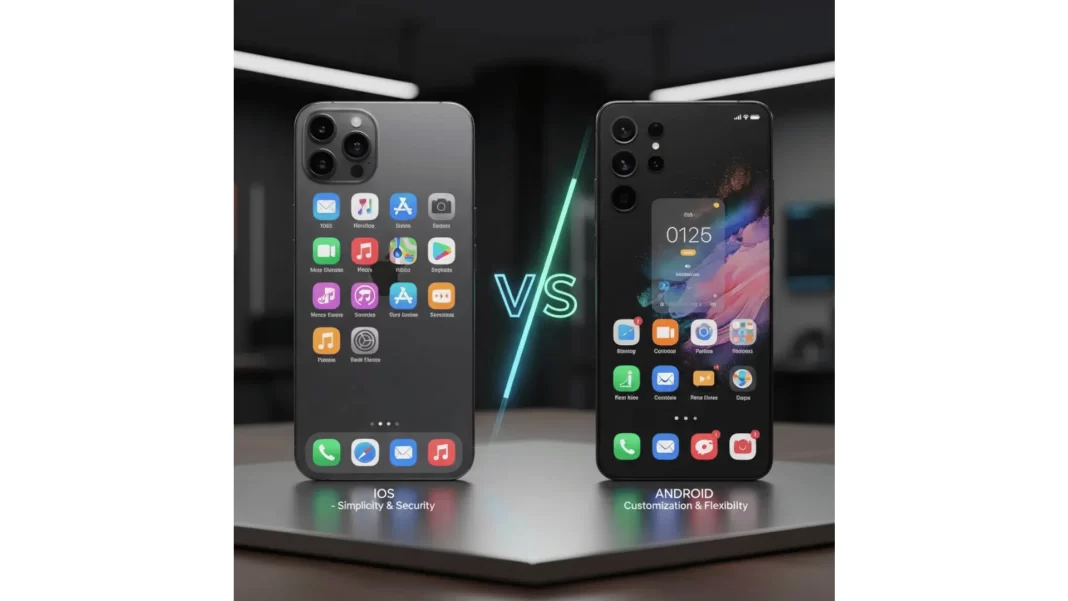
If you live in India and want maximum choice and value, Android wins. If you want tight security, long updates on a single device, and Apple’s ecosystem, get an iPhone. RCS now improves iPhone↔Android texting, but Apple Pay still isn’t in India. Pixel/Samsung now match Apple on 7-year updates.
How to Choose in 60 Seconds (Checklist)
- Budget under ₹25k–₹45k? Android (better specs/choice).
- Want the simplest, locked-down phone with tight integration? iPhone.
- Use a Windows laptop? Android pairs deeper (apps, screen, files); iPhone works but is limited.
- Care about updates for many years? Tie among iPhone, Pixel 8+, and Samsung S24/FE (7 years for latter two)
- Need UPI + contactless? Both do UPI via apps; Apple Pay itself isn’t available in India (yet).
India Reality Check: Price, Payments, Market
Market share & why it matters. In India, Android holds ~95% share; iOS ~4–5% (Aug 2025). That shapes app offers, accessory availability, and used-phone pricing across cities and small towns.
What phones actually cost here. Official iPhone 16 (128 GB) starts at ₹79,900 on Apple India, though retail promos can drop it. Pro line starts at ₹1,19,900.
Payments. UPI is standard across both platforms, but Apple Pay isn’t supported in India as of July–Aug 2025 per Apple’s country list. If NFC tap-to-pay with Apple Wallet is a must, that’s a blocker.
Updates & Longevity
How long will your phone stay current?
- Pixel 8 and later: up to 7 years of OS & security updates.
- Samsung S24/FE: 7 generations OS + 7 years security.
- iPhone: Apple doesn’t post a number, but historically supports many years; iOS 18 covers a wide range of devices and Apple’s security docs show how updates are delivered. (We avoid guessing a fixed year count.)
Repair & resale.
iPhones typically keep value better (varies by model/condition). On repair, newer flagships on both sides are trending towards sealed designs; recent iFixit teardowns note construction trade-offs on iPhone 16 and Galaxy S25. (Scores evolve-check current teardowns when you buy.)
Security & Privacy
Apple’s approach. Hardware-rooted security (Secure Enclave), strict app review, and Private Cloud Compute for Apple Intelligence (cloud work on Apple silicon servers with published transparency). Good defaults, minimal settings work.
Android’s approach. SELinux enforcement, hardware TEEs (e.g., Trusty), monthly bulletins, and multiple vendor policies (Pixel/Samsung now match long support windows). Security is strong, but the experience varies by brand and how quickly your OEM pushes patches.
Which is more secure iPhone or Android?
Both are secure when used properly. Apple consolidates hardware + software + services under one roof, reducing variability. Android’s core model is robust, too, and Pixels/Samsung flagships now get long updates. For non-tech users, Apple defaults may feel safer; for tinkerers, Android lets you dial controls in.
Messaging & Ecosystem
RCS on iPhone is here.
With iOS 18, iPhones support RCS: higher-quality media, read receipts, typing indicators—especially useful in iPhone↔Android chats. In India, carrier rollout is ongoing; Jio announced enablement for iPhones. iMessage remains Apple-only.
Windows vs Mac life.
- Android + Windows: deep integration (Phone Link, app streaming/mirroring on many Galaxy phones, notifications, file drag-drop).
- iPhone + Windows: Phone Link works, but limited—basic calls/messages/notifications over Bluetooth; group MMS, media sending, and full sync aren’t like Mac.
- iPhone + Mac: still the gold standard (AirDrop, Continuity, iMessage, FaceTime).
Does iPhone finally fix green-bubble pain?
Partly. RCS on iOS upgrades media quality, typing indicators, and delivery/read receipts for iPhone↔Android chats. It’s still green bubbles, and some advanced features differ, but cross-platform texting is far less painful than SMS/MMS.
Apps, AI & Camera Experience
App availability. Even in 2025, many headline apps/features hit iOS first, then Android (fragmentation and device diversity slow Android rollouts). Not universal—but still common enough to notice.
AI features you’ll actually use.
- Apple Intelligence adds writing/notification summaries, image cleanup, and a more capable Siri with Private Cloud Compute handling heavier requests.
- Android flagships (Pixel, Samsung) push AI editing, live transcription and more; long support windows mean features keep landing over time. (See Samsung’s “Galaxy AI” and Pixel feature drops.)
Who Should Buy iPhone vs Android
- The simple-life professional: Wants a secure phone that “just works,” uses a Mac/iPad, doesn’t tweak much → iPhone.
- The value hunter: Needs best specs under ₹20–40k, dual SIM flexibility, service in small cities → Android.
- The creator: Wants easy AirDrop to Mac, Apple’s photo/video pipeline, consistent apps → iPhone.
- The Windows power user: Lives in Excel/Teams, wants app streaming and file drag-drop to PC → Android.
- The long-term keeper: Buys and keeps for 5–7 years → iPhone, Pixel 8+, or Samsung S24/FE.
Pros & Cons
iPhone (iOS)
| Pros | Cons |
|---|---|
| Excellent security defaults; seamless Apple ecosystem | Higher upfront price in India |
| Years of updates; stable performance | Apple Pay not in India (as of Aug 2025) |
| Apps often arrive polished/first | Windows integration is basic |
| Strong resale; easy family setup | Fewer hardware choices |
Android
| Pros | Cons |
|---|---|
| Huge choice across budgets; strong value in India | Experience varies by brand/skin |
| Deep Windows integration (Phone Link, mirroring on many Galaxy) | Some big apps/features arrive later |
| Long updates on Pixels/S24/FE | Bloatware on some models |
| Customization, dual-SIM flexibility | Resale varies a lot |
Mini Case Studies
- College student, ₹18k budget → Redmi or Moto Android with clean UI, UPI, decent cameras. Upgrade in 2 years; you still spent less than one entry-iPhone.
- Creator with MacBook → iPhone 16: AirDrop, iMessage, camera pipeline, Apple Intelligence writing aids.
- Corporate user on Windows → Samsung S24 or Pixel 8a/9: Phone Link app streaming, 7-year updates.
Comparison Table
| Category | iPhone (iOS) | Android |
|---|---|---|
| Price range in India | Premium; starts ~₹79,900 (iPhone 16) | Wide spectrum ₹8k–₹150k+ |
| Updates | Many years (no fixed number published) | Up to 7 years on Pixel 8+/S24/FE |
| Security | Hardware-rooted, strong defaults | Robust model; varies by OEM speed |
| Messaging | iMessage; RCS (iOS 18) for cross-platform | RCS native; rich features |
| Windows pairing | Basic (Phone Link limited) | Deep (Phone Link, app mirroring on Galaxy) |
| Ecosystem | Excellent if you own Mac/iPad | Flexible; Google & OEM clouds |
| Payments (India) | Apple Pay unavailable | UPI/NFC via apps widely used |
Quick Answer
Which is better: iPhone or Android?
There’s no universal winner. iPhone nails security defaults and Apple ecosystem polish. Android wins on value, hardware variety, and Windows pairing. For long support, pick iPhone, Pixel 8+, or Samsung S24/FE. Budget and ecosystem decide more than specs.
Is iPhone secure than Android?
Apple’s vertically integrated hardware-software model offers strong defaults. Android’s core security (SELinux, TEE, monthly bulletins) is also robust—results vary by brand and update speed. Non-technical users may prefer Apple’s defaults; power users can fine-tune Android.
Does iPhone support RCS in India?
Yes, iOS 18 added RCS; availability depends on your carrier. In India, Jio announced enablement for iPhones. Expect better media quality and typing indicators in iPhone↔Android chats.
Is Apple Pay available in India?
No. Apple’s official list of Apple Pay countries currently excludes India. Use UPI apps like Google Pay/PhonePe instead.
Who gets longer updates?
Pixels 8+ and Samsung S24/FE commit to 7 years; Apple supports iPhones for many years (no fixed public number).
FAQs
Is iPhone better than Android in 2025?
It depends. For security defaults and Apple ecosystem, iPhone. For value, hardware choice, and Windows synergy, Android. Updates are a tie among iPhone, Pixel 8+, and Samsung S24/FE.
Which lasts longer?
Pixels 8+ and Samsung S24/FE promise 7 years. iPhones receive many years, though Apple doesn’t publish an exact number.
Is Apple Pay available in India?
No—Apple’s official country list doesn’t include India (as of July–Aug 2025). Use UPI apps instead.
Do iPhones support RCS now?
Yes—iOS 18 adds RCS with high-res media, read receipts, typing indicators; India rollout depends on your carrier (e.g., Jio).
Which is cheaper in India?
Android. iPhone 16 starts at ₹79,900 officially; Android spans ₹8k–₹150k+. Watch for seasonal deals.
Which is more secure?
Both are very secure. Apple emphasizes vertically integrated security + PCC; Android enforces SELinux, TEE, and monthly bulletins. Your habits (updates, screen lock, phishing avoidance) matter most.
Conclusion – What to Buy
- Buy iPhone if you’re in Apple’s world (Mac/iPad), want minimal fuss, and value consistency + privacy defaults.
- Buy Android if you want maximum value, Windows pairing, or cutting-edge features at many price points.
- Shortlist: iPhone 16; Pixel 9/8a; Samsung S24/FE (for the 7-year promise).

Glossary
- RCS: Rich Communication Services; modern texting standard (read receipts, better media).
- PCC (Private Cloud Compute): Apple’s privacy architecture for cloud AI tasks.
- TEE: Trusted Execution Environment (e.g., Trusty on Android).
- SELinux: Mandatory access control used by Android.

