

Quick Brief
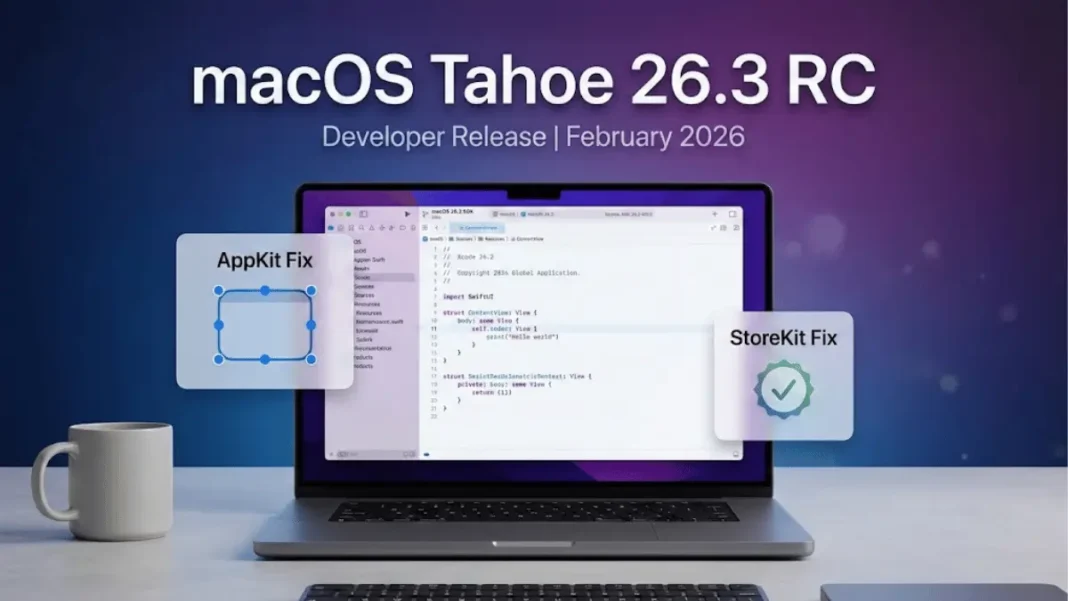
- macOS Tahoe 26.3 RC shipped February 3, 2026 with AppKit window resize and StoreKit error handling fixes
- macOS 26.2 SDK included with Xcode 26.2 for development targeting Tahoe 26.3 RC
- AppKit now renders window resize areas following corner radius geometry instead of square regions
- StoreKit Product.products(for:) method now properly throws errors instead of failing silently
Apple released macOS Tahoe 26.3 Release Candidate on February 3, 2026, targeting developers with framework-level improvements rather than consumer features. The update resolves two persistent issues that affected app development workflows: AppKit’s window geometry handling and StoreKit’s error reporting mechanism. This release candidate signals the final testing phase before public distribution.
What Developers Gain from macOS 26.3 RC
The macOS 26.2 SDK accompanying this release supports development for Mac computers running Tahoe 26.3 RC. Xcode 26.2 is available through the Mac App Store and includes SDKs for iOS 26.2, iPadOS 26.2, tvOS 26.2, and visionOS 26.2. Developers working on multi-platform Apple ecosystem apps receive unified SDK access through this single Xcode update.
Xcode 26.2 requires a Mac running macOS Sequoia 15.6 or later for development. This allows development teams to maintain stable production environments on Sequoia while building for Tahoe 26.3 targets. On-device debugging extends to iOS 15 and later, tvOS 15 and later, watchOS 8 and later, and visionOS.
What is the minimum macOS version required for Xcode 26.2?
Xcode 26.2 requires macOS Sequoia 15.6 or later to function. Developers do not need macOS Tahoe installed to build apps targeting Tahoe 26.3, providing flexibility for teams maintaining older macOS versions on development machines.

AppKit Window Resize Precision Improvements
Apple addressed a geometric accuracy issue in AppKit’s window interaction zones. Prior to this update, window resize areas used square hit-testing regions regardless of the window’s visual corner radius, creating a mismatch between appearance and functionality. macOS 26.3 RC corrects this by making resize areas conform to the actual corner radius shape.
This fix resolves bug report 149726089, which developers filed when users experienced unexpected resize behavior near rounded window corners. The correction particularly matters for apps leveraging macOS Tahoe’s Liquid Glass interface design, where transparent and rounded UI elements are prominent. Window chrome that appears rounded now behaves as rounded during user interaction.
StoreKit Error Handling Restoration
The StoreKit framework update fixes a critical regression where Product.products(for:) failed silently instead of throwing errors. Developers relying on proper exception handling for in-app purchase flows faced debugging challenges when product fetching failed without notification. The method now correctly throws errors as documented in Apple’s API specifications, matching expected Swift error propagation patterns.
Bug report 165186025 (Feedback Assistant ID FB21110809) tracked this issue through beta cycles. Apps implementing robust error handling for StoreKit operations can now receive actionable error information when product queries fail due to network issues, invalid product identifiers, or App Store Connect configuration problems.
How does the StoreKit fix affect in-app purchase implementations?
The Product.products(for:) method now properly throws errors when product fetching fails, enabling developers to implement catch blocks that handle specific failure scenarios. Apps can display appropriate user feedback for network timeouts, invalid product IDs, or subscription configuration errors instead of encountering silent failures.
macOS Tahoe 26.3 Development Timeline
macOS Tahoe 26.3 entered developer testing through multiple beta iterations before reaching release candidate status. Apple released Beta 3 on January 26, 2026, followed by the February 3 RC build. The update continues the Tahoe platform evolution that began with macOS 26’s September 15, 2025 launch.
Major Tahoe features including Liquid Glass interface design, redesigned Spotlight with AI integration, and new Phone, Journal, Magnifier, and Games apps arrived in the initial 26.0 release. Subsequent updates introduced refinements like Edge Light for webcam performance and Live Translation for calls.
Compatibility Considerations for Existing Workflows
Developers maintaining legacy projects should note that Xcode 16.4 does not launch on macOS Tahoe 26.2 despite functioning on Tahoe 26.1. Teams requiring older Xcode versions for existing codebases can work around this by right-clicking Xcode, selecting “Show Package Contents,” navigating to Contents/MacOS, and launching the Xcode executable directly. This compatibility break affects development teams unable to immediately migrate to Xcode 26.2.
Release Candidate Significance
Release Candidate builds represent Apple’s final pre-release testing phase. The RC designation indicates feature-complete status with no expected changes except critical bug fixes discovered during final validation. Developers can submit App Store builds compiled against the RC SDK, as API stability is maintained between RC and public release versions.
Limitations and Known Issues
macOS Tahoe 26.3 RC documentation does not list new limitations beyond the resolved AppKit and StoreKit issues. The update focuses on framework fixes rather than feature deprecations or API changes requiring code modifications. Developers should test apps thoroughly against the RC build to identify any edge-case regressions specific to their implementations.
Apps relying on previous AppKit window resize behavior may need minor interaction adjustments if custom hit-testing logic assumed square resize regions. StoreKit implementations that worked around the silent failure bug by implementing timeout-based fallback logic should remove those workarounds to respect proper error propagation.

Frequently Asked Questions (FAQs)
When will macOS Tahoe 26.3 be released to the public?
Apple released the Release Candidate build on February 3, 2026. RC builds typically precede public releases, though Apple has not announced a specific public release date.
Do I need macOS Tahoe to develop apps for Tahoe 26.3?
No. Xcode 26.2 runs on macOS Sequoia 15.6 or later, allowing developers to build Tahoe 26.3 apps without installing Tahoe on their development machines.
What Macs support macOS Tahoe 26?
macOS Tahoe supports most M-series Macs and select Intel models. Check Apple’s official compatibility list for your specific model.
Will the AppKit fix break my existing window handling code?
The resize area correction affects hit-testing geometry but maintains backward compatibility. Apps with custom window chrome should verify resize behavior during testing.
Can I submit App Store builds using the RC SDK?
Yes. Release Candidate SDKs are feature-complete and API-stable, making them suitable for App Store submissions.
What happened to the StoreKit silent failure issue?
Prior to this fix, Product.products(for:) failed without throwing errors, preventing proper exception handling. The method now correctly throws errors as documented.
What are the two main fixes in macOS 26.3 RC?
The update resolves AppKit window resize area geometry issues (bug 149726089) and StoreKit error handling in Product.products(for:) method (bug 165186025).
Which Xcode version supports macOS 26.3 RC development?
Xcode 26.2 includes the macOS 26.2 SDK for developing apps targeting macOS Tahoe 26.3 RC.

