

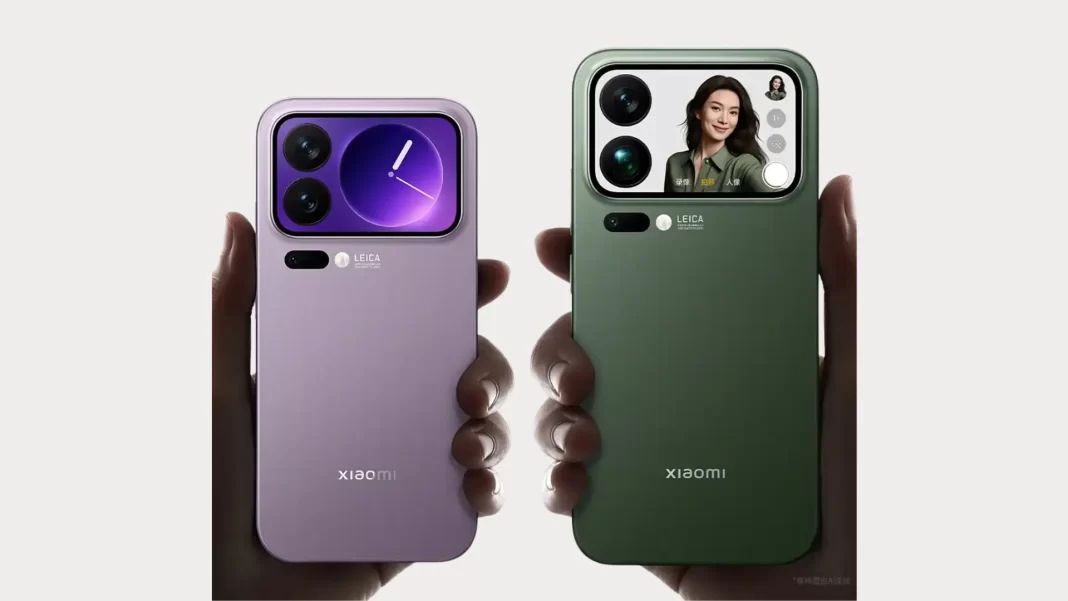
Xiaomi is launching its next flagship trio Xiaomi 17, 17 Pro and 17 Pro Max tonight at 7pm Beijing. If you’re following outside China, that’s 11:00 UTC (4:30pm in India). Expect the focus to be on display efficiency and new battery tech, both of which Xiaomi has been teasing heavily this week.
What’s new today
The two headline upgrades are M10 screen luminescence technology across the lineup and a new “Jinshajiang” battery for the Pro models. M10 is a materials and efficiency play: Xiaomi says it uses a new domestically developed red emissive material and cites a luminous efficiency figure of 82.1 cd/A, which it calls world-class. In simple terms, you should get similar brightness at lower power or higher brightness at the same power.

For the 17 Pro Max, Xiaomi is teasing a different pixel structure with an independent RGB arrangement the marketing line is “reject pixel pooling.” The claim: up to 26% lower power than conventional 2K displays. That matters for battery life and sustained brightness, especially with always-on features.
On batteries, the 17 Pro and 17 Pro Max move to Xiaomi’s Jinshajiang pack featuring an L-shaped, special-shaped stacked design and 16% high-silicon content to lift energy density. Both support 100W wired charging, with Xiaomi’s teasers mentioning a ~40-minute full charge.
Price, variants, availability
Tonight’s event covers three models: 17, 17 Pro and 17 Pro Max. Pricing and global availability were not posted ahead of the show; historically, Xiaomi launches China-first and rolls out to other markets weeks later. We’ll update pricing and market timelines as soon as Xiaomi confirms them on stage.
Specs or features that matter
Displays
The Xiaomi 17 and 17 Pro share a 6.3-inch flat OLED with uniform 1.18mm bezels and a 19.6:9 aspect ratio a compact footprint for a flagship. All three phones use M10 luminescence; Xiaomi’s 82.1 cd/A efficiency claim is the big talking point. If the claim holds in real-world tests, you could see better brightness-per-watt than typical OLED flagships.
17 Pro Max’s pixel stack
Rather than a Pentile-style subpixel layout, Xiaomi says the Pro Max uses independent RGB pixels (its “super pixel” pitch), aimed at cleaner detail and lower power draw 26% down versus conventional 2K panels, per Xiaomi’s teasers. In practice, that could mean crisper text at the same resolution and less drop in brightness during long sessions.
Battery and charging
The Jinshajiang battery in the Pro models combines L-shaped packaging with stacked sheets to fill odd internal spaces, plus ~16% high-silicon anode content for higher energy density. Xiaomi pairs that with 100W wired fast charging. Early teasers mention about 40 minutes to full we’ll verify the exact capacity and charge curve once official specs land.
Processor and software (what to expect)
Xiaomi hasn’t detailed chips on Weibo posts cited here, but coverage ahead of launch suggests a next-gen Qualcomm flagship and HyperOS 3. We’ll confirm platform details once announced on stage. Treat anything else as provisional.
Real-world notes: what these claims could mean for you
- Efficiency = brightness without the burn: If 82.1 cd/A pans out, the always-on display and outdoor readability should pull less power than usual. That helps with both screen-on time and peak brightness sustain.
- RGB layout = sharper small text: An independent RGB layout can reduce color fringing around fine UI elements compared to some Pentile matrices. The 26% power cut matters when you watch HDR video or game at high brightness.
- High-silicon battery = bigger tank, similar weight: Silicon-rich anodes raise energy density, so the Pro models can pack more capacity without a chunky feel. 100W should still deliver sub-one-hour full charges.
Pros and cons (early view)
Pros
- Promising display efficiency and thin bezels on compact 6.3-inch models.
- Pro Max pixel tech could balance sharpness and battery life.
- 100W charging and high-silicon battery chemistry on Pro models.
Cons
- Pricing and global release not yet confirmed.
- Independent RGB claims need third-party tests to verify the 26% power cut.
How to choose / alternatives
- Xiaomi 17: if you want a compact flagship with the new M10 display and slim bezels, and you don’t need the Pro’s battery setup.
- Xiaomi 17 Pro: likely the sweet spot if you want M10 + 100W + high-silicon battery without Max size.
- Xiaomi 17 Pro Max: for those prioritizing display tech and battery stamina; the independent RGB panel is the most interesting upgrade.
Comparison
| Model | Display highlights | Battery/charging | What stands out |
|---|---|---|---|
| Xiaomi 17 | 6.3″ flat OLED, 1.18mm bezels, M10 | TBA (wired fast charging expected) | Compact body, efficient panel |
| Xiaomi 17 Pro | 6.3″ flat OLED, M10 | Jinshajiang, high-silicon, 100W wired | High-density pack, quick top-ups |
| Xiaomi 17 Pro Max | M10 + independent RGB pixel stack | Jinshajiang, high-silicon, 100W wired | 26% lower display power target |
Frequently Asked Question
Are all Xiaomi 17 models getting M10 displays?
Yes, Xiaomi says the entire series uses M10 luminescence tech.
Do the 17 and 17 Pro share the same screen size?
Yes, both are 6.3-inch flat OLED with 1.18mm bezels and 19.6:9 aspect ratio.
Does the Pro Max have a different display?
Yes, it adds an independent RGB pixel layout aimed at detail and power savings.
How fast is charging on the Pro models?
100W wired, with Xiaomi teasing ~40 minutes to full.
What’s high-silicon battery tech?
Silicon-rich anodes raise energy density, letting similar-size packs store more energy. Xiaomi quotes ~16% high-silicon.
Will prices be announced today?
Pricing typically arrives at or shortly after the event; no official prices pre-event.
Is global availability confirmed?
Not yet; Xiaomi usually launches in China first.
Featured Answer Boxes
When is the Xiaomi 17 launch, and what’s that in UTC/India?
Xiaomi’s event starts 7pm Beijing time on Sept 25, which is 11:00 UTC and 4:30pm IST. Expect China-first availability, with pricing and wider rollouts typically announced later or in follow-up releases.
What is Xiaomi’s M10 screen luminescence tech?
M10 refers to Xiaomi’s new OLED emissive materials stack, notably a new red material. Xiaomi claims 82.1 cd/A luminous efficiency, meaning more brightness per unit power. In theory, you get brighter screens or longer battery life under the same conditions.
What’s special about 17 Pro Max’s display?
Xiaomi says 17 Pro Max uses an independent RGB pixel arrangement to avoid “pixel pooling,” aiming for sharper detail and about 26% lower power than conventional 2K displays.
What is the Jinshajiang battery on the Pro models?
It’s a new pack with an L-shaped stacked design and ~16% high-silicon anode content for higher energy density, paired with 100W wired charging. Xiaomi’s teaser mentions around 40 minutes to full.
Source: Xiaomi

